


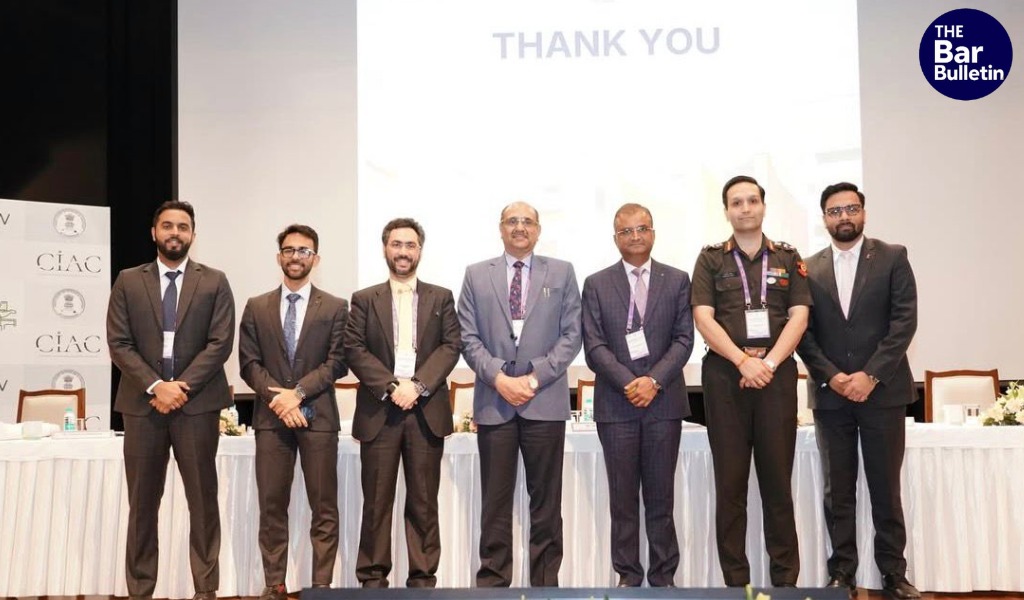

A panel discussion on “Evolution of ADR Practices in India” at the India International Disputes Week (IIDW) 2026 brought together leading practitioners, academics and institutional experts to examine the development of alternative dispute resolution (ADR) mechanisms in India, particularly the growing importance of mediation and institutional frameworks in resolving commercial disputes.
The session was moderated by Jonathan Rodrigues, International Mediation Professional and Founder of The PACT (Peacekeeping and Conflict Resolution Team), who guided the discussion through the historical evolution of ADR in India, recent legislative developments and the future trajectory of mediation and arbitration.
Opening the discussion, Naresh Markanda, Senior Advocate at the Punjab & Haryana High Court, traced the origins of modern ADR practices in India to the economic liberalisation of the 1990s, which led to a surge in commercial disputes and increasing pressure on courts. He highlighted the introduction of Section 89 of the Code of Civil Procedure through the 1999 Amendment Act, based on the recommendations of the Malimath Committee and the 129th Law Commission Report, which mandated courts to explore settlement through ADR mechanisms such as mediation, conciliation, arbitration and judicial settlement. Markanda noted that landmark judicial decisions, including Salem Advocate Bar Association v. Union of India, strengthened the constitutional legitimacy of ADR and encouraged courts to facilitate negotiated settlements. He also pointed to the establishment of mediation centres across district courts as a major step in institutionalising mediation.
Discussing recent developments, Mr Markanda highlighted the Mediation Act, 2023, which seeks to establish regulatory bodies, uniform standards and institutional structures for mediation in India. According to him, once fully operationalised, the legislation has the potential to bring about a significant transformation by institutionalising mediation and ensuring greater quality and consistency in dispute resolution.
Dr. Shashwat Bajpai, Founder Partner of DRSB Law Chambers, reflected on the challenges faced by mediation in practice despite legislative support. He identified three key barriers: a deeply entrenched litigation mindset, concerns among lawyers about strategic disadvantages in mediation, and economic incentives that continue to favour prolonged litigation. Bajpai also emphasised the need for full implementation of the Mediation Act, noting that certain critical provisions relating to enforcement of mediated settlement agreements are yet to be operationalised.
Addressing the institutionalisation of ADR, Animesh Anand Bordoloi, Senior International Case Counsel at the Asian International Arbitration Centre (AIAC), stressed that while India has witnessed extensive discussion on institutional arbitration and mediation, implementation has often lagged behind. He pointed to delays in appointment of arbitrators under Section 11 of the Arbitration and Conciliation Act, noting that institutional appointment mechanisms, similar to those followed in jurisdictions such as Singapore and Malaysia, could significantly reduce delays and improve efficiency.
Offering a practitioner’s perspective, Neeraj Kochar, Partner at Accuracy India Private Limited and an expert witness in numerous arbitration proceedings, described how ADR practices have evolved from personality-driven processes to more structured, process-oriented proceedings. He noted that parties today approach arbitration and mediation with greater seriousness and preparation. Improvements in infrastructure, case management practices and technological tools have significantly enhanced the efficiency of dispute resolution proceedings in India.
Highlighting the perspective of government stakeholders, Col. Narinder Singh, Deputy Judge Advocate General (Litigation), discussed the relevance of ADR in defence procurement and government contracts. He explained that delays or failures in contractual performance in defence-related matters can have cascading consequences, including operational risks for armed forces personnel. Singh emphasised that institutional arbitration and mediation mechanisms can help address disputes efficiently in government procurement, infrastructure and supply-chain contracts.
The panel also examined the effectiveness of pre-litigation mediation, particularly in commercial disputes. Dr. Deepak Jindal, Advocate at the Punjab & Haryana High Court, discussed statutory developments such as Section 12A of the Commercial Courts Act, which mandates pre-institution mediation in commercial disputes. He observed that mediation offers advantages such as cost efficiency, quicker resolution and preservation of business relationships, though its success ultimately depends on the willingness of parties to engage constructively.
In a discussion on mediation dynamics, the panel highlighted factors that determine the success of mediation, including the presence of decision-makers with authority, preparedness of parties and awareness of the economic costs of prolonged litigation. Experts noted that mediation works best when parties seek to preserve relationships or ongoing business arrangements.
The session concluded with reflections on the evolving role of lawyers in mediation. Sr Adv Naresh Markanda emphasised that mediation should remain primarily party-driven, with lawyers playing a supportive rather than dominant role during negotiations. Panelists broadly agreed that while legal counsel remain important in advising clients, effective mediation requires a collaborative and problem-solving approach rather than adversarial litigation strategies.
Summing up the discussion, moderator Jonathan Rodrigues stressed that the continued development of ADR in India will depend on greater collaboration between courts, legal practitioners, mediators, arbitrators and institutions. As India aims to strengthen its dispute resolution ecosystem and support economic growth, the panel noted that mediation and institutional arbitration will play an increasingly central role in the country’s legal and commercial landscape.