


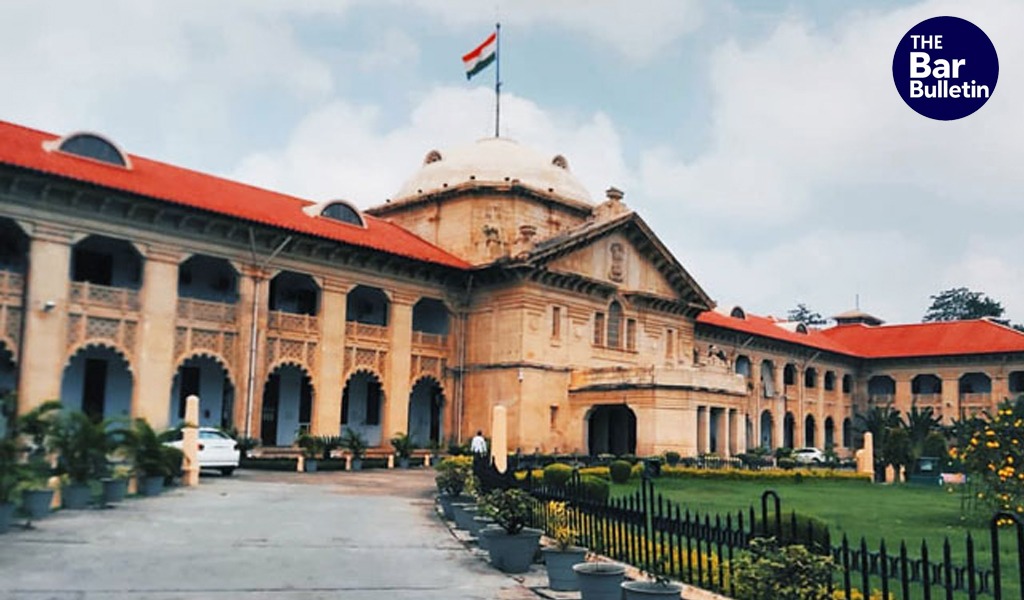

The Allahabad High Court reiterated that if a person is promoted to a higher post or put to officiate on that post, or a stop-gap arrangement is made to place him on the higher post, denial of salary to him for a higher post would be contrary to law and also against public policy. The Court also clarified that even a contract or agreement containing such a stipulation would be unenforceable in law in view of Section 23 of the Contract Act. Reference was made to the decision of the Supreme Court in the case of Secretary-cum-Chief Engineer, Chandigarh vs. Hari Om Sharma [1998 (5) SCC 87].
The Court therefore directed the East Central Railway Inter College to pay the salary to the petitioner in the pay-scale of Rs. 6500-10500 for the period w.e.f. December 01, 2004, to March 06, 2008, after adjusting for the salary he has already received as a Trained Graduate Teacher. The Court also directed payment of simple interest on the difference of pay at the rate of 6% per annum from the date of application till the date on which actual payment is made to him.
The Division Bench comprising the Chief Justice Arun Bhansali and Justice Kshitij Shailendra observed that the present case is not the one where the petitioner was given an additional charge of a post ‘which was not filled up before’, rather it is a case where the post of Head Master had fallen vacant on account of his superannuation. Further, the duties performed by the petitioner were not of a ‘routine nature’.
The Bench noted that when the petitioner was subjected to departmental proceedings, in an office memorandum, his designation was clearly indicated as ‘Head Master’ (Junior Wing)’ and he was asked to submit a representation against the action proposed to be taken by the respondents.
Though no punishment was awarded to the petitioner in the departmental proceedings, the Bench found that right from the initiation of the departmental proceedings till the appeal of the petitioner was allowed, he was continuously referred to as Head Master/Principal of Junior Wing. Therefore, it cannot be said that the respondents did not treat the petitioner’s work in the capacity of Head Master/Principal of Junior Wing.
Briefly, the petitioner was serving as a Trained Graduate Teacher (TGT) in a regular, substantive role in a college in Uttar Pradesh. As the Head Master (Junior Wing) was set to superannuate, the petitioner was ordered to take on the role of ‘teacher-in-charge’ on November 03, 2004, and he held this position till March 6, 2008, when a new Head Master was appointed.
When the petitioner raised concerns about not receiving the higher pay scale that should have been given for the post of Head Master (Junior Wing), his complaints went unanswered. Instead, the college issued him a charge sheet, claiming he had not shown complete integrity towards his duties as Head Master (Junior Wing). Eventually, he was cleared of these charges, but the higher salary was still not paid.
Appearances:
Advocate Amardeo Singh, for the Petitioner
A.S.G.I., Agam Narain Roy, for the Respondent
