


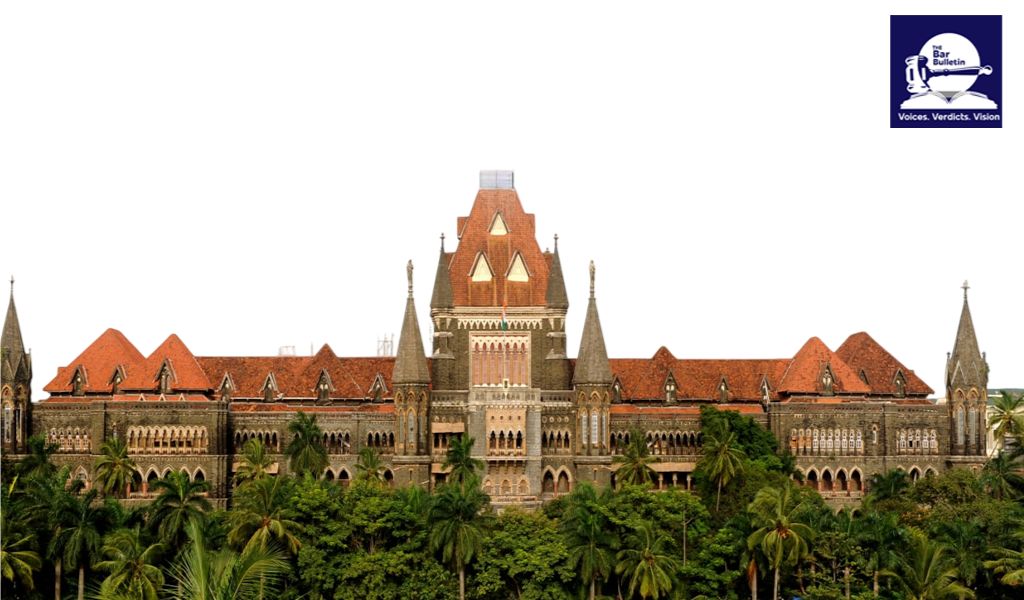

In a petition filed before the Bombay High Court to challenge the judgment and order dated 01-11-2021 by the Divisional Joint Registrar, Cooperative Societies, whereby an application seeking condonation of a twelve-year delay in filing a revision was rejected, a Single Judge Bench of Justice Amit Borkar took note of the false pleas of the petitioners and dismissed the petition while imposing a cost of Rs. 1,00,000/-.
On 04-04-2005, the petitioners took out two loans by mortgaging two properties. On 16-01-2007, the Registrar issued two certificates, one for Rs. 68,08,969 and another for Rs. 83,47,098 under Section 101 of the Maharashtra Cooperative Societies Act, 1960 (MCS Act). The petitioner failed to pay the dues as per the certificates. Thereafter, the Special Recovery Officer held an auction on 17-08-2009 for the mortgaged properties.
It was the allegation of the petitioners that the purchaser did not deposit 15% and 85% of the amount within the period described under clauses (g) and (h) of Rule 107(11) of the Maharashtra Cooperative Societies Rules, 1961, and thus, the auction must have been rendered void. The petitioners filed a writ petition before this Court, which was permitted to be withdrawn with liberty to take appropriate proceedings. Hence, the petitioners filed a revision application under Section 154 of the MCS Act to challenge the auction and confirmation of sale.
An application for condonation of delay was filed with the said revision, stating that the petitioners were unaware of the auction sale and that the auction date should be treated as 06-11-2020 for the purpose of computing the limitation. The respondent bank and purchasers opposed the same and stated that on 16-09-2011, the bank had supplied the petitioners with account extracts reflecting the entry of the auction amount deposited on 01-10-2009. The Revisional Authority rejected the said application. Aggrieved, the present petition was filed.
The petitioners submitted that, as the confirmation of sale itself was void due to the purchasers’ failure to deposit the amount, no limitation would apply. The respondents opposed, stating that the petitioners had made false statements and that an application dated 16-09-2011 had been filed with the bank by them.
The Court found the petitioners’ assertion that they had no knowledge of the auction sale until November 2020 to be patently false, since the account extracts were provided to them in 2011 and they had acknowledged receipt of the extracts, thereby becoming aware of the auction on 16-09-2011 itself. The Court took note of a letter dated 16-04-2015 from petitioner 1, wherein it was stated that the bank had auctioned the mortgaged property and had adjusted the amount received.
Further, the Court said that the petitioner had made a categorical statement on oath that he did not come to know of the auction until much later. It was stated that this was not an inadvertent error but a deliberate assertion. The Court found the statement to be contrary to the record and held that a false statement had been made knowingly.
The Court stated that the petitioners had deliberately attempted to mislead the Court and that it could not act on statements that are proved untrue by the litigant’s own record. It was said that the increasing trend of litigants attempting to gain advantage through concealment or misrepresentation not only undermines the dignity of judicial proceedings but also shakes public confidence in the justice delivery system.
The Court said that suppression of facts and false statements strike at the root of justice and that when a litigant’s conduct falls short of honest disclosure, the Court will refuse to exercise its jurisdiction, as the process cannot be permitted to be misused by suppression or deceit. The Court cited various Supreme Court decisions and stated that when a litigant hides material facts or knowingly makes a false statement to secure a favorable order, the Court cannot proceed to examine the merits of the case.
In furtherance, the Court said that the petitioners repeated the same false plea in the delay condonation application as well as the writ petition, and that the hearing consumed ninety minutes of judicial time. It was stated that the Court’s time is not private property, as it belongs to every litigant waiting in the corridor of justice.
While saying that imposition of costs becomes necessary when a party uses the Court process to obtain an advantage through falsehood, the Court not only dismissed the petition but also imposed a cost of Rs. 1,00,000/- to be deposited with the Maharashtra State Legal Services Authority within four weeks.
It was held that if the petitioners failed to deposit the amount, the same would be recovered as arrears of land revenue. Lastly, the Court rejected the petitioners’ request for the continuation of the ad-interim relief.
Appearances:
For Petitioners – Mr. Girish S. Godbole, Mr. Shrishailya S. Deshmukh
For Respondents – Mr. P.G. Sawant, Mr. S.R. Nargolkar, Mr. Arjun Kadam, Ms. Neeta Patil, Mr. Abhishek Arote, Mr. Vijay D. Patil, Mr. Yogesh V. Patil