


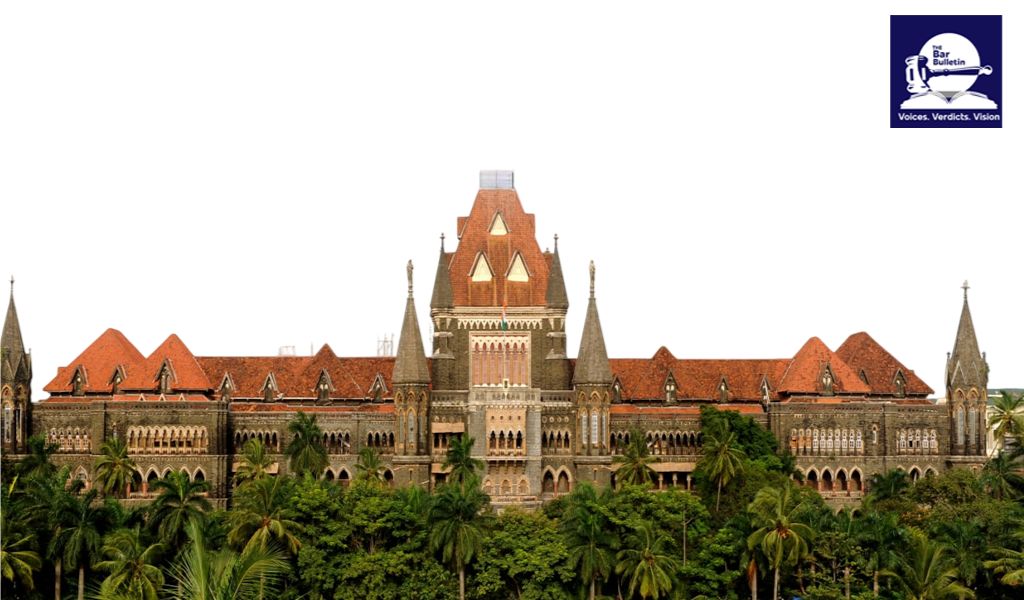

The Bombay High Court has held that an arbitral tribunal cannot decide a claim by withholding essential documents from a party. Justice Somasekhar Sundaresan set aside both the arbitral award and the District Judge’s order that had upheld it, holding that the tribunal’s denial of essential documents amounted to a violation of natural justice and deprived the contractor of a fair opportunity to present its case.
The dispute arose from a meat supply contract for the armed forces for the 1995-96 period. After Iqbal Trading Company expressed its inability to continue supplies due to a steep rise in market prices, the Union of India forfeited the security deposit and initiated arbitration claiming damages of over ₹35 lakh towards meat purchased from the open market. The arbitrator proceeded to allow the Government’s claim in full.
However, during the proceedings, Iqbal Trading Company repeatedly sought access to crucial documents relied upon by the Government: market quotations, supply orders, vouchers, and details of actual quantities and rates of the meat allegedly procured. The tribunal rejected most requests, observing that the information was either irrelevant or unnecessary, and refused to provide copies of the underlying records. It also declined to disclose data on market availability and price escalation and granted the entire claim as-is.
When the award was later challenged, u/s 34 of the Arbitration and Conciliation Act, 1996 (“Act”), the District Court proceeded on the footing that the 1940 Act applied and dismissed the challenge as time-barred, even though a Liberty Order passed in August 2005 had already clarified that the 1996 Act governed the proceedings and allowed the contractor to file a fresh Section 34 challenge within 30 days.
The appellant then approached the High Court u/s 37 of the Act. Justice Sundaresan first clarified that the proceedings were governed by the 1996 Act, not the 1940 Act, since the arbitrator was appointed in April 1996, after the new law had come into force. The District Judge’s approach of treating the challenge as barred by limitation under the old statute, despite a prior liberty order expressly permitting a Section 34 challenge, was held to be unsustainable.
On the standard of review, the Court referred to Malluru Mallapa (D) through LRs vs. Karuvathappa & Ors., (2020) 4 SCC 313, to reiterate that an appeal under Section 37 is a continuation of the original proceedings, and the appellate court must show conscious application of mind, address all issues of fact and law, and apply the Section 34 standard while examining whether the party was unable to present its case. The Court emphasised that while an appellate court does not reassess evidence as if sitting in first appeal on facts, it must nevertheless scrutinise whether the essential procedural safeguards under Section 34 have been breached.
More critically, the Court found the tribunal’s approach “untenable and tramples upon basic expectations of natural justice” by refusing to supply material that formed the basis of the claim. The Court also found the Arbitral Award in conflict with public policy for being in conflict with fundamental principles of natural justice.
The Court noted an absence of judicial approach in the manner in which the arbitrator decided the Government’s damages claim. Instead of examining the evidence, assessing procurement prices, or giving reasons as required under the contract, the arbitrator simply accepted the claim in full while refusing to disclose the underlying documents. This mechanical, unreasoned approach, the Court held, failed the standard of judicial approach laid down in the Associate Builders vs. DDA, (2015) 3 SCC 49.
Calling the award a “summary judgment”, the Court held that Iqbal Trading Company was unable to present its case due to the non-disclosure of documents, squarely attracting Section 34(2)(a)(iii) of the Arbitration and Conciliation Act, 1996.
Allowing the appeal, the Bombay High Court set aside both the District Judge’s order and the arbitral award, observing that the denial of essential documents rendered the proceedings fundamentally unfair and the award legally unsustainable.
Cases Referred
Konkan Railway Corporation Ltd. Vs. Chenab Bridge Project Undertaking, (2023)
11 SCR 215
Associate Builders vs. DDA, (2015) 3 SCC 49.
Malluru Mallapa (D) through LRs vs. Karuvathappa & Ors., (2020) 4 SCC 313
ONGC vs. Discovery Enterprises (P) Ltd., (2022) 8 SCC 42
Appearance
Appellant- Mr. S.K. Halwasia a/w Ms. S.S. Halwasia and Mr. Keshav Thakur i/b Halwasia & Co.
Respondents- Mr. Mohamedali M. Chunawala a/w P.S. Gujar
