


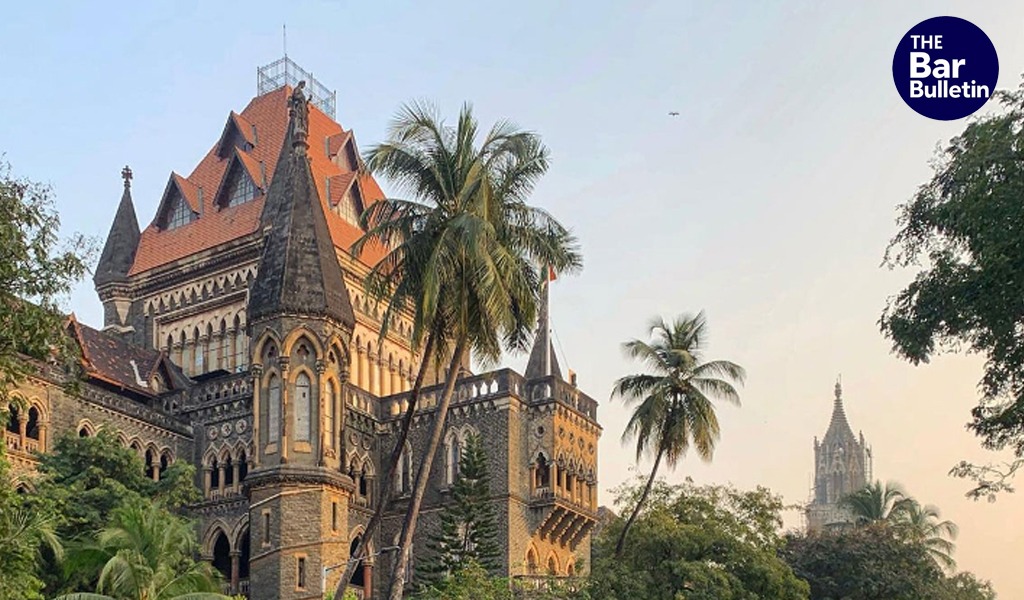

The Bombay High Court has upheld an Industrial Court order granting permanent status to 30 firemen and drivers engaged at CIDCO-run fire stations in Panvel, Dronagiri, Ulwe and Kharghar. Justice Amit Borkar dismissed CIDCO’s writ petition and held that the corporation had engaged in unfair labour practices by repeatedly issuing short fixed-term appointments and inserting “one-day breaks” to defeat the workers’ claim to continuous service.
The Court observed that while an employer and employee may contractually agree to “temporary” work, such labels are not conclusive. What ultimately matters is the real nature of the employment and how the workers were actually treated because “ titles and labels do not decide legal rights”.
The case arose from a challenge filed by CIDCO against an Industrial Court order that had held the corporation guilty of unfair labour practices and directed that 30 firemen and drivers working at its fire stations be granted permanent status along with consequential benefits. The Industrial Court had found that CIDCO repeatedly issued short fixed-term appointment letters and inserted one-day breaks to deny the workmen continuity of service, despite their performing perennial fire-fighting duties for years.
CIDCO, in its appeal, has argued that the workers were hired on purely temporary, project-based terms under a 2008 advertisement and therefore could not seek regularisation. It also claimed that, as a New Town Development Authority, it would eventually transfer these fire stations to local municipal bodies and could not be saddled with permanent staff.
The Court, however, rejected these contentions, noting that the firefighting duties were perennial, the fire stations continued under CIDCO’s control for years, and the workers had been performing uninterrupted essential services.
The Court further held that CIDCO, having more than 1,000 employees, was bound by the Model Standing Orders but had failed to classify workers or follow statutory procedure, attracting Item 9 of Schedule IV of the MRTU & PULP Act. It affirmed the Industrial Court’s finding that one-day breaks were engineered solely to prevent employees from acquiring permanency, amounting to an unfair labour practice. This inference is supported by (i) repeated renewal of the same work, (ii) continuation of duties without any actual interruption and (iii) absence of any administrative record justifying such breaks
Noting that CIDCO had itself filled similar posts on a permanent basis in later recruitments and that sanctioned vacancies remained protected under earlier High Court orders, the Court directed CIDCO to implement the permanency benefits within 12 weeks.
Appearances
Petitioner- Mr. G.S. Hegde, Senior Advocate with Ms. P.M. Bhansali i/by D.S.K. Legal
Respondents- Ms. Vaishali K. Jagdale with Mr. Yash K. Jagdale & Mr. V.P. Vaidya with Mr. Jagdish G. Aradwad (Reddy) & Mr. Abhijit Patil
