


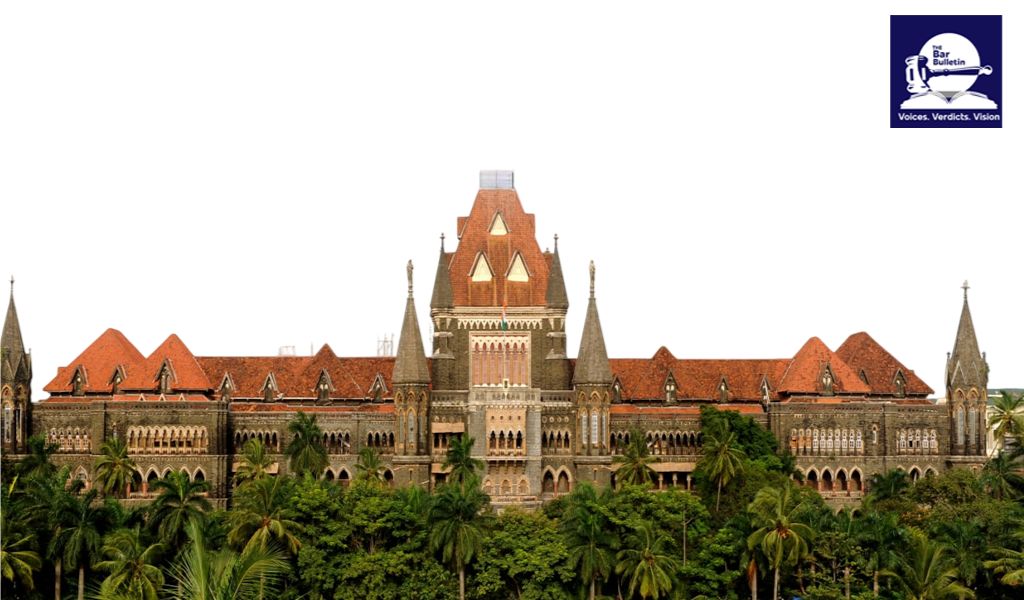

The Bombay High Court has set aside an order directing M/s Arjun Travels to pay compensation for the death of a temporary bus driver, holding that although the driver was found dead inside the employer’s bus, there was no evidence establishing a causal connection between his heart attack and his employment.
Justice S.M. Modak held that the deceased was ‘very much on duty’ in the sense that he was found inside the employer’s vehicle, but the Employees’ Compensation Act, 1923, requires proof that the death arose out of employment, not merely that it occurred during employment.
The deceased, a temporary driver called as per requirement, had signed the muster roll only up to 15 December 2021. He was not assigned driving duty on 16 December 2021 but was found dead in the bus early that morning. The post-mortem recorded the cause of death as coronary artery disease. The Commissioner for Employees’ Compensation had treated the death as arising during the course of employment and awarded compensation.
Setting aside the award, the High Court held that the Commissioner had incorrectly assumed that merely being found inside the bus established the statutory requirement. “There is absolutely no evidence to infer that driving or any work-related stress accelerated the death,” the Court observed. The judgment notes that neither medical evidence nor factual material was produced to show that the employment had any nexus with the heart attack.
The Court considered the question of whether the deceased was in employment with the Appellant when he died. And whether the injury can be due to an accident?
The Court held that to fall under Section 3 of the Employee’s Compensation Act, the personal injury to an employee must (i) occur during employment, and (ii) arise out of employment.
Referring to Mackinnon Mackenzie & Co. v. Ibrahim Mahommed Issak (1969) 2 SCC 607, the Court reiterated that “in the course of employment” refers to work the employee is assigned or incidental acts related to it, and “arising out of the employment” are understood to mean that, “during the course of the employment, injury has resulted from some risk incidental to the duties of the service….”
The Court found that the scope of the employment is not strictly restricted to the duties assigned to him but injury caused while doing certain acts which are incidental or which are connected to the prescribed duties is also covered.
The Court held that the Commissioner’s findings were perverse, noting that they were made without evidence and based on an incorrect interpretation of Section 3 of the Employees’ Compensation Act; while the death may have occurred in the course of employment, the crucial connection between the injury, the accident, and the employment was not proved.
However, the Court distinguished precedents relied on by the respondent where notional extension applied, such as Leela Bai v. Seema Chouhan, Civil Appeal No. 931 of 2019 and Manju Sarkar v. Mabish Miah, 2014 ACJ 1927, observing that in those cases the employee was within the employment zone while performing acts reasonably connected to duty (waiting for loading, resting during trip, etc.). Whether the employee plays the particular act during the course of employment or not, depends upon the facts of the particular case. The Court also rejected the employer’s argument that a temporary or casual worker is outside the scope of the Act, noting that the 2009 amendment to Section 2(1)(dd) expressly includes such workers.
Although the claim was dismissed on the merits, the Court clarified that the amount privately paid earlier was voluntary and therefore not refundable.
Appearances
Applicant- Mr. J. S. Kini a/w Mr. Aum Kini i/by Miss Sapna Krishnappa
Respondent- Mr. Vasant N. More
