


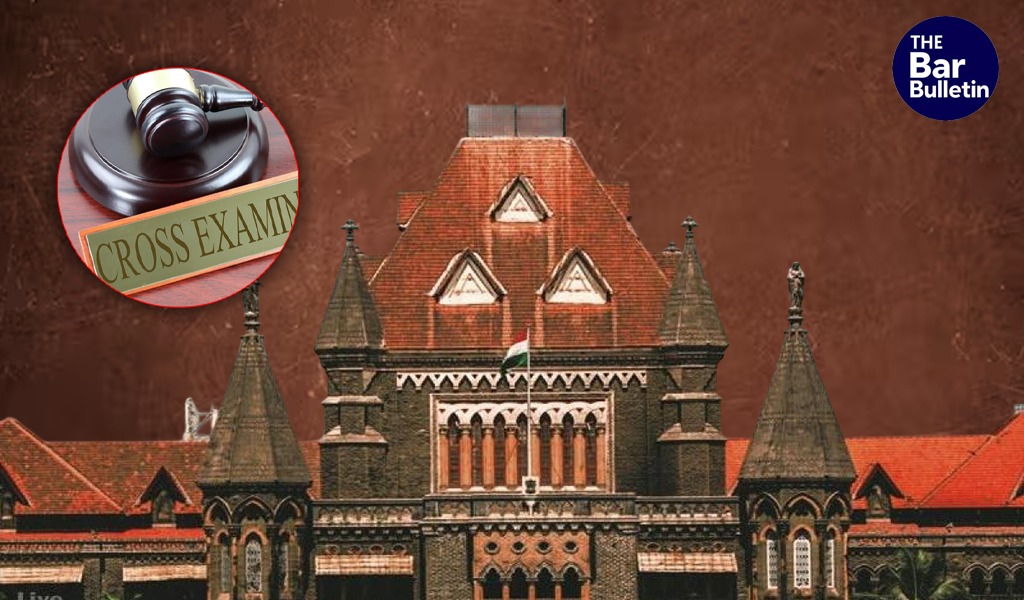

The Bombay High Court has held that documents relevant to the pleadings may be produced during cross-examination even if they were not filed earlier with the plaint or written statement, provided they are used for effectively confronting a witness.
The case arose from a civil suit seeking cancellation of sale deeds allegedly executed by a constituted attorney in favour of another defendant. The defendant contended that consideration of ₹5 lakhs had been paid to the plaintiffs and sought to produce receipts during the cross-examination of the plaintiff. The trial court rejected the application, prompting the defendant to approach the High Court.
Allowing the petition, the Court held that procedural rules under the Code of Civil Procedure governing the production of documents contain specific exceptions permitting documents to be introduced during cross-examination. These exceptions apply where the documents are used to confront a witness or refresh their memory.
The Court emphasised that such documents cannot be rejected merely because they were not produced earlier, especially where they are connected to the pleadings. The Court noted:
“So long as the document produced for the limited purpose of effective cross-examination or to jog the memory of the witness is not completely divorced from or foreign to the pleadings made, the same cannot be disallowed.”
Justice Gauri Godse explained that procedural requirements under Orders VII, VIII and XIII of the CPC must be read alongside Section 145 of the Evidence Act (now Section 148 of the Bharatiya Sakshya Adhiniyam, 2023), which allows a witness to be confronted with previous written statements relevant to matters in issue.
The Court further observed that documents used during cross-examination fall within a statutory exception and therefore do not require prior filing or separate permission of the court. It held:
“The requirement to produce the documents along with the pleadings… does not apply to documents required for cross-examination.”
Finding that the receipts sought to be produced were directly connected to the defendant’s pleaded defence regarding payment of consideration, the Court ruled that there was no legal impediment to confronting the plaintiff with those documents during cross-examination.
Accordingly, the High Court quashed the trial court’s order and directed that the defendant be permitted to produce the documents listed in the application to confront the plaintiff during cross-examination.
Cases referred
Mohammed Abdul Wahid Vs Nilofer and another, (2024) 2 SCC 144
Appearances
Mr. Mateen Shaikh a/w. Mr. Shrinivas Kshirsagar, Mr. Parvez Inamdar and Ms. Muskan Shaikh for the Petitioner.
Mr. P. J. Thorat i/b. Mr. Prabhanjan Gujar for Respondent Nos. 1 to 3.
