


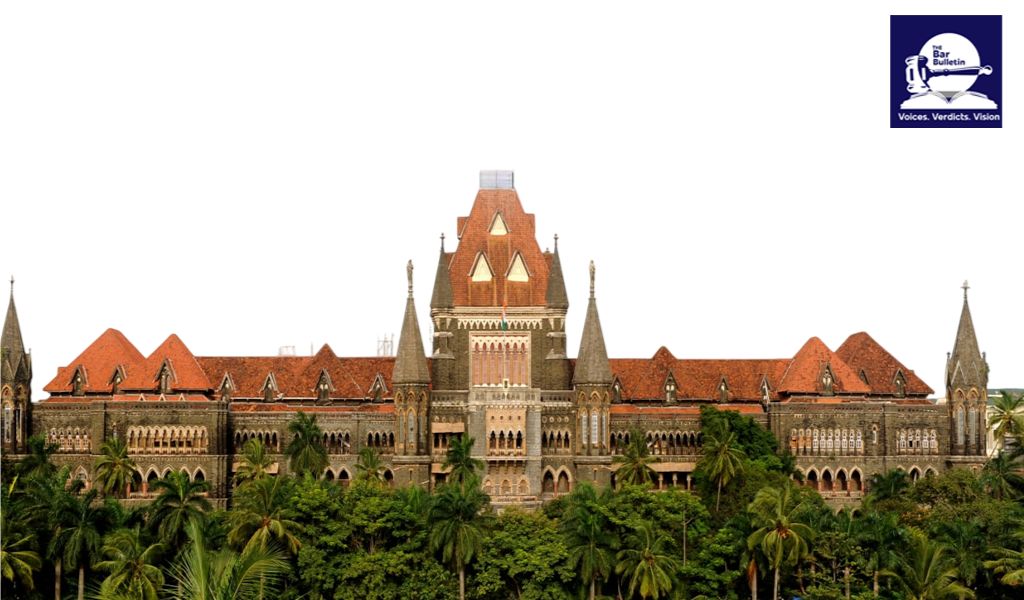

Marking that the debtor-husband seeks to take the shield of “insolvency” to protect himself from the sword of the Family Court order, the Bombay High Court ruled that the husband (debtor) cannot seek a declaration as an “insolvent” under the Presidency Towns Insolvency Act, 1909, just because he has pleaded inability to pay the maintenance amount to his estranged wife, as per the order of the Family Court.
The Court emphasised that seeking a stay of the Family Court order, the petitioner (husband), under the guise of insolvency proceedings, would undermine the very purpose of the maintenance order passed by the Family Court and would embolden the debtor to escape liability through insolvency proceedings.
The Court also clarified that the Insolvency Act cannot be abused to seek a stay of the Family Court’s order granting maintenance when the petitioner himself has challenged that order in the Criminal Revision Petition. Further, the debtor cannot adopt a modus operandi by taking recourse to the Insolvency Act to modify or frustrate the order passed by the Family Court.
“Since, under the Insolvency Act, there is a specific provision under Section 9(2) for dealing with insolvency proceedings based on a decree or order for payment of money, the petitioner cannot take shelter of Section 9(1)(f) of the Insolvency Act, and cannot bypass the provisions of sub-section (2) of Section 9 for declaring himself as an insolvent”, added the Court.
A Single Judge Bench of Justice Jitendra Jain referred to Section 14(1)(a) of the Insolvency Act, which only lays down the qualifying amount for filing the insolvency petition by a debtor, to observe that merely because the debts are more than Rs. 500, it does not mean that automatically on a petition being filed, the Court has no option, but to declare the petitioner as an insolvent.
Section 14(1)(a) read with Section 9(1)(f) of the Insolvency Act only entitles a person to present an insolvency petition by treating the same as an act of insolvency, which is only for the purpose of defining eligibility to file the petition and not for an automatic order by the Court to be declared as an insolvent, added the Bench.
As far as the issue of whether the order/decree of a Civil Court passed against the husband for maintenance of his wife is a “debt” or not, the Bench quoted the decision in the case of Hemavathiamma vs. Kumaravela Mudalia [AIR 1968 Mysore 111], where the then Mysore High Court had concluded that the amount payable for the maintenance of wife cannot be termed as a debt but it is a moral duty and, therefore, an order of declaring the husband therein as an insolvent cannot be passed under the Provincial Insolvency Act.
Briefly, the matrimonial discord between the petitioner-husband and the respondent-wife, within two months of marriage, reached the Family Court, resulting in an order under Section 125 of the CrPC ordering the petitioner to pay Rs. 25,000 monthly towards maintenance for the respondent. As the Family Court rejected the contention of the petitioner regarding his earnings of Rs. 15,000 per month, the petitioner sought a declaration that he is insolvent under the provisions of Section 14 of the Presidency-Towns Insolvency Act, 1909, and further sought a stay of the execution proceedings in respect of the Family Court Order.
Case Relied On:
Hemavathiamma vs. Kumaravela Mudalia [AIR 1968 Mysore 111]
Appearances:
Advocates Siddh Pamecha and Kuber Wagle, for the Petitioner
Insolvency Registrar Rekha Rane, for the Respondent