


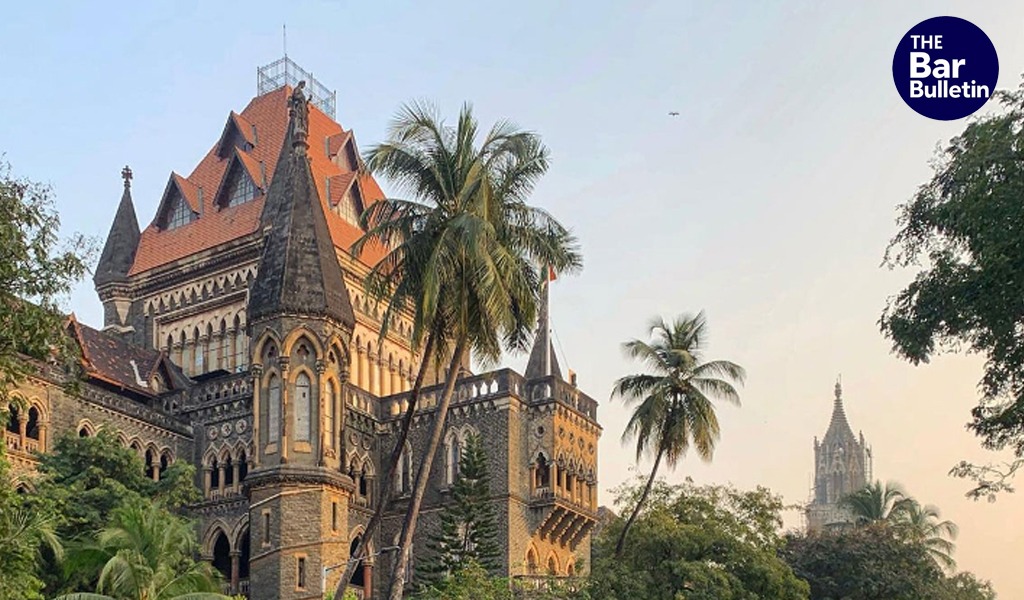

The Bombay High Court (Aurangabad Bench) has held that once a resolution plan is duly approved by the Adjudicating Authority (NCLT) under Section 31 of the IBC, it is binding on all stakeholders, including employees. Essentially, the successful resolution applicant takes over the corporate debtor on a “clean slate”, free from any prior claims that are not part of the approved plan.
Stating that there is no scope left for the payment of any dues by the petitioner company, as the claims of the respondent-employees automatically stood extinguished upon the approval of the resolution plan, the Court quashed the orders passed by the Labour Court and the Industrial Tribunal.
The Court clarified that all claims that are not part of the approved resolution plan shall stand extinguished, and no person is entitled to initiate or continue any proceedings in respect of a claim that was not included in the resolution plan. The Bench reiterated that a successful resolution applicant cannot be faced with undecided claims after the plan’s acceptance, as this would amount to a “hydra head popping up” and create uncertainty.
The lifting of the moratorium does not revive claims that have been extinguished by the approval of the resolution plan, and proceedings for claims not included in the resolution plan cannot be continued after the plan’s approval. Therefore, the Court said that the Industrial Tribunal could not adjudicate the employees’ claims, including the claim for reinstatement without back-wages, which stand extinguished pursuant to approval of resolution plan.
A Single Judge Bench of Justice Arun R. Pedneker examined the approved Resolution Plan, noting that it made no provision for the claims of the respondent-employees. Clause 3.4.2 and 3.4.3 explicitly stated that all dues payable to employees and workmen, and any and all claims (including for back wages, compensation, etc.), whether admitted or not, crystallized or uncrystallized, would be written off in full and permanently extinguished.
The Bench noted that Clause 3.7(d) mentioned that the SRA would, without obligation, endeavour to retain the existing manpower of 699 employees as of December 15, 2017, and the respondents’ names were not on this list. Further, Clause 4.6 specified that any creditor who did not submit a claim to the Resolution Professional prior to the NCLT approval date would not be entitled to any payments, and such unclaimed amounts would stand extinguished.
The Bench emphasised that Section 238 of the IBC gives the Code an overriding effect over other laws, including the Industrial Disputes Act, 1947, in case of any inconsistency.
Briefly, the petitions involved a challenge to orders passed by the Industrial Tribunal, Aurangabad, in complaints filed by employees under Section 33-A of the Industrial Disputes Act, 1947. The employees alleged that the petitioner company had contravened Section 33(2)(b) of the Act by dismissing them during the pendency of an industrial dispute without seeking approval. The employees also sought reinstatement with continuity of service and full back wages.
In detail, a wage settlement dispute between the Trade Union and the management was referred for adjudication in 2017. Later, the National Company Law Tribunal (NCLT) admitted a petition under Section 7 of the Insolvency and Bankruptcy Code, 2016 (IBC) against the petitioner company and the Corporate Insolvency Resolution Process (CIRP) commenced.
After moratorium was declared under Section 14 of the IBC, the respondent-employee was dismissed from service during the CIRP. In the meantime, the NCLT approved the resolution plan submitted by the Successful Resolution Applicant (SRA), which resulted in a change of management. The petitioner (the new management) argued before the Industrial Tribunal that all claims beyond the ambit of the approved resolution plan stood extinguished, and the SRA had taken over the company on a “clean slate.” The Tribunal dismissed this application, holding the claim for reinstatement to be tenable.
Appearances:
Senior Advocate P. R. Katneshwarkar, along with Advocates Puneet Bindra, A. D. Kulkarni, Prathmesh Kundalwadikar, Chaitali Seth, and Amit Yadkikar, for the Petitioner
Advocate B.R. Kawre, for the Respondent
