


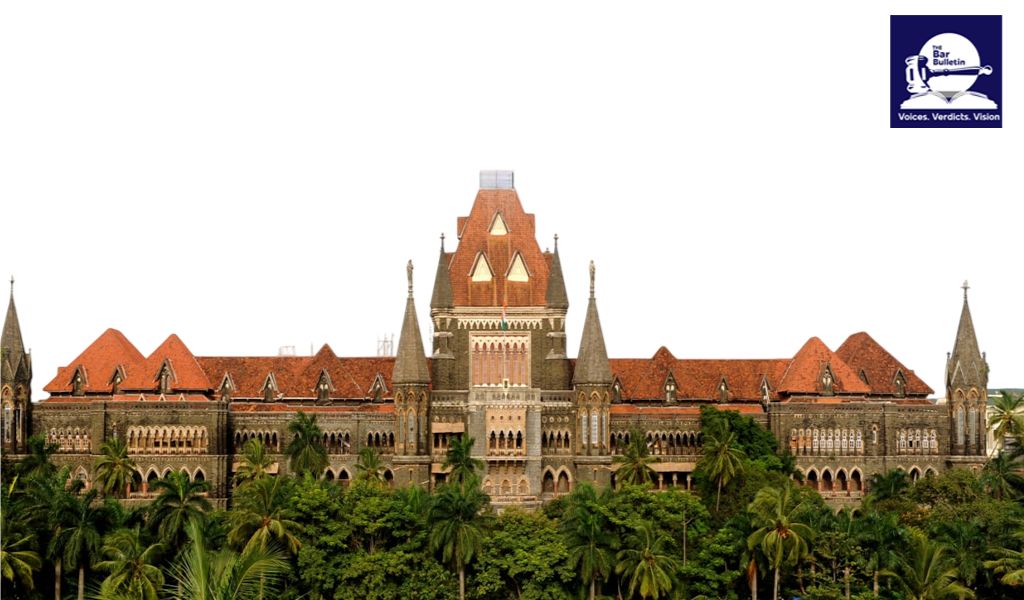

Pointing out that ‘a cleverly drafted challenge under Section 34 of the Arbitration and Conciliation Act, 1996, cannot transform a non-Arbitral Order into an Arbitral Award, the Bombay High Court clarified that corporate procedural formalities are flexible enough to uphold substantive justice without being obstructed by rigid technicalities. Pointing out that any breach of Section 174(2) of the Companies Act may attract a sanction rather than automatically invalidating all actions, given the potential impact on every corporate decision and operation, the Court opined that given the multiple complexities involved, the Arbitral Tribunal has appropriately rejected Master Drilling’s absolutist argument for an outright non-suit of Sarel Drill under Section 32 of the Arbitration Act.
The Court observed that the Arbitral Tribunal appropriately refused to non-suit Sarel Drill merely on the claim of an absence of corporate mind. It is only for the Arbitral Tribunal to examine whether a Board Meeting is necessary to initiate arbitration or whether the individuals who acted had existing authority to do so. Essentially, the Court left it to the Arbitral Tribunal to assess whether a Board Resolution is foundational or merely commemorative, and whether decisions taken by a non-quorate Board could be validated retrospectively once quorum is restored.
The Court rejected the extreme contention that a company can do nothing until its Board is quorate as unsustainable, and held that the absence of a “corporate mind” or a quorate Board of Directors will not render the aggrieved party incapable of taking a valid corporate decision to commence or pursue arbitration proceedings. Finding that the order passed by the Arbitral Tribunal cannot be treated as an arbitral award, since it does not constitute a final adjudication terminating any issue or the arbitral proceedings, the Court declared that the invocation of Section 34 of the 1996 Act is misconceived.
A Single Judge Bench of Justice Somasekhar Sundaresan referred to Section 19 of the 1996 Act, which specifies that the arbitral tribunal is not bound by the procedural requirements of the Code of Civil Procedure, 1908, or the Indian Evidence Act, 1872. The parties are given autonomy to determine the procedure to be followed during the arbitration, and in the absence of an agreement, the arbitral tribunal has the discretion to conduct the proceedings in a manner it deems appropriate, subject to the provisions of the Act.
The Bench, therefore, pointed out that it is essential for Master Drilling to establish that the Impugned Award constitutes either a partial/interim award, representing a final adjudication of at least part of the dispute, or a final award, resolving the entire cause of action. If the impugned award is recognised as an arbitral award, the next consideration is whether the award is so perverse or implausible that it undermines the very foundation of the decision. Only in such exceptional circumstances, a Court under Section 34 of the 1996 Act, can exercise its jurisdiction to interfere with the arbitral award.
The Bench went on to observe that the tribunal’s authority under Section 19 extends to deciding the admissibility, relevance, materiality, and weight of evidence, as well as determining the appropriate stage at which such considerations should be addressed during the arbitration. Therefore, when Master Drilling quoted Section 174(2) of the Companies Act, to claim incapacity of Sarel Drill to proceed for arbitration in the absence of at least two directors, the Bench observed that this proposition is too extreme, and it is not for the Court to decide on this issue at this stage of the arbitration.
While refusing to consider such a proposition, the Bench also emphasised that the Companies Act is designed to ensure that a company remains effectively governed for the benefit of all stakeholders, and the idea that a company would be completely paralyzed even for matters not requiring Board approval is unrealistic and counterproductive, and cannot be assumed simply because a counterparty seeks to disrupt ongoing arbitral proceedings.
Since Master Drilling does not rely on any provision expressly declaring that actions taken by a company without a quorate Board are automatically non est, and instead, it seeks to draw an inference from Section 174(2) of the Companies Act, the Bench explained that had the Parliament intended every act of a company without a quorate Board to be void, the legislation would have expressly provided so; likely avoided to prevent the chaotic consequences that would otherwise arise. Thus, during the arbitration, the Arbitral Tribunal is empowered to decide on the issues and should be allowed to conduct the proceedings independently, without any judicial interference.
Briefly, the arbitration arises from a Business Transfer Agreement executed between Master Drilling India and Sarel Drill & Engineering Equipment India under which Master Drilling acquired the business and assets of Sarel Drill. Though Sarel Drill claims that the Agreement lapsed because certain conditions precedent were not fulfilled due to breaches, causing Sarel Drill financial loss. Consequently, Sarel Drill has sought damages, return of machinery, and rental payments through arbitration. Master Drilling opposes that with fewer than two directors, Sarel Drill was legally incapable of taking a valid corporate decision to commence or pursue arbitration proceedings.
The Arbitral Tribunal, however, observed that the issues raised by Master Drilling involved mixed questions of fact and law, which could be more appropriately determined during the course of the arbitration. The Tribunal held that the proceedings ought not to be terminated outright on this ground and that the alleged defects, even if ultimately established, would not justify bringing the arbitration to an end at this stage. Subsequently, Sarel Drill appointed an Additional Director to its Board and passed Board Resolution formally regularising such appointment. Master Drilling, however, maintained that such subsequent appointments and ratifications cannot retrospectively validate an arbitration that was invalidly commenced.
Appearances:
Senior Advocate Sharan Jagtiani, along with Advocates Anirudha Mukherjee, Aviral Sahai, Shreya Som, Sushil Jethmalani, Soumya Dasgupta, Shivam Tiwari, and Aanya Anvesha, for the Petitioner
Advocates Rashmin Khandekar, Chirag M. Bhatia, Rakesh K. Taneja, and A.R. Shaikh, for the Respondent
