


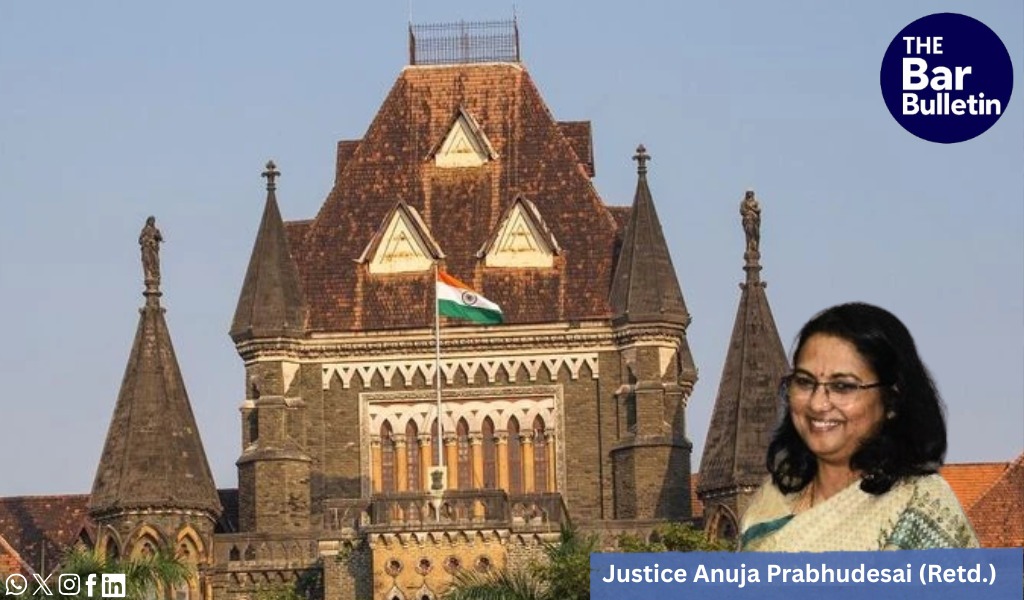

The Bombay High Court has dismissed a petition filed by ISON Builders LLP seeking interim protection against termination of a redevelopment agreement, holding that the developer had failed to demonstrate any prima facie case after causing inordinate delay of over eleven years in the redevelopment of municipal tenanted property. The Court held that the rights of municipal tenants to timely and safe redevelopment must prevail over a developer’s commercial interests.
The dispute arose from a Development Agreement dated December 22, 2014, under which the petitioner was appointed to redevelop a municipal property at Lower Parel, Mumbai, comprising 28 tenanted structures owned by the Municipal Corporation of Greater Mumbai (MCGM). Despite several years, the redevelopment failed to progress beyond the preliminary stages, including tenancy verification and the issuance of Annexure-II, largely due to the petitioner’s failure to demonstrate financial capacity and to pursue approvals diligently. MCGM issued repeated notices, and the proposal was even closed and later revived due to the petitioner’s non-compliance.
In September 2025, the respondent society resolved to terminate the petitioner’s appointment and appointed another developer. The petitioner challenged the termination and sought a stay under Section 9 of the Arbitration and Conciliation Act, 1996, contending that delays were attributable to MCGM and that the agreement was capable of specific performance.
While declining interim relief, Justice Sandeep V. Marne examined the record and held that the petitioner was primarily responsible for prolonged inaction, including a two-year delay in consent verification and failure to submit financial documents despite repeated opportunities. The Court noted that redevelopment had remained stalled at a nascent stage for more than a decade and that the society had justifiably lost faith in the developer. Relying on earlier Division Bench decisions, the Court held that courts should avoid stalling redevelopment projects, particularly where residents of dilapidated buildings continue to suffer.
The Court further observed that the petitioner’s conduct indicated an intent to profiteer by transferring the project to another developer, rather than executing the redevelopment. Holding that damages would be an adequate remedy if termination were ultimately found wrongful, the Court refused to grant any injunction restraining the society from proceeding with redevelopment through a new developer.
At the same time, since both parties expressed willingness to arbitrate, the Court allowed the application under Section 11 and appointed Justice Anuja Prabhudesai (Retd.), former Judge of the Bombay High Court, as the sole arbitrator to adjudicate the disputes. The findings were clarified to be prima facie and not binding on the arbitral proceedings.
Appearances:
For the Petitioner – Advocates Karl Tamboly, with Rohan Savant, Chirag Sarawagi, and Yash Sinha.
For Respondent: Senior Advocate Prateek Seksaria, with Advocate Pooja Yadav.
