


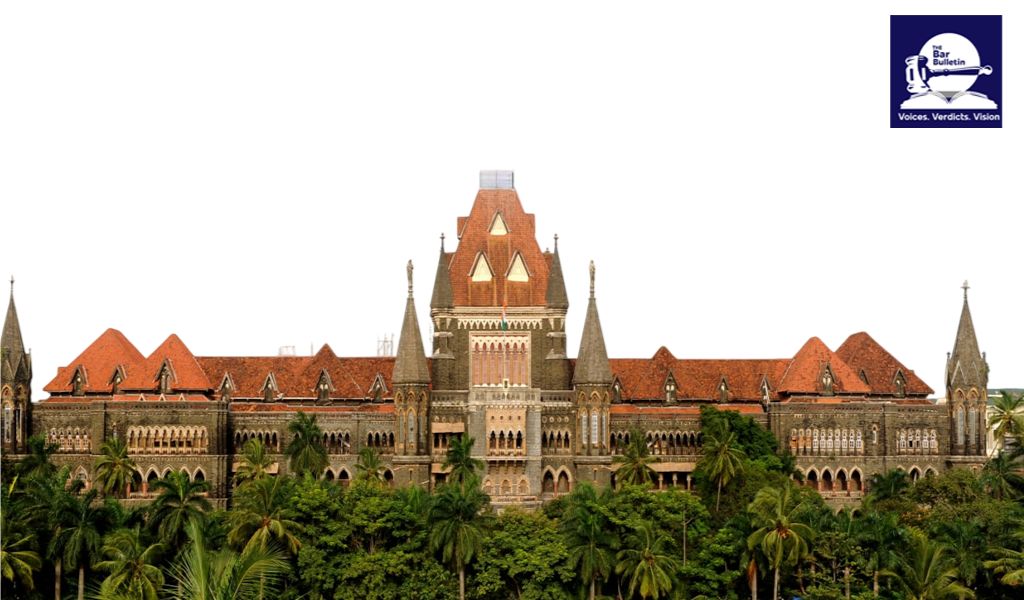

The Bombay High Court strongly asserted that the requirement to obtain prior approval under Section 153D of the Income Tax Act for the draft assessment order is an inbuilt protection against the arbitrary or unjust exercise of power by the Assessing Officer (AO), and therefore, this protection cannot be reduced to some mechanical exercise uninformed by any serious application of mind.
Noticing that the AO regarded the requirement of obtaining prior approval under Section 153D as merely a formality, and the Additional Commissioner who granted the approvals, likewise, was entirely in agreement with such an approach, the Court held that in the absence of valid approvals, the action under Section 153A would be legally vulnerable.
In this case, the en masse approvals were hastily granted within minutes or at best a couple of hours, casually, mechanically and without any application of mind, highlighted the Court while stating that the ITAT has referred to some of the instances of gross discrepancies in some of the cases, only to flag the quality of the approvals and the utmost casualness with which the entire exercise was processed.
The Division Bench comprising Justice M.S. Sonak and Justice Advait M. Sethna observed that the entire approval process and the requirement for approval under section 153D were reduced to mere ritual, meaningless formality, or even a mockery in these matters. Most surprisingly, the draft orders that were supposed to accompany the approval proposals already included the date and number of the approval orders that had yet to be issued.
The Bench pointed out that the glaring inconsistency shows that the approval was a foregone conclusion even before the proposal and draft orders were received by the Additional Commissioner, or that the authorities considered the mandatory approval a trivial formality subject to casual compliance.
Apart from the fact that even the draft assessment orders contained glaring discrepancies, the Bench said that it is too much to accept that the Additional Commissioner, in a matter of minutes or, at most, a few hours, could have read, let alone applied his mind to, and issued the approvals under Section 153D. These inferences drawn by the ITAT about the mechanical exercise of powers without any application of mind, based on a fact, warrant no interference even upon expansion of the scope of review under Section 260A of the Income Tax Act.
Thus, the Bench found that the approvals granted by the Additional Commissioner were indeed vitiated by total non-application of mind, and the ITAT has not exceeded its jurisdiction or acted with any perversity in quashing such approvals or holding that action under Section 153A of the Income Tax Act was incompetent, being based upon such vulnerable approvals.
Briefly, the Income Tax Department (appellant) had challenged the single order passed by the ITAT cumulatively in all the 34 cases, by recording a finding that the “prior approval” contemplated under Section 153D of the Income Tax Act was vitiated by total non-application of mind and on such basis, quashed such approval. The ITAT, in its reasoning, has held that the proceedings under Section 153A, based upon an approval under Section 153D which was vitiated by total nonapplication of mind, were not competent and accordingly quashed the final orders in such proceedings, solely on such ground.
Appearances:
Advocate Suresh Kumar, for the Appellant/ Revenue
NA, for the Respondent/ Taxpayer
