


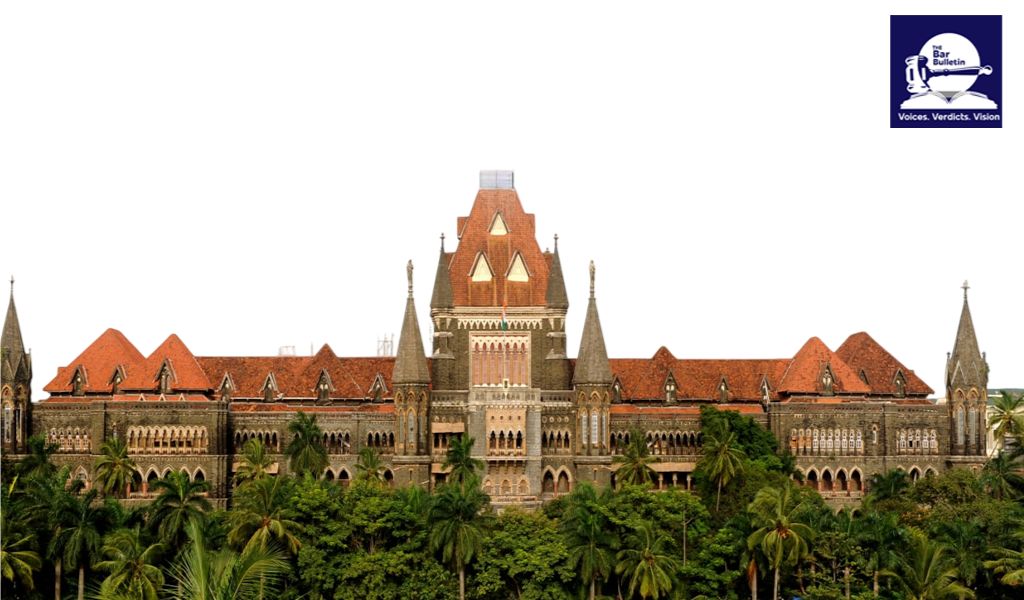

Finding that the Tata Group has not taken over the possession and occupancy rights in the writ land, pursuant to dilution of the shareholding in the VSNL, the Bombay High Court reprimanded the State for raising a misconceived and hopelessly time-barred claim, after having remained inactive for more than twenty-five years. The Court also emphasised that the Government is “no ordinary party” but must function as a model litigant, meeting just or honest claims and not defeating lawful entitlements through technical pleas or obstinate resistance
The Court pointed out that the Collector and the Revenue Minister are expected to know the law, and the State, unlike a private litigant, must discourage litigation, resolve disputes at the threshold, thereby pre-empt disputes wherever possible, and act in a manner consistent with its constitutional obligation to uphold the law. Declaring wasteful litigative expenditure by the State government as a public wrong, the Court imposed a cost of Rs. 25 lacs on the State to be paid to the petitioners within four weeks.
A Single Judge Bench of Justice Kamal Khata observed that a company is a legal entity distinct from its shareholders, and that shareholders, irrespective of the extent of their shareholding, possess no right, title or interest in the assets of the company. Thus, on the allegation that the property was transferred without prior permission of the Government/Collector, the Bench observed that the dilution shareholding pursuant to the Government’s disinvestment policy (where the Government, as a 100% shareholder, reduced its stake) does not amount to a transfer of the company’s assets to TCL.
The Bench clarified that VSNL diluted its 100% shareholding initially in favour of its employees and financial institutions, and subsequently by divesting a substantial portion of its shareholding to TCL. However, the Central Government continues to retain a 25% substantial stake in TCL.
Thus, the Bench emphasised that the writ land is not the sole asset of VSNL, and the mere dilution of shareholding in VSNL cannot, therefore, be characterised as a transfer of the writ land to TCL, nor can it be construed as an indirect attempt to achieve what could not be achieved directly.
As far as the issuance of the SCN that the construction was not completed within two years of taking possession, the Bench highlighted that the possession was handed over in March 1985; the allotment letter was issued in March 1992; construction commenced in 1992, was completed in 1998, and an Occupation Certificate was granted by BMC. Since no explanation was offered for initiating action only in 2012, fourteen years after the building was completed, the Bench held the SCN as unsustainable.
Briefly, this petition concerns the allotment of land situated at Andheri by the Government of Maharashtra to Videsh Sanchar Nigam Limited (VSNL) for the construction of staff quarters in 1991. Although the construction of staff quarters started in 1992, the construction of two buildings was completed, and the Brihanmumbai Municipal Corporation (BMC) issued an Occupation Certificate (OC) in July 1998. Later, due to the liberalisation and disinvestment policy, the Government of India sold 25% out of the 52% of its shareholding in VSNL to a Tata Group Company, and ultimately, in January 2008, the name of VSNL was changed to Tata Communications Limited (petitioner).
Three years later, based on a Circular dated May 22, 1990, the Collector issued a Show Cause Notice (SCN) to VSNL claiming that (i) the construction was not completed after two years of allotment, (ii) the writ land was transferred without prior permission from the Collector in breach of condition, and (iii) the land was used for the purpose other than the sanctioned purpose. Though the petitioner replied to the SCN, the Collector, without considering the same, passed an Order directing the TCL to pay Rs. 26.06 crores as unearned income on the basis that the construction was completed in 1998 instead of 1987, no extension was sought for the same and the writ land was ‘transferred’ by VSNL to TCL without permission.
Aggrieved, the petitioner approached the Revenue Minister, who held that, ownership of the Central Government was 26.12%, TCL was 48.87% and the balance was with a financial institution; therefore, though the writ property was not directly transferred, because the interest in the writ land was created in favour of TCL without permission of the State Government, it amounted to transfer of land.
Case Distinguished:
State of Rajasthan vs. Gotan lime stone Bhaniji Udyog Pvt Ltd. [(2016) 4 SCC 469]
Appearances:
Advocates Virendra Tulzapurkar, Raj Panchmatia, Pranav Sampat, and C. Nageshwaran, for the Petitioner/ Taxpayer
AGP Vishal Khanavkar, for the Respondent/ Revenue
