


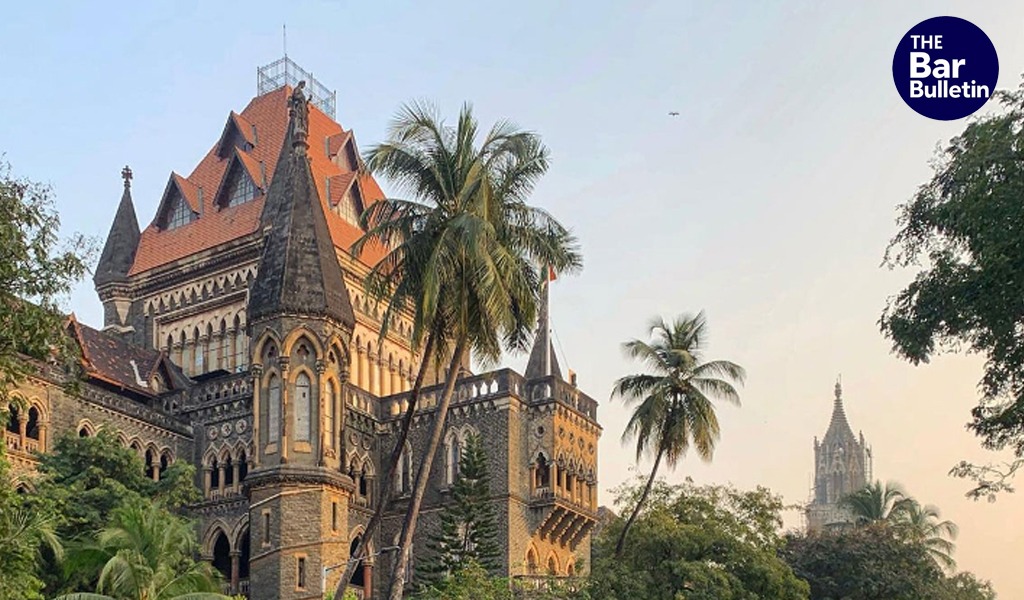

The Bombay High Court has clarified that a comprehensive industrial settlement providing for voluntary retirement, which has been accepted and acted upon by workmen through the receipt of monetary benefits without contemporaneous protest, is binding upon them. Such a settlement cannot be invalidated on a belated plea of fraud or coercion unless the allegations are substantiated with specific particulars and cogent evidence.
A court will not interfere with such a settlement, viewed as a composite package deal to ensure industrial peace, unless it is demonstrated to be fundamentally unfair, illegal, or in violation of mandatory statutory minimum entitlements, added the High Court.
A Single Judge Bench of Justice Amit Borkar observed that the notice issued by the company did not terminate the employer-employee relationship; it merely suspended work with an assurance that employment would be protected. Therefore, the petitioners legally remained employees and were entitled to wages and statutory benefits until their service was terminated in a manner known to law, which in this case was the settlement of 2005.
Secondly, regarding the allegation of fraud, the Bench observed that such a serious charge must be pleaded with specific particulars and established with convincing proof, which was absent in this case. The petitioners’ claims of being confined and forced to sign were general assertions unsupported by independent witnesses, contemporaneous police complaints, or any written protest at the time of signing or receiving payments.
The act of accepting payments and issuing receipts without any endorsement of protest significantly weakened the plea of fraud, pointed out the Court.
Thirdly, the Bench addressed the adequacy of payments. While acknowledging that a settlement cannot override mandatory statutory provisions like the Payment of Gratuity Act, it observed that the petitioners failed to demonstrate that the payments made were below the statutory minimum. The dispute was found to be about the method of calculation based on the settlement’s formula, rather than a clear violation of a statutory provision.
Finally, the Court concluded that an industrial settlement must be viewed as a composite package deal negotiated to achieve industrial peace, especially amidst financial uncertainty. Such settlements, having been acted upon by a large number of workers, should not be dissected or disturbed on slender grounds, unless there is clear evidence of illegality, fraud, or a violation of mandatory rights.
Briefly, the petitioners, former workmen of Wellman Hindustan Limited (Respondent No. 1), filed a complaint alleging unfair labour practices under the Maharashtra Recognition of Trade Unions and Prevention of Unfair Labour Practices Act, 1971. The core of their claim was the non-payment of wages from June 1999 to November 1999 and other statutory dues. In the meantime, the respondent company had been engaged in processing wool but discontinued its operations due to financial distress, which led to it approaching the Board for Industrial and Financial Reconstruction (BIFR).
In 1999, the company displayed a notice directing workmen not to report for duty until further instructions, while assuring them that their services would remain protected. Subsequently, in 2005, the company entered into a settlement with a union (Respondent No. 4), under which 442 workmen agreed to voluntary retirement in exchange for a full and final settlement of all their claims, including gratuity and wages.
The petitioners contended that they were not members of this union and that their signatures on the settlement documents were obtained through coercion and fraud, as they were illiterate and unaware of the contents. Following the settlement, the workmen, including the petitioners, received payments in stages between 2006 and 2008 and issued receipts for the same. Later, in 2008, after receiving the payments, the petitioners formally disputed the computation of their dues, leading to the filing of Complaint, which was dismissed by the Industrial Court.
Appearances:
Advocates K.P. Anil Kumar, Jayshree Kumar, Amit Sadle, Priyanka Kumar, G.R. Naik, Uresh U. Sawant, and Rutika Naik, for the Petitioners
Advocates Prashant C. Pavaskar, Gaurav Shrivastav, Nikita Vardhan and Srushtee Panhale, for the Respondent
