


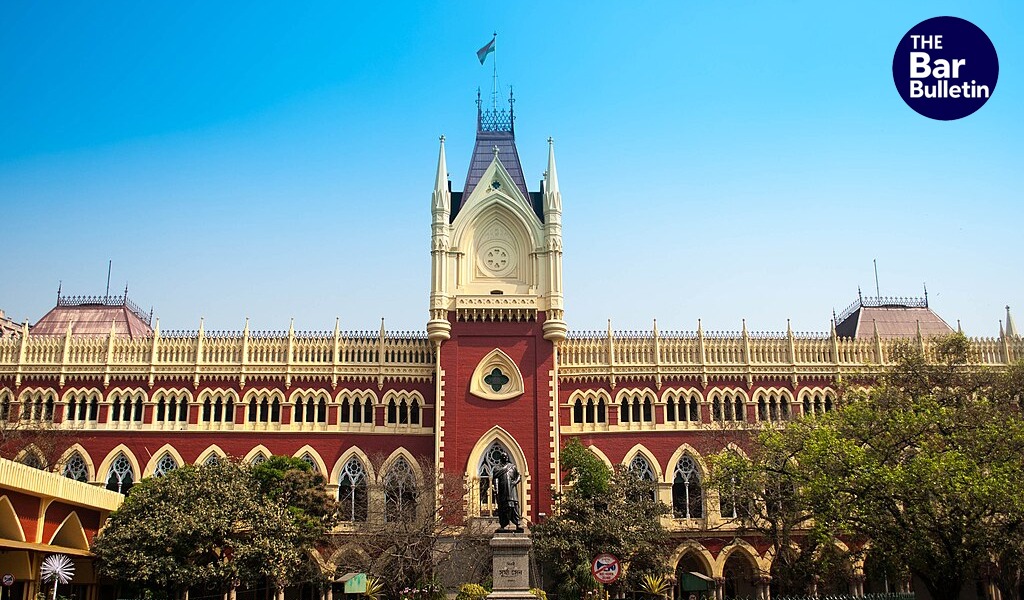

In an appeal filed before the Calcutta High Court against a judgment and order dated 14-03-2018 by the Additional District and Sessions Judge, whereby the appellant was convicted under Section 376 of the Indian Penal Code, 1860 (IPC) and Section 6 of the Protection of Children from Sexual Offences Act, 2012 (POCSO), a Division Bench of Justice Rajasekhar Mantha and Justice Ajay Kumar Gupta refused to interfere with the appellant’s conviction and directed SLSA to pay an additional sum of Rs. 2,00,000/- to the victim.
The appellant was sentenced to life imprisonment and directed to pay a fine of Rs. 2,00,000/-, of which 90% was to be paid to the victim as compensation. In the event of default, the appellant was directed to undergo rigorous imprisonment for a year, and the detention period already suffered by him was directed to set off as per Section 428 of the Code of Criminal Procedure, 1973 (CrPC).
The appellant had been having a love affair with the victim, aged 15 years, for more than three years, and they entered into sexual intercourse on several occasions. Even though the victim initially objected, she gave her assent once the appellant assured her of marriage.
The victim’s family confronted the appellant’s family and informed them that the victim had become pregnant. However, they denied the appellant’s involvement. The victim’s complaint resulted in a First Information Report (FIR) against the appellant under Section 6 of the Protection of Children from Sexual Offences Act, 2012 (POCSO) and Section 376 of the Indian Penal Code, 1860 (IPC).
In her complaint, the victim mentioned that the appellant had sexual intercourse with her for the first time when their relationship commenced and thereafter had engaged in intercourse with her several times. When the victim got to know about her pregnancy, she informed the appellant, who ignored the same. Upon falling sick, the victim informed her parents, and her pregnancy was confirmed after a medical test.
The Court noted that the debate regarding the age of the victim could not be sustained since the cross-examination of the witnesses had clearly brought on record that the victim was a minor on the date of the complaint.
It was stated that the DNA report had not given a clean chit to the appellant and that the expression ‘cannot be excluded’ indicated that the appellant could be the father of the victim’s child. The Court stated that the evidence of the victim in a rape case wields a higher level of sanctity and that no further corroborative evidence is necessary to hold the perpetrator guilty.
The Court held that the appellant had not been able to prove that he did not have any access to the victim, which, as per Section 29 of the POCSO Act, is a mandate. It was said that the object of Section 29 is to bring the perpetrators of sexual offences to justice, since a child would ordinarily not be able to shout out and resist the assailant.
The Court noted that even though the love affair began in 2014, the real intention of the appellant was revealed in 2016 when the appellant entered into sexual intercourse with the victim by silencing her protest with a promise to marry her. Thus, the Court stated that the delay in lodging the complaint was based on love and hope and that it was inconsequential as to when the complaint was filed.
Further, the Court held that even if there are some loopholes in the investigation, the same cannot stand in the way of the conviction since the main crux of the offence had been established against the appellant, particularly in view of Section 6 of POCSO and Section 376 of IPC. Thus, the Court was of the clear view that the conviction of the appellant did not call for any interference.
The Court opined that the appellant may not pay the fine imposed upon him and thus, directed the State Legal Services Authority (SLSA) to pay 90% of the fine within 15 days. It was also directed that, in the event the appellant pays the fine of Rs. 2,00,000/-, 90% of the same would be paid to SLSA. Additionally, the Court directed SLSA to pay Rs. 2,00,000/- to the victim from its own funds.
Appearances:
For Appellant – Mr. Sabir Ahmed, Mr. Ayan Chakraborty, Ms. Sohini Mukherjee, Mr. Saikat Mallick
For Respondents – Ms. Rituparna Ghosh, Ms. Afreen Begum, Mr. Shounak Mondal
