


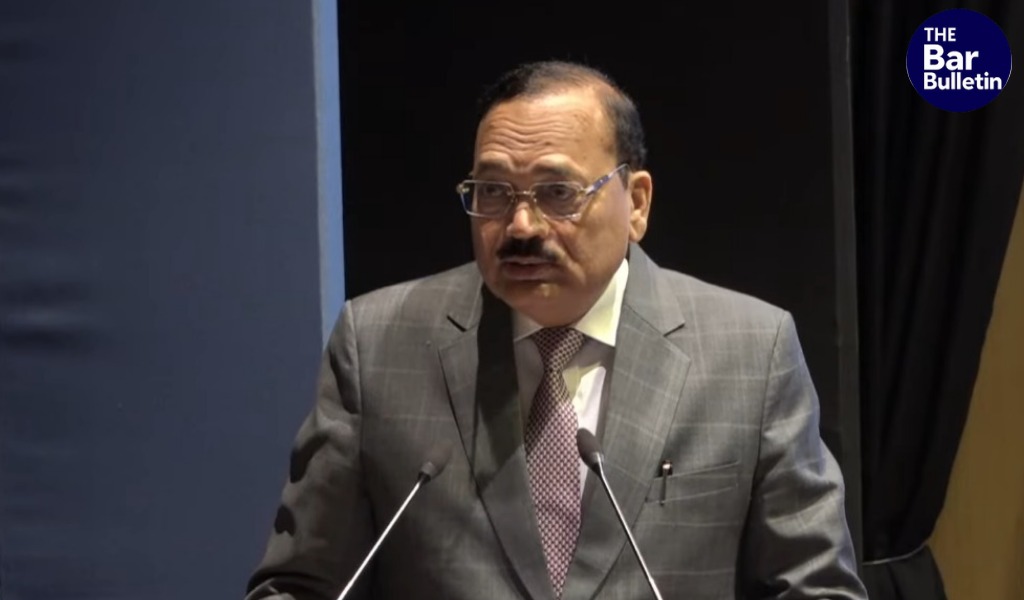

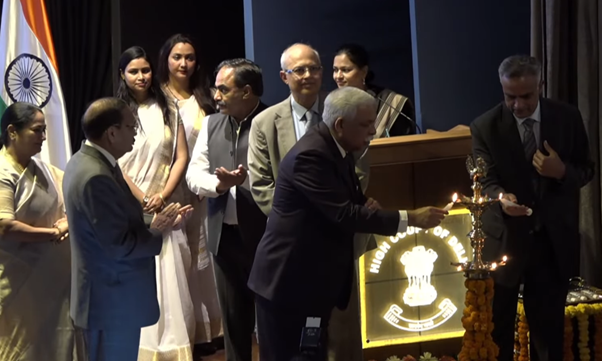
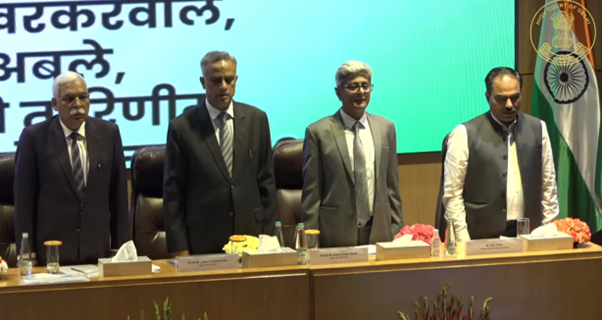
The foundation stone for a new Family Court Complex at Rohini Court Complex, Delhi, was laid on March 16, 2026, by Chief Justice of India, Justice Surya Kant, in the presence Justice Manmohan, Judge, Supreme Court, Delhi High Court Chief Justice Devendra Kumar Upadhyay, Delhi Chief Minister Rekha Gupta, Justice V. Kameswar Rao and Justice Sanjeev Narula, Judges of Delhi High Court, Rajiv Tehlan, President of the Rohini Court Bar Association, Additional Solicitor General Chetan Sharma and other dignitaries, marking a significant step towards strengthening judicial infrastructure for family dispute resolution.
The upcoming complex is expected to include 18 courtrooms along with mediation rooms, counselling facilities, child-friendly spaces, and support services, aiming to create a more accessible and humane environment for resolving family disputes. The project is slated for completion by June 2027.
Justice V. Kameswar Rao, in his welcome address, underscored that family disputes demand not just adjudication but a “sensitive and dignified environment.” He highlighted that judicial infrastructure is not merely about physical buildings but about creating spaces that ensure dignity, efficiency, and accessibility for litigants, lawyers, and court staff. Emphasising the human dimension of family litigation, he noted that such disputes “are not mere cases… they involve human relationships, and therefore require adequate courtrooms, mediation facilities, and legal aid support to ensure timely and humane resolution.”
He described the Rohini Family Court Complex as a significant step towards strengthening justice delivery by integrating adjudication with alternative dispute resolution mechanisms and modern infrastructure.
Rajiv Tehlan, President of the Rohini Court Bar Association, placed several long-pending demands before the dignitaries, particularly relating to space, welfare, and jurisdictional issues affecting advocates.
• Allocation of at least one dedicated floor in the new complex for lawyers’ chambers, given the severe shortage of space.
• Request for allotment of a nearby DDA land parcel for the construction of additional lawyers’ chambers and parking space.
• Highlighted that Rohini Bar has over 14,000 members but only around 450 chambers, creating acute infrastructure constraints.
• Concern regarding future parking shortages due to the increasing number of advocates and litigants.
• Urged the resolution of pending demands relating to health and life insurance for advocates.
• Sought action on the long-pending issue of removal of pecuniary limits (unlimited jurisdiction) for district courts, noting that other neighbouring states already provide such jurisdiction.
• Requested an expedited decision on the committee examining pecuniary jurisdiction reforms.
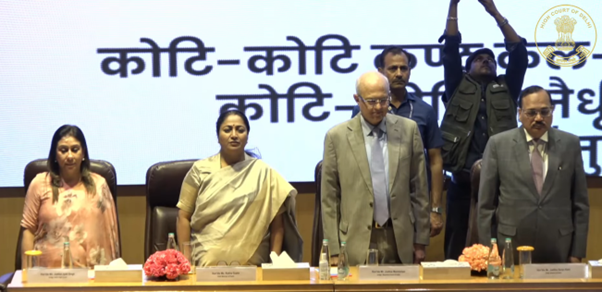
Additional Solicitor General Chetan Sharma emphasised that the Rohini Family Court Complex represents a shift in how family justice is conceived, not merely as adjudication but as a humane process. He highlighted that family courts must go beyond conventional courtroom structures and function as spaces for reconciliation and dignity, noting that disputes in such courts involve
“grief, misunderstanding… and the future of children.” Stressing the importance of infrastructure, he observed that “this evening is not merely about laying a foundation stone… it’s about laying the foundation of a judicial space where dialogue is not defeated by discord.”
Delhi Chief Minister Rekha Gupta focused on the need to strengthen judicial infrastructure to ensure timely and accessible justice. She stated that improved infrastructure would directly impact efficiency and delivery of justice, adding that “justice is the same that can be found with ease, can be found on time… it is very important for every person to get justice in the same way.” She also outlined ongoing and proposed projects, including new court complexes and additional courtrooms, and assured continued government support for expanding judicial capacity in Delhi.
Delhi High Court Chief Justice Devendra Kumar Upadhyay focused on the pressing need for infrastructure expansion, noting that family courts in Delhi are currently handling over 54,000 cases across 31 courts. He emphasised that family disputes require “specialised handling in a sensitive and compassionate environment.”
Delhi High Court Chief Justice Devendra Kumar Upadhyay emphasised the centrality of robust infrastructure in delivering effective justice, noting that modern courts must reflect dignity and functionality. He focused on the pressing need for infrastructure expansion, noting that family courts in Delhi are currently handling over 54,000 cases across 31 courts. He highlighted that the new Rohini Family Court Complex would address long-standing demands while helping manage increasing case loads, particularly in sensitive family disputes requiring specialised and compassionate handling.
Stressing accountability in execution, he also called for timely completion of such projects to avoid cost overruns and delays. Underscoring the evolving standards of judicial spaces, he observed, “A temple of justice, as the courts are often called, must look so, and gone are the days when courts used to be dilapidated and uninviting spaces.”
Justice Manmohan of the Supreme Court highlighted systemic constraints faced by the district judiciary, identifying “budget, staff, and space” as persistent challenges. He recalled instances where judges were available but could not be assigned due to lack of courtroom space, illustrating the urgent need for infrastructure development. Justice Manmohan highlighted mediation as a highly effective tool in resolving family disputes, noting that it not only settles individual cases but also prevents multiple related litigations. He emphasised the success of Delhi’s mediation framework, particularly its bar-driven model and structured training of mediators.
Addressing the gathering, Chief Justice of India Justice Surya Kant underscored the unique nature of family courts, observing that such disputes “are not between strangers” but arise within relationships carrying deep emotional, social and financial consequences. He stressed that family courts are “not merely legal fora” but spaces where law must remain sensitive to “care, responsibility and relationships.” Highlighting systemic challenges, he noted that delays in family matters undermine the very objective of the Family Courts Act, 1984, and called for establishing more such courts “on a war footing.”
Justice Surya Kant also pointed to structural issues, including long distances litigants must travel in several states and the burden on limited judicial officers. He suggested innovative solutions such as circuit benches and urged states to allocate greater financial resources and infrastructure for family courts.
“I think this is high time that the judiciary should take up this cause and it should be segregated from the rest of the infrastructure requirements. The other courts can wait probably, but not the family courts.”
Vote of thanks
Justice Sanjeev Narula, delivering the vote of thanks, reflected on the deeper significance of the Rohini Family Court Complex, describing it as more than a physical structure and instead “a public space where the law becomes visible in the daily lives of the citizens.” He emphasised that family courts deal with disputes marked by emotional strain, uncertainty, and the future of children, and therefore require environments that ensure dignity, privacy, and calm resolution.
He highlighted broader systemic concerns, stressing that judicial infrastructure must go beyond buildings to include the working conditions of judges. Concluding, he described the event as reflective of a judiciary committed to strengthening itself “with seriousness, honesty and foresight.”