


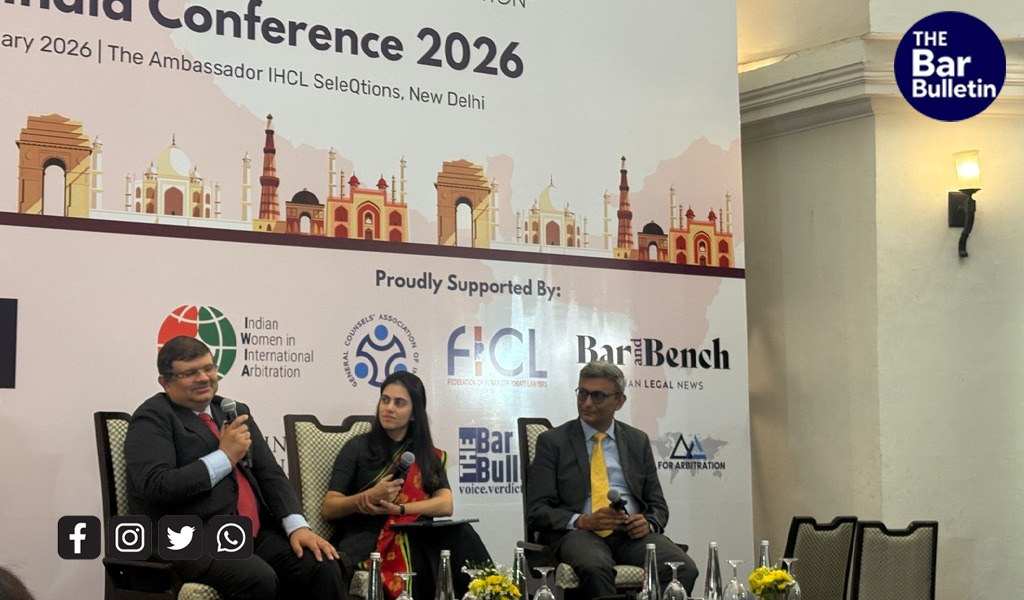

At the ICDR India Conference 2026, a well-attended fireside chat on “What Arbitrators & Courts Want Counsel to Know in Complex Cases” featured Hon’ble Mr Justice Tejas Karia of the Delhi High Court and Vyapak Desai of Vyapak Desai Law Chambers, in conversation with moderator Naira Jejeebhoy. The discussion offered practical guidance for navigating complex commercial arbitrations and litigation.
Justice Karia highlighted that persuasive advocacy in complex matters demands discipline and clarity. “Comprehensiveness is not the same as effectiveness,” he observed, cautioning against equating length with strength. Emphasising the importance of precision, he noted, “It takes time to write a short submission,” encouraging counsel to invest the effort required to distil arguments to their essence.
Drawing from his experience on the Bench and in arbitration, Justice Karia reminded practitioners that their role extends beyond adversarial presentation. “The job of counsel is also to assist the tribunal,” he said, adding that well-structured pleadings, clear indexing, and focused cross-examination enable adjudicators to concentrate on analysis rather than document management. He advised counsel to “start with the end in mind”, to be clear about the exact relief sought and to shape submissions accordingly.
Vyapak Desai brought a practitioner’s perspective to the discussion, emphasising that success in complex disputes often turns on correctly identifying the core issue. “If you identify the real issue, many peripheral arguments fall away,” he remarked, cautioning against being “enamoured by volume” in pleadings or evidence. According to Desai, the discipline lies in diagnosis: isolating the decisive point and building the case around it.
On expert and technical evidence, Desai stressed that counsel must go beyond reproducing reports. “You have to intellectualise the expert evidence,” he said, explaining that lawyers must fully understand the technical theory of their case in order to present it coherently and test it effectively in cross-examination. Joint expert statements, he suggested, can narrow disagreements and sharpen the tribunal’s focus.
Addressing the growing use of demonstratives such as animations and visual models, Justice Karia acknowledged their value but advised restraint. Such tools, he noted, should clarify rather than overwhelm, and must be shared transparently with the opposing side and tribunal in advance. Desai echoed this sentiment, observing that demonstratives are effective only when they support a clearly framed issue rather than distract from it.
Throughout the session, both speakers returned to a shared theme: in complex commercial disputes, clarity, structure, and strategic restraint are often more persuasive than exhaustive detail. The fireside chat offered attendees practical insights into what courts and arbitral tribunals truly expect from counsel, thoughtful preparation, disciplined advocacy, and a commitment to assisting the decision-maker.