


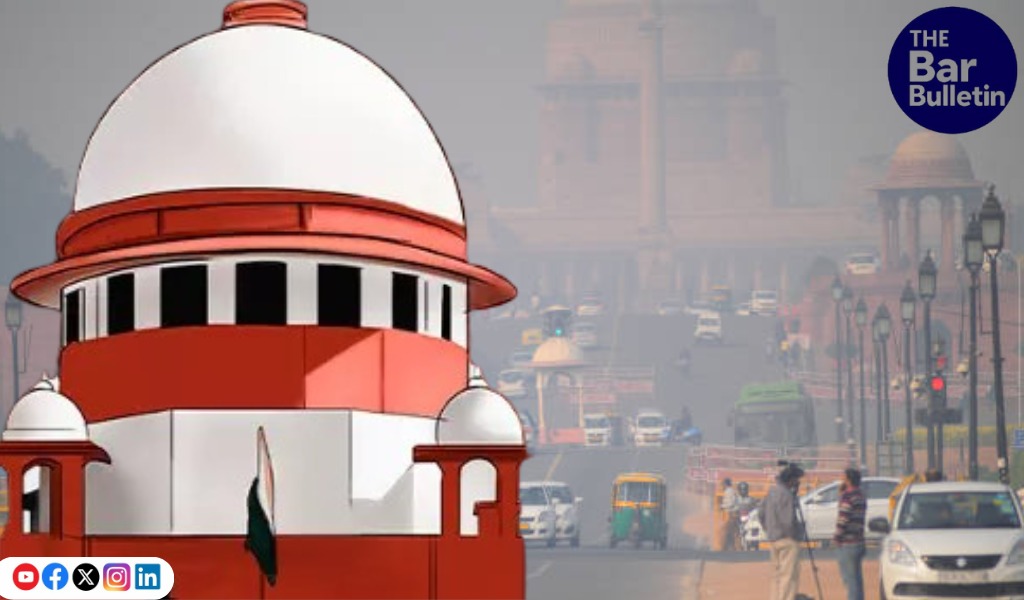

The Supreme Court on Tuesday reiterated that judicial directions in the Delhi air pollution matter must be realistic, enforceable, and capable of actual compliance, with Chief Justice of India Justice Surya Kant emphasising that courts would refrain from issuing orders that cannot be effectively implemented on the ground.
Observing that lifestyle-related directions are often difficult to enforce, the CJI remarked that in urban metropolitan cities, “people have their own way of lifestyle, they do not change,” adding that the burden of pollution disproportionately affects the poor, while the problem largely arises from the practices of the affluent class. Stressing judicial restraint, he stated, “We will only pass orders which are effective. There are certain directions which cannot be enforced.”
During the hearing, Amicus Curiae Aparajita Sinha pointed out persistent non-compliance by States despite existing court directions, noting that although protocols exist, implementation often falters until the Court intervenes. She also flagged concerns relating to children’s health, informing the Bench that despite judicial orders, several schools have continued sporting and outdoor activities by finding ways around restrictions, while the Commission for Air Quality Management (CAQM) continues to rely on Supreme Court directions.
Responding to submissions, the CJI acknowledged the gravity of the issue and reiterated the need for pragmatic judicial intervention, observing that while some directions can be forcibly imposed, others particularly those seeking behavioural change pose serious enforcement challenges. He agreed that poor labourers remain the worst affected by air pollution, underscoring the socio-economic dimension of the crisis.
The Chief Justice further informed that the matter is slated to come up before a three-judge Bench on Wednesday. He also cautioned counsel and stakeholders against engaging with the media, directing that all suggestions and inputs be routed through the amicus curiae, rather than being shared with the press.