


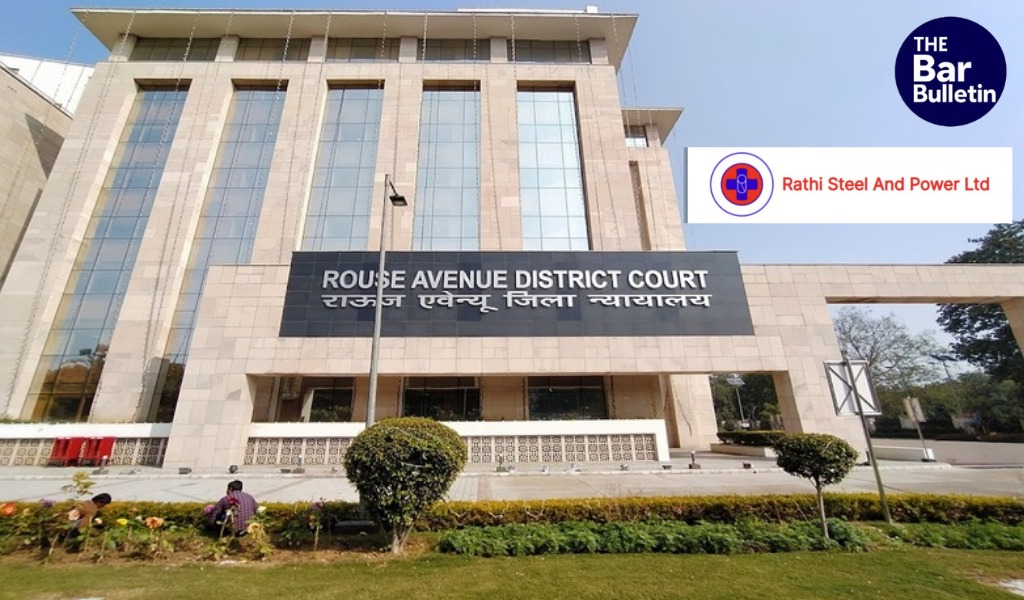

The Rouse Avenue District Court, New Delhi, has clarified that existence of ‘proceeds of crime’ is a foundational and indispensable ingredient for the offence of money laundering under Section 3 of the Prevention of Money Laundering Act (PMLA). In its absence, no offence under the Act is made out. The Court therefore held that a coal block allocation letter, when it does not result in any direct or indirect financial or economic gain (such as through a mining lease, coal extraction, or enhancement of share value traceable to the allocation), remains merely a ‘valuable right’ and does not constitute ‘property’ or ‘proceeds of crime’ under the PMLA.
The District Court explained that in the context of coal block allocation, a company may derive profits or financial gains in multiple direct and indirect ways. The most obvious mode is through commercial exploitation by extracting and selling coal or using it for captive consumption, thereby generating revenue or reducing input costs, which results in measurable financial gain. Even prior to extraction, economic benefit may accrue through enhancement of the company’s net worth, increase in share valuation and improved creditworthiness, enabling it to secure loan or attract investors on more favourable terms.
Further, the Court pointed out that the allocation may also confer a strategic market advantage strengthening the company’s competitive position and future earning capacity. Thus, profit derivation may be immediate or prospective, direct or indirect, tangible or financial in nature an issue that becomes legally significant when determining whether such benefit amounts to ‘property’ or ‘proceeds of crime’.
For any property or financial gain to be classified as ‘proceeds of crime’, the prosecution must demonstrate a clear nexus, showing that it was derived or obtained, directly or indirectly, ‘as a result of’ the criminal activity related to a scheduled offence. A transaction cannot be treated as proceeds of crime based on mere assumptions or conjectures, or simply because it occurred after the commission of the scheduled offence, added the Court.
Further, where the material on record fails to establish the existence of ‘proceeds of crime’, the court cannot take cognizance of an offence under the PMLA. Ultimately, the court declined to take cognizance of the offence, concluding that the prosecution had failed to demonstrate the existence of any proceeds of crime. Accordingly, in view of Section 8(6) of PMLA, the money/property (in the form of immovable properties valued at Rs.30.72 Lakh) attached by the complainant/Directorate of Enforcement in this case from A-1 RSPL was directed to be released forthwith to the said company.
The Special Judge, Dheeraj Mor, observed that a ‘valuable right’ is not synonymous with ‘property’. An allocation letter confers a right to be considered for a mining lease but does not create any proprietary interest, right, or title in the coal block itself. Such interest arises only upon the grant of a mining lease. In this case, the allocation never culminated in a mining lease, and no coal was extracted or commercially exploited. The Judge emphasised that in the absence of any demonstrable economic benefit or conversion of the allocation into an asset with monetary value, the allocation letter remained a statutory privilege rather than ‘property’ capable of being treated as ‘proceeds of crime’.
As far as Rs. 3.08 crores raised through preferential equity shares, the prosecution contended that this sum was an indirect result of the scheduled offence, as RSPL used the tainted coal block allocation to attract investors and sell shares at an inflated premium. The defence argued there was no connection, as the share issuance was decided before the allocation was disclosed, and the price was determined by SEBI guidelines based on market value, not the allocation.
The Special Judge however, found the prosecution’s case on this point to be based on ‘unfounded assumptions, illusions and conjecture’. It noted from RSPL’s Annual Report for FY 2007-08 that the decision to allot warrants (convertible to shares) to the non-promoters was made before the report disclosing the coal block allocation was published; therefore, the disclosure could not have induced the investment.
The Judge also found the share price of Rs. 22 to be compliant with SEBI’s pricing formula and market trends at the time. Further, the market price of RSPL’s shares actually declined after the coal block allocation, indicating the allocation had no positive impact on its valuation. The District Court therefore held that the prosecution failed to establish any nexus, direct or indirect, between the Rs. 3.08 crore transaction and the criminal activity. Hence, this amount could not be considered ‘proceeds of crime’.
Briefly, the case originated from a Central Bureau of Investigation (CBI) FIR lodged against M/s Rathi Steel & Power Ltd. (RSPL), its directors, and others for offences under Section 120B read with Section 420 of the IPC, and provisions of the Prevention of Corruption Act, 1988. The core allegation was that the accused conspired to dishonestly induce the 36th Screening Committee and the Ministry of Coal by submitting a highly inflated claim regarding the land in their possession to secure the allocation of the Kesala North Coal Block in Chhattisgarh. This misrepresentation led to the Ministry of Coal allocating the said coal block to RSPL in 2008.
Following a trial, RSPL and three of its key personnel, namely, Pradeep Rathi (Managing Director), Udit Rathi (Chief Executive Officer), and Kushal Kumar Agarwal (Assistant General Manager), were convicted for criminal conspiracy and cheating under Sections 120B/420 of the IPC. Based on this conviction for a scheduled offence, the Directorate of Enforcement (ED) initiated an investigation under the Prevention of Money-Laundering Act, 2002 (PMLA) by recording an ECIR. The ED’s prosecution complaint alleged the generation of two categories of ‘proceeds of crime’.
The allocation letter for the coal block itself, which was termed a ‘valuable security’ obtained from the criminal activity. A sum of Rs. 3.08 crores gained by RSPL during the financial year 2009-10 from the issuance of 14 lakh preferential equity shares to two non-promoter companies. The ED alleged that this capital was raised at a premium on the strength of the fraudulently acquired coal block allocation, which was projected in RSPL’s annual reports to attract investors. The Special Court had initially taken cognizance of the ED’s complaint, but this order was set aside by the Supreme Court for not providing the accused an opportunity to be heard, as required under Section 223 of the Bhartiya Nagrik Suraksha Samhita, 2023 (BNSS).
Appearances:
Advocates Rajesh Batra and N.K. Matta, for the ED
Advocate Vijay Aggarwal, for the Accused
