


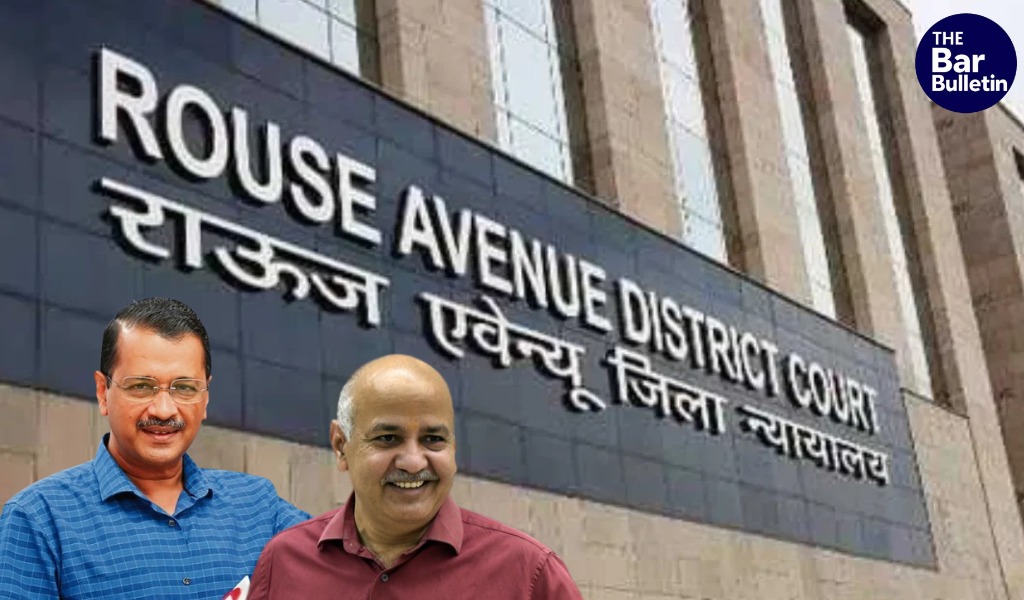

The Rouse Avenue Court, New Delhi, on 27 February 2026, discharged all 23 accused and closed the CBI prosecution in the Delhi Excise Policy 2021–22 case, holding that the material placed on record does not disclose a prima facie case or raise grave suspicion warranting trial.
The Court was dealing with one main charge-sheet and four supplementary charge-sheets filed by the Central Bureau of Investigation, which alleged that public servants, political executives and private liquor businessmen entered into a criminal conspiracy to manipulate the Excise Policy 2021–22 to extend undue benefits in exchange for illegal gratification allegedly amounting to ?90–100 crore, part of which was claimed to have been routed through hawala channels and used for political expenditure, including the Goa Assembly Elections 2022.
After an exhaustive examination of witness statements, approver testimonies, banking and corporate records, digital material, call-detail records, hotel records and internal government files, the Court held that the prosecution case was built on conjecture, post-facto inference and a pre-constructed narrative, rather than on material capable of sustaining criminal charges. It found that even if the prosecution material were accepted at face value, it failed to establish mens rea, quid pro quo, or a conscious agreement among the accused to commit an illegal act.
The Court categorically held that policy formulation, Cabinet decisions, GoM deliberations, file notings and administrative processing cannot be criminalised, and that the wisdom, success or failure of a policy, or profits earned by private entities under it, cannot form the basis of criminal prosecution in the absence of independent evidence of corruption or abuse of office. It cautioned against using criminal law as a tool to retrospectively scrutinise executive policy decisions, warning that such an approach would paralyse governance.
On the charge of criminal conspiracy under Section 120-B IPC, the Court held that the prosecution failed to establish consensus ad idem, observing that the case required the Court to impermissibly “join the dots” by speculation rather than evidence. Once the conspiracy allegation failed, the Court held, all consequential offences under the IPC and the Prevention of Corruption Act necessarily collapsed.
The Court also rejected the prosecution’s attempt to sustain the case on alleged Goa election funding and hawala transactions, holding that the material did not disclose any legally sustainable link between the alleged cash movement and an offence of illegal gratification connected with the Excise Policy or any official act. It declined to treat the Goa allegations as a standalone offence.
Importantly, while discharging all accused, the Court recorded serious adverse observations on the manner in which the investigation was conducted and directed that the conduct of the concerned CBI official(s) be examined, holding that the failure of the prosecution could not be divorced from issues relating to investigative approach and overreach. The Court thus ordered scrutiny of the role of the investigating officer, even as it terminated proceedings against the accused.
The Court clarified that although sanction for prosecution under the Prevention of Corruption Act was pending in respect of certain accused, the discharge was on merits and not on technical or procedural grounds, and that the case could not be revived merely by curing sanction defects.
Holding that the prosecution material raised only mere suspicion and not grave suspicion, the Court discharged all 23 accused and brought the CBI case to an end at the threshold stage, while simultaneously calling for accountability in the investigation itself.
