


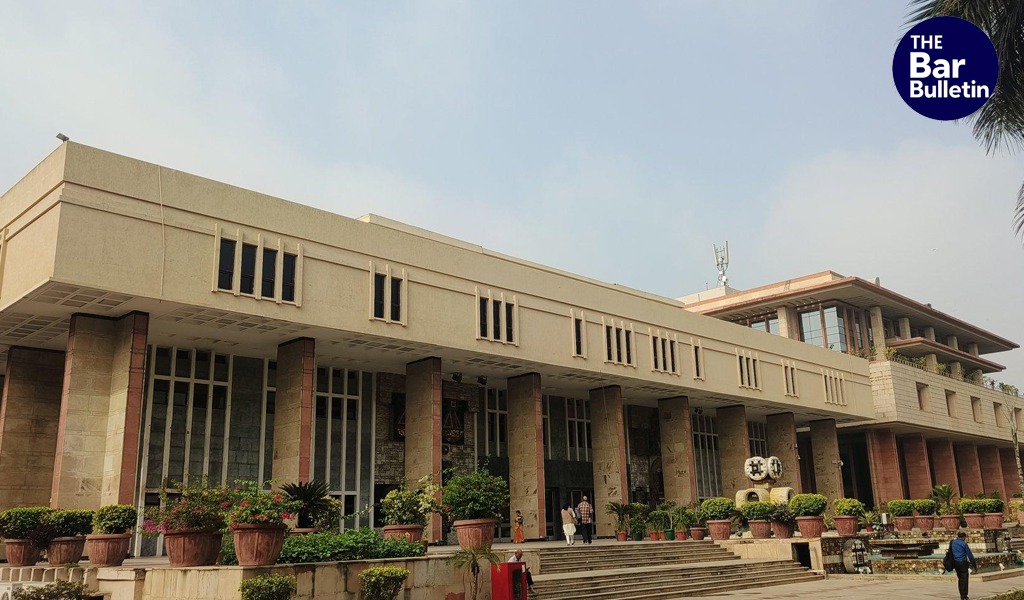

The Delhi High Court has ruled that when an advertising agency is rendering services to its client and not to the media houses, and no separate obligation or contract with media houses exists, then incentives given by media houses would not be susceptible to service tax under ‘business auxiliary services’ in terms of the provisions of Section 65A of the Finance Act, 1994.
The Court explained that an advertising agency primarily books slots on electronic media and books space in the print media on behalf of its clients, and the advertising plans are negotiated with the media houses, with the help of the advertising agency and are finally approved by the clients.
The Court also clarified that the advertising agency merely renders service as per the advertising plans, which are approved by its clients and does not render any additional service to the media house. Moreover, achieving targets or revenue benchmarks is part of the service that is already being rendered, and since there is no additional service to the media house, it cannot be held that the incentives that are given by the media houses would be liable to service tax as it constitutes a ‘business auxiliary service’.
The Division Bench comprising Justice Prathiba M Singh and Justice Shail Jain observed that even under Section 66E(e) of the Finance Act, 1994, the advertising agency is neither carrying out any specific act nor is refraining from any specific act, and primarily, the advertising agency is rendering service on behalf of its clients to book the slots and space with the media houses.
In the present case, the Bench found that the contract, though executed by the respondent with the media house, is for and on behalf of the client, and the respondent is rendering services to its client and not to the media house. Further, there is no additional service or component of service that was rendered by the respondent.
Moreover, in terms of the Circular 214/1/2023 – Service Tax dated February 28, 2023, the Bench noted that the respondent was merely performing its services on behalf of its own clients, and it has no separate obligation or contract with the media houses apart from what has been agreed by clients.
Accordingly, the Bench dismissed the Department’s appeal and upheld the concurrent findings of the Adjudicating Authority and the CESTAT.
Briefly, the respondent, an advertising agency engaged in rendering services and selling spaces and timeslots for advertising in both print and electronic media, was investigated by the DG, GST Intelligence, which unearthed certain agreements that the respondent had entered into with media houses. A case was made that the respondent was receiving a certain commission on the gross billed amount, and thereafter, certain amounts were being retained as remuneration/income.
According to the Department, the incentives received by the respondent translate to performing business promotion of media owners and constituted a ‘business auxiliary service’, and therefore, raised a demand. The Adjudicating Authority, however, held that the component of incentive received by the respondent would not be susceptible to service tax as no service is being rendered by the respondent to the media houses, in respect of the said incentives. The CESTAT upheld the order passed by the adjudicating authority.
Cases Relied On:
Mahanagar Telephone Nigam Ltd. v. Union of India [W.P.(C) 7542/2018]
Just Click Travels Pvt Ltd. vs. Union of India [W.P.(C) 8896/2023]
Kafila Hospitality & Travels Pvt Ltd. vs. Commissioner of S.T., Delhi [Appeal No. ST/59716/2013]
Appearances:
SSC, CBIC, Aditya Singla and Advocate Arya Suresh Nair, for the Appellant/ Revenue
NA, for the Respondent/ Taxpayer
