


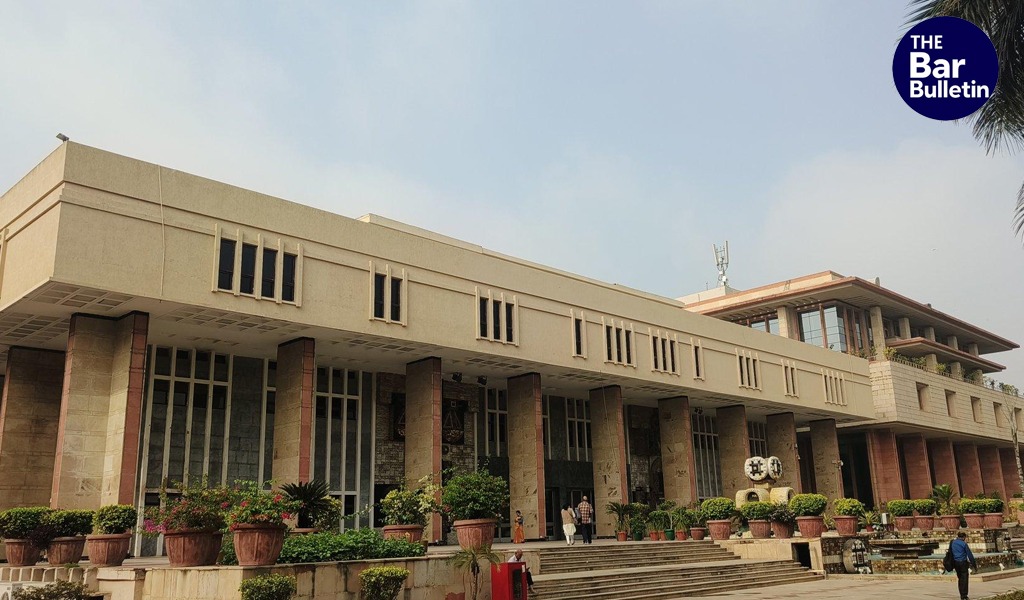

The Delhi High Court has extended the mandate of the Sole Arbitrator by one year in a commercial arbitration between NCC Limited and Indian Oil Corporation Limited (IOCL), holding that sufficient cause exists under Section 29A of the Arbitration and Conciliation Act, 1996. The Court rejected IOCL’s plea for substitution, noting that terminating the arbitrator at an advanced stage would result in unnecessary delays and wastage of time and resources.
Justice Jasmeet Singh passed the order on a petition filed by NCC seeking extension for concluding arbitral proceedings arising out of a major infrastructure contract for civil, structural, and underground piping works at IOCL’s Paradip Refinery Project. The disputes arose due to delays in project execution and pending payment claims, leading to arbitration initiated in 2017. The Sole Arbitrator was appointed in 2019 after IOCL’s objections were dismissed, but proceedings were stalled by a Supreme Court stay on IOCL’s challenge to the arbitrator’s appointment.
The Court clarified that where a rejoinder is permitted and filed, pleadings are deemed complete on the date the last pleading is taken on record, citing NCC’s filing of its rejoinder on June 17, 2024, as the date of completion. It also explicitly held that periods during which arbitration proceedings are stayed such as by Supreme Court orders must be excluded while computing the statutory 12-month period under Section 29A. Consequently, the period commenced from June 17, 2024, and expired on June 17, 2025.
The High Court relied on Emco Limited v. Delhi Transco Limited, 2024 SCC Online Del 6306 and Rohan Builders v. Berger Paints, (2025)10 SCC 802, confirming that applications for extension are maintainable even after the expiry of the statutory period if sufficient cause is shown. The Court observed that the arbitration was at an advanced stage, with pleadings complete, cross-examination of witnesses concluded, and much of the delay attributable to jurisdictional challenges, stay orders, and procedural extensions agreed upon by the parties.
Allegations by IOCL that the Sole Arbitrator had disregarded Supreme Court directions or contractual procedures were rejected as beyond the scope of a Section 29A petition, noting that such grievances could be addressed, if at all, under Sections 34 or 37 of the Act.
Emphasising the principle of litigant-centric arbitration, the Court concluded that non-extension would undermine the purpose of arbitration and waste significant time and resources already invested. Accordingly, the mandate of the Sole Arbitrator was extended by one year from the date of the judgment, with directions to conduct the remaining proceedings expeditiously. The period between June 18, 2025, and the judgment date was also regularised.
Appearances:
For the Petitioner: Dr. Amit George, Mr. Adhishwar Suri, Mr. Dusyant Kishan Kaul, Ms. Ibansara Syiemlieh, Ms. Rupam Jha, Advocates.
For the Respondent: Mr. VN Koura, Ms. Paramjeet Benipal, Advocates
