


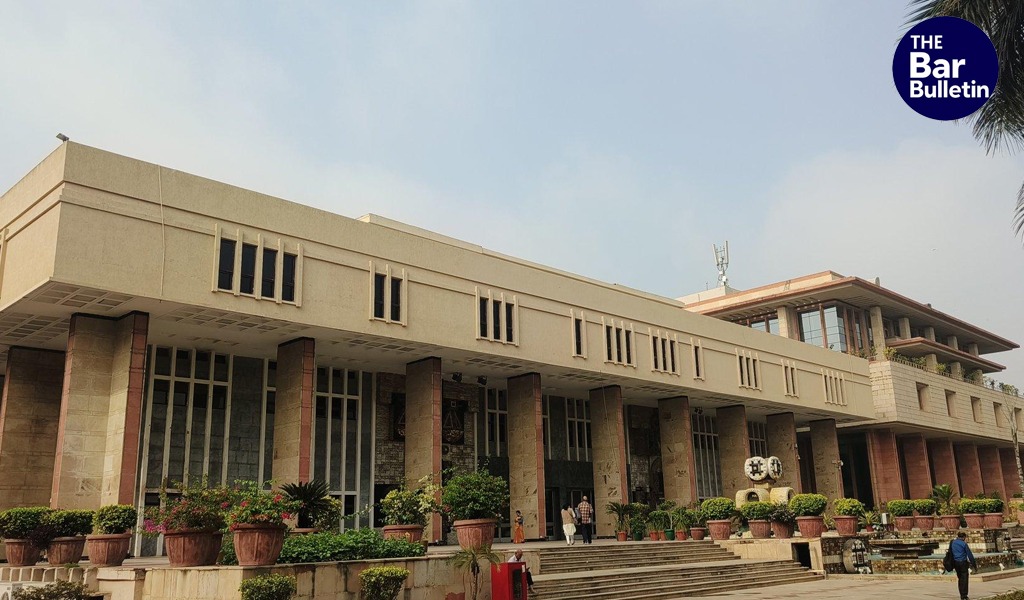

The Delhi High Court has quashed criminal proceedings for cheating and forgery initiated between co-legal heirs over the mutation of ancestral agricultural land, holding that the dispute was essentially civil in nature and lacked the foundational ingredients required to attract offences under the Indian Penal Code.
JusticeSanjeev Narula, exercising inherent jurisdiction under Section 482 of the Code of Criminal Procedure, held that “allowing the proceedings to continue would not vindicate the criminal law; it would merely prolong a family succession dispute in the garb of serious penal charges.”
The case arose from a private complaint alleging that the petitioners had forged the complainant’s signature on an affidavit and mutation application filed before the Tehsildar, Najafgarh, to secure mutation of ancestral land in their favour. The complainant alleged that the documents were filed without his consent and apprehended that they could be misused to deprive him of his share in the property. Notably, the mutation ultimately recorded the names of all legal heirs, including the complainant.
Acting on the complaint, the Metropolitan Magistrate took cognizance and summoned the petitioners to face trial for offences under Sections 419, 420, 467, 468 and 471 read with Section 34 of the IPC. The summoning order was affirmed in revision by the Sessions Court, prompting the petitioners to approach the Delhi High Court by invoking its inherent jurisdiction under Section 482 of the CrPC, seeking quashing of the summoning and revisional orders.
The High Court noted that even if the allegations of forged signatures were assumed to be correct, the essential ingredients of cheating for cheating and forgery were not made out as carved out in Dr. Vimla v. Delhi Admn., 1962 SCC OnLine SC 172, Sheila Sebastian v. R. Jawaharaj, (2018) 7 SCC 581, Mariam Fasihuddin & Ors. v. State & Ors., MANU/SC/0051/2024, and Jupally Lakshmikantha Reddy v. State of Andra Pradesh & Ors. 2025 INSC 1096.
The Court held that “there is no deception-linked deprivation or loss of property, no legally cognisable interference with a valuable security, and no identified maker of a false document who can be fastened with the requisite mens rea.”
The Court also took note of the inconclusive forensic report, the complainant’s son having recorded a no-objection before the Sub-Divisional Magistrate during mutation proceedings, and the suppression of this material fact while pursuing criminal action. It held that continuation of the prosecution, in the absence of core statutory ingredients of the alleged offences, would amount to an abuse of the process of law.
Accordingly, the High Court quashed the complaint and all consequential proceedings against the petitioners, while clarifying that the parties were free to pursue their civil or revenue remedies in accordance with law.
Appearances
Petitioners- Mr. Ramesh Gupta, Senior Advocate with Mr. Shailendra Singh, Mr. Ishaan Jain and Mr. Surya Pratap Singh, Advocates.
Respondents- Mr. Hemant Mehla, APP for State with SI Ravi Kumar, PS-Najafgarh. Mr. Manoj Joshi, Advocate for R-2.
