


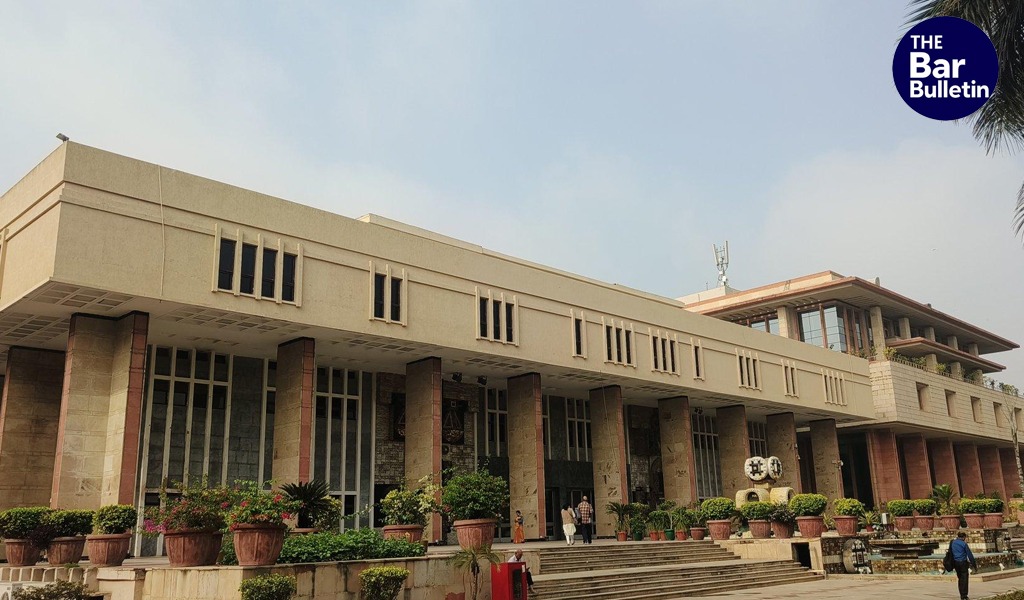

Can the Courts, lacking technical expertise, sit as an appellate authority over aeronautical determinations that fall within the statutory domain of the Airports Authority of India (AAI)? The Delhi High Court said NO. It held that administrative decision-making, especially in specialised and safety-critical domains, necessarily involves internal consultations and exchanges, and such decisions cannot be elevated to a status higher than the reasoned determination arrived at by the competent authority.
The Court refrained from venturing into the highly technical question as to whether Kolkata Airport is equipped with one radar system or two, or from examining their respective technical specifications, operational capabilities, or functional roles in airport management. These matters lie squarely within the exclusive province of expert statutory authorities, who possess the requisite technical knowledge, institutional competence, and statutory mandate to assess them.
Given that such issues directly implicate aviation safety, air-traffic management, and the security of the entire airport ecosystem, as well as the safety of the travelling public at large, the High Court ruled that judicial substitution of expert opinion would be not only inappropriate but also potentially detrimental to public interest.
This ruling came in reference to the dispute arising from a challenge to the judgment passed by a Single Judge of the High Court of Delhi concerning height restrictions for a two-tower complex being developed by Shristi Infrastructure Development Corporation Ltd. near the Netaji Subhas Chandra Bose International Airport, Kolkata.
The Division Bench comprising Justice Anil Kshetarpal and Justice Harish Vaidyanathan Shankar observed that the reliance on the No Objection Certificate Application System (NOCAS) was deemed a scientific method. Further, the internal note referring to a “crude method” was interpreted as referring to an explanatory pictorial diagram and did not nullify the underlying scientific calculations.
Emphasising that an independent report from Sakthi Aviation was held to be a private expert opinion with no statutory imprimatur and was not binding on AAI, the Bench explained that the Courts cannot compel expert authorities to adopt a particular technical course of action, especially where such action may compromise safety norms or undermine established regulatory frameworks.
The Bench observed that a real estate developer (respondent) cannot claim vested rights based on permissions granted in a markedly different regulatory context. The Bench noted that despite being fully cognizant of the regulatory changes and in the absence of any valid or subsisting permission authorising construction beyond the prescribed limits, the respondent nevertheless proceeded to raise construction in excess of the permissible height, thereby consciously and deliberately assuming the attendant risks and consequences.
Having elected to act in the face of a changed statutory and regulatory regime, the respondent cannot now seek to shift the burden of its own calculated decision onto the authorities, and in such circumstances, the authorities cannot be compelled, whether directly or indirectly, to revive, resurrect, or extend benefits flowing from an obsolete regulatory framework, particularly when any such course would be fundamentally inconsistent with, and indeed inimical to, the safety-oriented policies and norms currently governing the field, added the Bench.
Accordingly, the Bench affirmed the findings of the Single Judge on the technical aspects, which were in favour of AAI, as having no infirmity, illegality, or perversity.
Briefly, the appellant, i.e., the Airports Authority of India (AAI), issued a No Objection Certificate (NOC) in favour of the respondent, permitting the construction of Tower-I and Tower-II up to a height of 144.53 metres above Mean Sea Level (AMSL). This NOC was valid for three years and expired on July 26, 2009, by which time the construction of Tower-II was not completed. Upon the respondent’s request for revalidation in 2010, the AAI, applying a new 2010 notification, informed that the maximum permissible height for Tower-II was 88.64 metres AMSL.
When subsequently, the AAI issued a second NOC approving Tower-I up to 144.53 metres AMSL and Tower-II up to 90.30 metres AMSL, which could be extended to 105.48 metres AMSL upon the commissioning of a proposed Air Surveillance Radar, the respondent challenged the reduced height, which was dismissed by the Single Judge of the High Court. In the interim, the Ministry of Civil Aviation notified the Height Restrictions for Safeguarding Aircraft Operations Rules, 2015, which introduced criteria for distinguishing between ‘large’ and ‘small’ objects based on the azimuth angle they subtend at the radar antenna. The AAI agreed to re-examine the matter and conducted a joint site inspection.
Later, the AAI in 2019 issued a communication stating that Tower-II, along with Tower-I, constituted a “large structure” under the 2015 Notification and was therefore restricted to the previously approved top elevation of 105.48 metres AMSL. This communication, when challenged by the respondent, was set aside by the Single Judge on the sole ground that it was unreasoned, cryptic, and violative of the principles of natural justice. However, the Single Judge upheld AAI’s technical findings, including the classification of the towers as a large structure and the non-applicability of multi-radar criteria.
Appearances:
Advocates Digvijay Rai, Archit Mishra and Abhishek Singh, for the Appellant
Senior Advocate Arvind Naiyar, along with Advocates Vijay K. Singh, Kumar Shashwat Singh Sawno, Diksha Dadu, Shubham Pandey, Sanjukta Kashyap, Ankur Mishra, Rakesh Kumar, and Sunil, for the Respondent
