


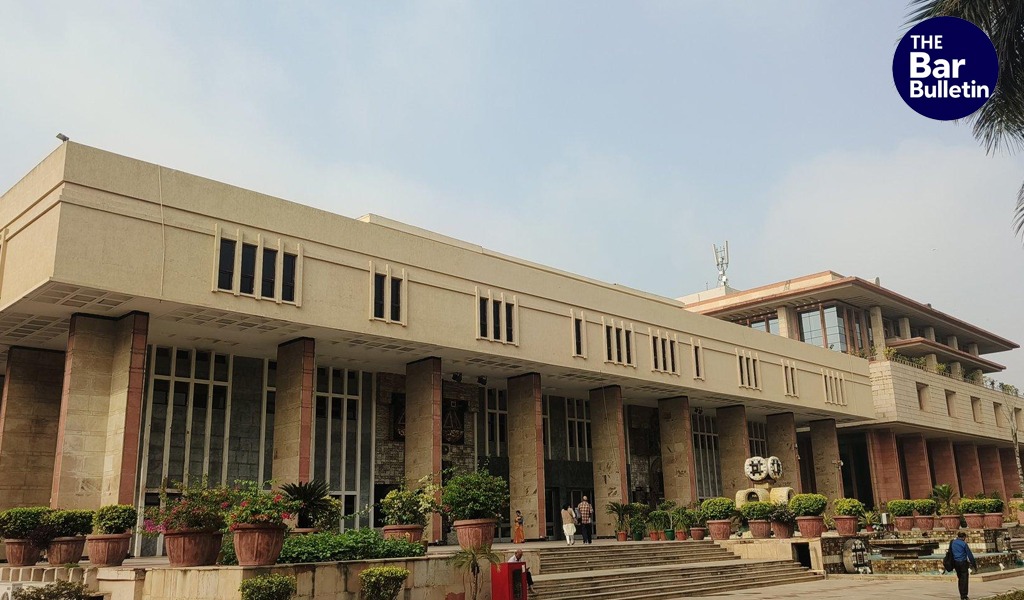

The Delhi High Court has refused to quash criminal proceedings under Section 138 of the Negotiable Instruments Act, 1881, initiated against Aeiforia Constructions Pvt. Ltd. and another accused, holding that despite deficiencies in the summoning order, the case was not fit for exercise of inherent jurisdiction under Section 482 of the Code of Criminal Procedure.
Justice Anup Jairam Bhambhani dismissed a petition challenging the summoning order passed by the Metropolitan Magistrate in a cheque dishonour complaint filed by Continental Carbon India Pvt. Ltd.
The dispute arose out of a construction agreement dated 1 April 2019 between the parties, followed by execution of a Security Bond on 9 April 2021, under which the complainant released a sum of ₹2.24 crore to the petitioners. A cheque issued as “security” under the bond was subsequently presented by the complainant and dishonoured on 1 July 2020 for insufficiency of funds. This led to issuance of a statutory notice and filing of a complaint under Section 138 NI Act, pursuant to which summons were issued on 29 April 2023.
Before the High Court, the petitioners contended that the cheque was merely a security instrument and could not have been presented without prior notice and a cure period as stipulated in the contract. They further argued that no legally enforceable debt existed on the date of presentation and that the summoning order was a template, non-speaking order reflecting no application of mind to the essential ingredients of the offence.
The respondent opposed the petition, asserting that issuance and signatures on the cheque were admitted, thereby attracting the statutory presumption under Section 139 of the NI Act. It was argued that whether the cheque was issued as security or towards a subsisting liability was a matter of evidence to be decided at trial and not at the summoning stage.
The Court undertook an extensive review of Supreme Court precedents on the scope of scrutiny at the stage of issuance of process, reiterating that summoning of an accused is a serious matter and must reflect application of mind. The Court noted that the impugned summoning order was largely procedural in nature and did not expressly record satisfaction regarding core ingredients of the offence, such as issuance of statutory notice and adherence to timelines under Section 138 of the NI Act.
However, the Court declined to interfere with the summoning order, noting that it had independently perused the complaint, the cheque, dishonour memo and statutory notice placed on record. Given that the proceedings had progressed to the stage of notice under Section 251 CrPC and complainant’s evidence, and keeping in mind the requirement of expeditious disposal of NI Act cases, the Court held that interference at this stage was unwarranted.
Accordingly, the petition was dismissed, the interim stay earlier granted was vacated, and the learned Magistrate was directed to proceed with the trial in accordance with law.
Appearances:
For the Petitioners: Mr. Mrinal Kumar Sharma and Mr. Veer Bhadra Singh, Advocates.
For the Respondent: Mr. Gauhar Mirza, Advocate
