


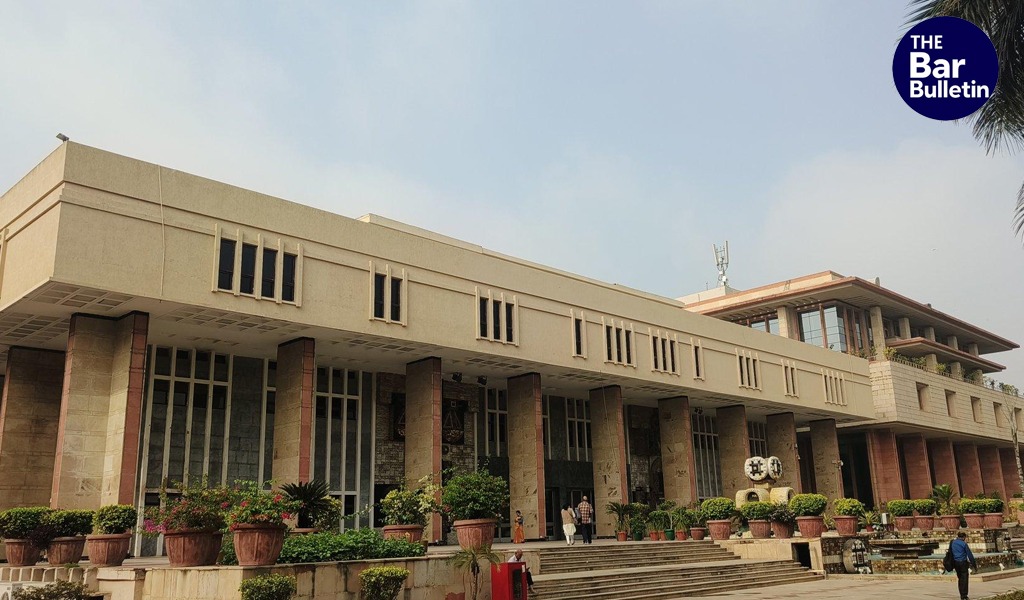

The Delhi High Court has set aside an order passed by a Sessions Court directing advocates appearing for McDonalds India Pvt. Ltd. to file personal affidavits disclosing the source of documents placed on the judicial record, holding that such a direction violates the statutory protection of client–advocate privilege under Section 126 of the Indian Evidence Act, 1872 and cannot be sustained in the absence of a prima facie finding of fraud.
The case arose from a criminal complaint filed by the second respondent alleging cheating, forgery and conspiracy in relation to corporate disputes involving McDonalds India and its affiliates. During revision proceedings against an order permitting search and seizure, McDonalds placed on record copies of applications filed by the complainant in 2011 in earlier proceedings, to demonstrate lack of urgency. Alleging that these documents were illegally procured and surreptitiously introduced, the complainant moved an application under Section 340 CrPC, following which the Additional Sessions Judge, by order dated May 20, 2017, directed the advocates for McDonalds to disclose the source of the documents through personal affidavits, followed by a consequential order dated July 22, 2017.
Justice Neena Bansal Krishna, while examining the issue of whether the Court was justified in directing the Advocates for disclosing the source of the documents. The Court held that compelling an advocate to disclose that a document was received from a client amounts to forcing disclosure of a protected professional communication.
The Court rejected the respondent’s reliance on the fraud exception under the proviso to Section 126, holding that mere allegations are insufficient to pierce privilege, and that there must be prima facie material to show that the communication itself was in furtherance of an illegal purpose. In the present case, the petitioner had plausibly explained that the documents were served upon it during Company Law Board proceedings in 2013, negating allegations of illegal procurement. The Court further clarified that while advocates are officers of the court, there is no “privilege-free zone” in favour of the court, and statutory confidentiality cannot be overridden without satisfying the strict conditions prescribed by law.
Accordingly, the High Court has quashed the impugned order dated May 20, 2017, as it directed the Advocate disclosing the source of the documents. The Writ petition was allowed.
Appearances:
For the Petitioner – Senior Advocate Siddharth Aggarwal, with Advocates Stuti Gujral, Mr. Vishwajeet Singh Bhati, Tasnimul Hassan, Priti Verma and Vipin Kumar.
For the State – ASC Amol Sinha, with Advocates Kshitiz Garg, Chavi Lazarus, Nitish Dhawan, Manan Wadhwa and Luv Mahajan.
