


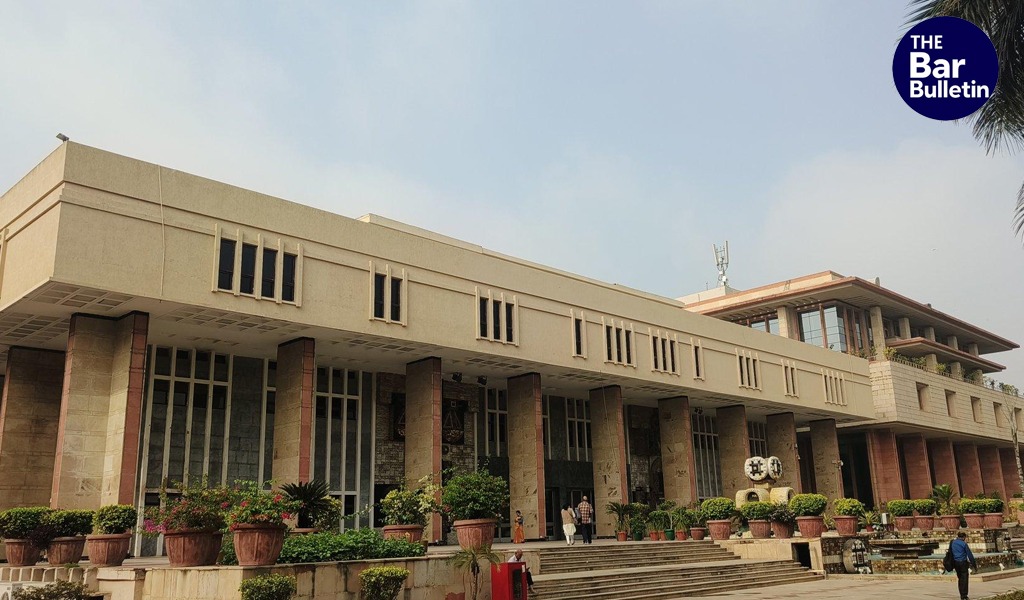

The Delhi High Court has allowed an appeal against a decree of specific performance passed by a Single Judge, holding that the plaintiff–buyer failed to establish the mandatory requirement of “readiness and willingness” under Section 16(c) of the Specific Relief Act, 1963. The Court set aside the decree directing execution of the sale deed and held that the sellers were entitled to forfeit the earnest money, while directing refund of the additional amount paid by the buyer with interest.
The Division Bench of Justice Anil Kshetarpal and Justice Harish Vaidyanathan Shankar was dealing with an appeal arising from a suit for specific performance of an Agreement to Sell dated 22 January 2008 concerning a residential property in Ashok Vihar, Delhi. The total sale consideration was fixed at ₹6.11 crore, of which ₹60 lakh was paid as earnest money at the time of execution of the agreement, followed by an additional payment of ₹30 lakh in March 2008. The balance amount of ₹5.21 crore was required to be paid on or before 10 May 2008, subject to mutation and conversion of the property from leasehold to freehold.
While the Single Judge had decreed the suit in favour of the buyer, the Division Bench found serious infirmities in the finding that the buyer was always ready and willing to perform his part of the contract. The Court emphasised that readiness relates to the financial capacity to pay the balance consideration, while willingness is reflected through consistent conduct. On facts, the Bench noted that the buyer neither visited the office of the Sub-Registrar on the stipulated date nor produced any cogent evidence to show that he had arranged or possessed funds to pay the balance consideration of ₹5.21 crore along with stamp duty and registration charges on the due date.
The Court scrutinised the buyer’s income-tax records, net-worth statements, and oral assertions regarding proposed sale of another property and potential loans, and held that these did not demonstrate availability of liquid funds or concrete financial arrangements. It also took note of the buyer’s attempt to downplay his involvement in real-estate business, which the Court found to be contradicted by documentary evidence and witness testimony, thereby affecting his credibility.
Rejecting the reasoning of the Single Judge, the Bench held that the buyer could not avoid proving readiness to pay merely by contending that the sellers had not completed mutation and conversion. The relevant clauses of the agreement, the Court held, had to be read harmoniously, and a party seeking specific performance must stand on its own legs and satisfy the statutory requirement of readiness and willingness.
On relief, the High Court held that the sellers were entitled to forfeit the earnest money of ₹60 lakh, as it was paid at the time of execution of the agreement as security for due performance. However, the additional payment of ₹30 lakh was not part of the earnest money and therefore could not be forfeited. The Court directed the sellers to refund the said amount of ₹30 lakh to the buyer along with interest at 9% per annum from the date of payment, with the amount to remain charged on the suit property until repayment.
Accordingly, the appeal was allowed, the decree of specific performance was set aside, and the suit stood dismissed subject to the above directions.
Appearances:
For the Appellants: Mr. Siddharth Batra, Mr. Chinmay Dubey, Ms. Shivani Chawla, Mr. Rhythm Katyal, Ms. Archna Yadav, Ms. Preetika Shukla, Advs.
For the Respondents: Mr. Kirti Uppal, Sr. Adv. with Mr. Nitin Mittal and Ms. Archisha Satyarthi, Advs.
