


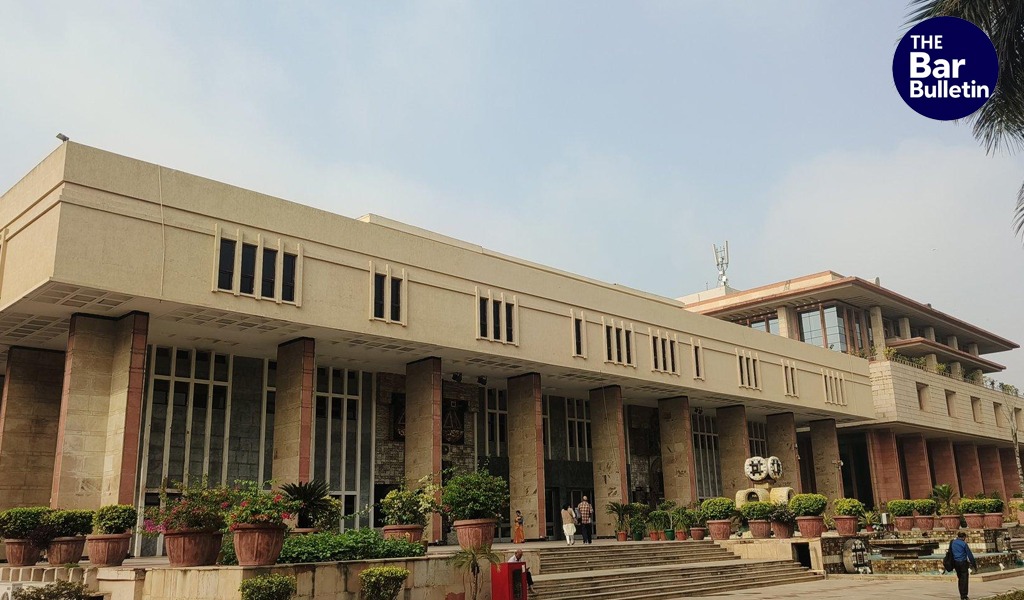

The Delhi High Court has clarified that a procedural defect, such as the failure to file a Statement of Truth as mandated by Order VI Rule 15A of the CPC in a commercial suit, is a curable irregularity. When a suit has been fully tried on its merits and a conclusive finding on the rights and liabilities of the parties has been reached based on evidence, the suit cannot be dismissed solely on account of such a rectifiable procedural defect.
This is particularly so when the defect does not affect the jurisdiction of the court or cause any prejudice to the opposing party, added the Court, while clarifying that the correct course of action is to afford the defaulting party an opportunity to rectify the defect, and thereafter, the court should proceed to pass a decree in accordance with its findings on the merits of the case.
The Division Bench comprising Justice Anil Kshetarpal and Justice Amit Mahajan observed that the central issue was the dismissal of a suit on a procedural technicality after a full trial on merits had been concluded in the Plaintiff’s favour. The Bench acknowledged that Order VI Rule 15A of the CPC is couched in mandatory terms to ensure procedural discipline in commercial disputes. However, it emphasized the legal principle that procedural law is merely a ‘handmaid of justice’ and a defect of form should not be allowed to defeat substantial rights, unless it goes to the root of jurisdiction or causes irremediable prejudice.
The Bench noted that the District Judge had conducted a meticulous examination of evidence, including ledger accounts, invoices, and witness testimonies, and had arrived at a conclusive finding that the Plaintiff was entitled to recover a principal sum of Rs. 29.64 Lakh. In these circumstances, dismissing the suit for a curable defect, especially when it was originally not a commercial suit, would amount to elevating procedure over substance.
The Bench further observed that the judgment in AV industries v M/s. NEON Electricals Pvt Ltd [RFA (Comm) No. 2/2021], relied upon by the District Judge, was distinguishable as it pertained to an ex-parte decree where no undertaking to cure the defect was given, and the discretionary power of the court under Order VI Rule 15A(5) was not considered.
Briefly, the dispute arose from a business relationship where the Plaintiff (Appellant), a sole proprietor trading in craft paper, supplied goods on credit to the Defendant (Respondent). The Plaintiff maintained a running account for these transactions and claimed an outstanding principal amount of Rs. 34.50 Lakh. To discharge this liability, the Defendant issued 12 cheques which were subsequently dishonoured upon presentation due to ‘funds insufficient’ and ‘account closed’.
Consequently, the Plaintiff filed a recovery suit for Rs. 45.35 Lakh, which included the principal and interest. The suit was initially filed as a summary suit under Order XXXVII of the Code of Civil Procedure, 1872 (CPC) but was later converted into a commercial suit.
During the proceedings, the original Defendant passed away and her legal heirs were brought on record. The District Judge ultimately dismissed the suit, not on merits, but on the ground of non-compliance with the procedural requirement of Order VI Rule 15A of the CPC, which mandates filing a ‘Statement of Truth’ with pleadings in a commercial suit.
Appearances:
Advocate Rakesh Kumar, for the Appellant
Advocate B. N. Gaur, for the Respondent
