


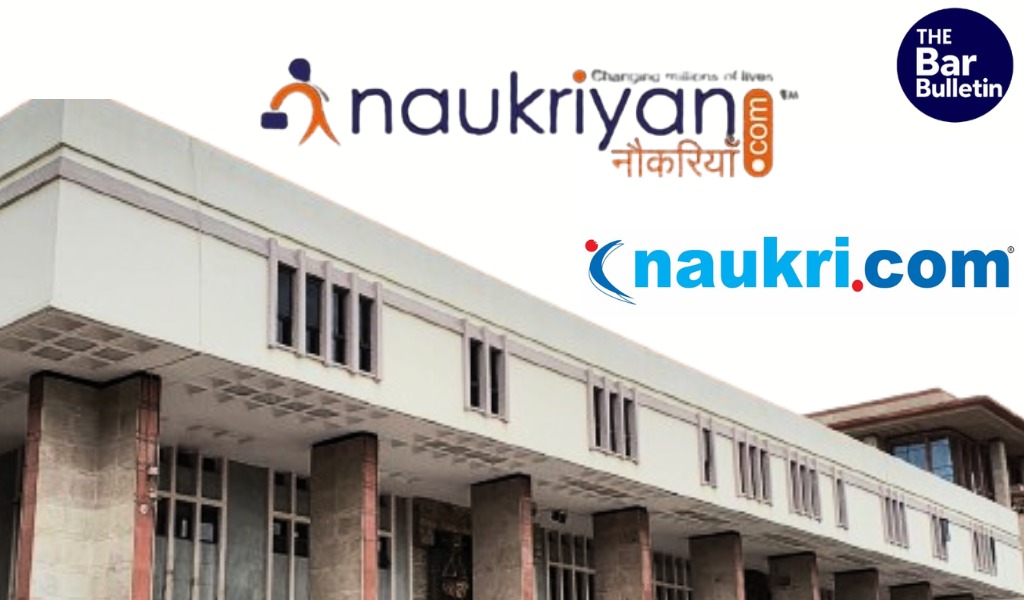

The Delhi High Court has held that where a proposed trademark incorporates the entirety of a prior, well-known, and registered trademark as its dominant and essential feature, the mere addition of a suffix that renders the new mark a plural form of the original mark is insufficient to create distinctiveness.
The Court clarified that such a mark is deceptively similar and likely to cause confusion, especially when the services offered under both marks are identical and targeted at the same consumer base. In such cases, the anti-dissection rule does not apply, and the focus must be on the dominant part of the mark.
The dishonest adoption, evidenced by the applicant’s own admission that the mark is a plural form of the original, further disentitles the mark from registration, added the Court, while quashing the impugned order of the Registrar as well as the Registration Certificate issued to the respondent no.1.
A Single Judge Bench of Justice Tushar Rao Gedela observed that the appellant’s word ‘NAUKRI’ is entirely subsumed within the respondent no.1’s mark ‘naukriyan’. It noted that the font, use of small case, and the fact that both are Hindi words written in English are common to both marks. Thus, ‘naukriyan’ is merely the plural form of ‘NAUKRI’, connoting ‘jobs’ versus ‘job’, and this distinction is not sufficient to prevent confusion or deception in the mind of the general public.
The Bench disagreed with the Registrar’s finding that the device marks were distinct, and found that the Registrar had noted that the respondent’s device was an artistic element of a walking man with a briefcase and tie, which was different from the appellant’s device of a blue curve with an orange dot. However, the adoption of an arching design of a man by the respondent does not create an essential distinction from the arching design of a man adopted by the appellant, especially when viewed from the perspective of a common man with average intelligence and imperfect recollection.
Further, the Bench addressed the Registrar’s application of the anti-dissection rule, and held that while marks should be considered in their entirety, it is permissible to identify a ‘dominant mark’ within a composite mark. The Bench determined that the word ‘NAUKRI’ is the essential and dominant part of both the rival marks. Therefore, the rule of anti-dissection was held to be inapplicable to the facts of the case, as the dominant feature itself was copied.
Briefly, the appellant, Info Edge (India) Limited, had adopted the trademark “NAUKRI” and registered the domain name favicon www.naukri.com in 1997. The appellant also secured registration for the trademark “NAUKRI” in Class-09 in 1999, and in 2000, it adopted a distinctive logo of a man’s device and subsequently, this Court, in an order dated March 05, 2002, held the trademark “NAUKRI/NAUKRI.COM” to be inherently distinctive, having acquired a secondary meaning, and to be a well-known trademark.
The appellant has also secured numerous other registrations for marks and domain names containing “NAUKRI” and has actively protected its rights through various lawsuits, obtaining injunctions against marks like NAUKRIE.COM, NAUKRINEWS.COM, and nownaukri.com.
The dispute arose when in 2023, the Respondent No. 1 filed an application for the mark “NAUKRIYAN” with a device in Class 35 on a ‘proposed to be used’ basis. The appellant filed a notice of opposition, despite which, the Registrar of Trade Marks allowed the registration of the respondent’s mark, issuing the registration certificate on the same day.
Appearances:
Advocates Nikhil Sharma, Mehak Rahul Chaudhry, Akshay Bhardwaj and Hitesh Malik, for the Appellants
Advocates Nidhi Raman, Om Ram and Nikita Singh, for the Respondents
