


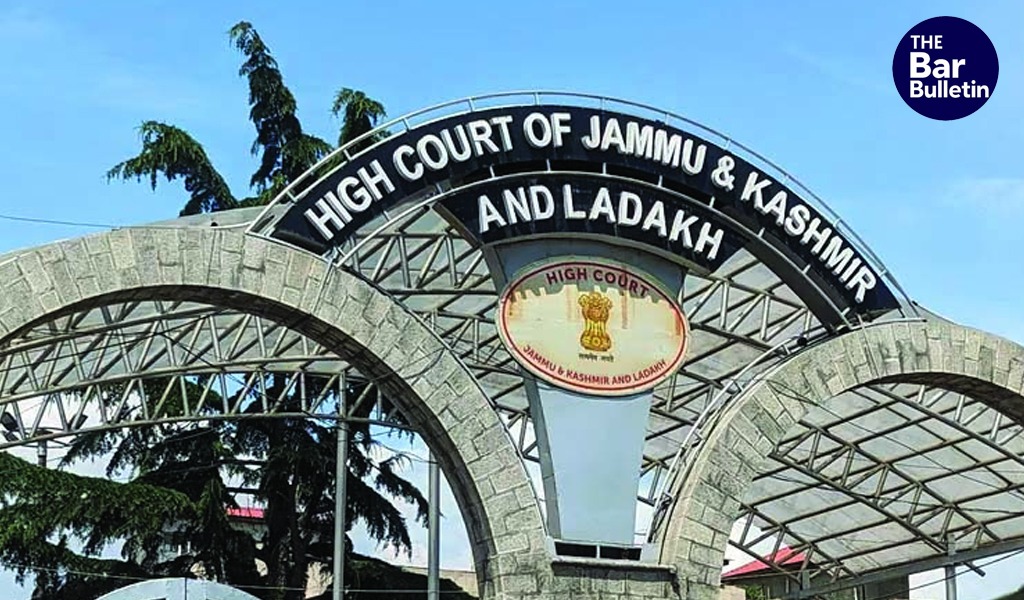
The Jammu & Kashmir and Ladakh High Court dismissed the Trust’s writ petition. It upheld the Industrial Tribunal’s award dated 9 September 2003 quashing the workman’s termination and granting 50% back wages.
Dharmarth Trust approached the High Court under Article 226 challenging the Tribunal’s award on a government reference (SRO 13 dated 21 January 2003). The Trust sought quashing of the award, claiming lack of jurisdiction since it is not an “industry” under Section 2(j) of the Industrial Disputes Act, 1947, the workman was not a “workman” under Section 2(s), and Section 25F (retrenchment conditions) did not apply to his disengagement for absenteeism. The core claim was that the Tribunal proceeded ex parte without jurisdiction over a religious/charitable trust’s purely spiritual activities.
Dharmarth Trust was established by Maharaja Gulab Singh for maintaining Hindu temples, endowments, and religious sites. It runs institutions like Sanskrit schools, research institutes, gaushalas, yatri bhawans, and commercial properties.
The workman was engaged as Safai Karamchari on daily wages vide order dated 23 May 1991 for three months from 18 April 1991. He faced show-cause notices for repeated absenteeism (22-26 October 2000, 2-7 November 2000, 13-16 December 2000) and was disengaged on 1 January 2001 by the Raghunath Temple Administrator. Government referred the dispute to the Industrial Tribunal, which passed an ex parte award holding the termination illegal, quashing the order, deeming continuous service, and awarding 50% back wages.
The trust argued that the ID Act is inapplicable to non-commercial religious trusts, there exists no employer-employee relationship, and the disengagement was for misconduct, not retrenchment. The workman countered that the Trust’s systemic activities (education, gaushalas, rentals generating profit) make it an “industry”, creating employer-workman relationship.
The Bench comprising Justice M.A. Chowdhary applied the “triple test” laid down in Bangalore Water Supply[1] to hold Dharmarth Trust an “industry” under Section 2(j) ID Act:
• systemic/organized activities (temple maintenance, education, gaushalas, rentals),
• employer-employee cooperation for services satisfying human wants (spiritual/religious included if organized),
• not purely selfless/volunteer-driven.
It was held that the Trust’s operations (even religious maintenance with paid staff) qualified as industry, and employer-employee relationship was made out. The Court also noted that the Trust’s failure to challenge reference timely or lead evidence before the Tribunal barred jurisdictional challenge at this stage.
The Court rejected the ex parte procedural challenge and upheld the Tribunal’s award quashing workman’s termination, deeming continuous service from disengagement date, and awarding 50% back wages till the date of the award (9 September 2003).
Appearances:
For the Petitioner: Mr. Ashwani Thakur, Advocate
[1] Bangalore Water-Supply and Sewerage Board Vs. R. Rajappa & Ors., (1978) 2 SCC 213
