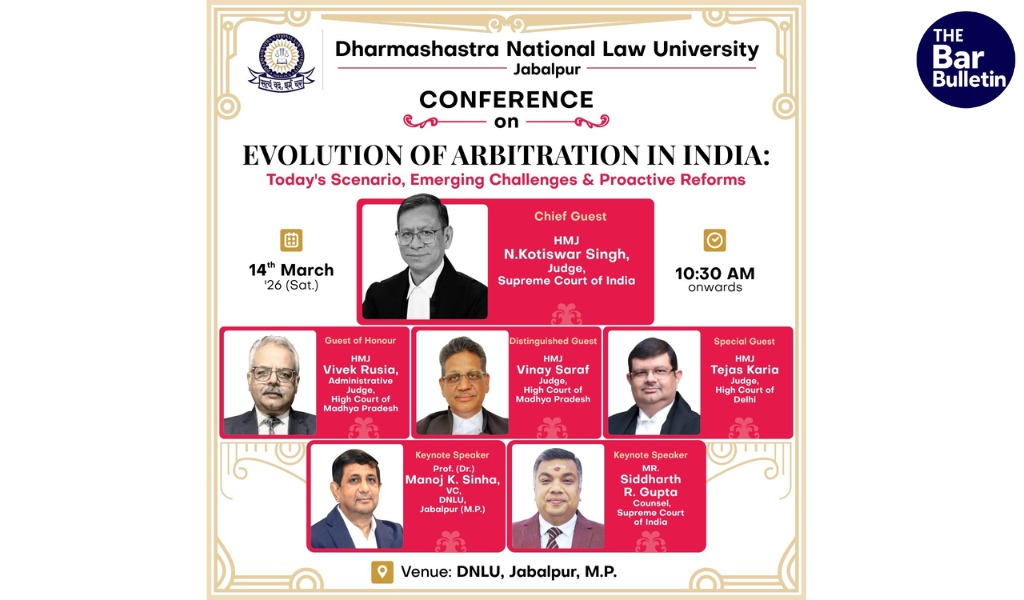
As India’s economy rapidly modernizes, how we resolve commercial disputes matters more than ever. On March 14, 2026, leading judicial experts and veteran practitioners will take the podium at Dharmashastra National Law University, Jabalpur in a national conference hosted by it. Centered on the theme“Evolution of Arbitration in India: Today’s Scenario, Emerging Challenges & Proactive Reforms,“ this conference will feature insightful talks on the current legal landscape, practical solutions to existing bottlenecks and the path forward for Indian dispute resolution. The event shall be live streamed on official YouTube channel of DNLU – https://youtube.com/live/11U1a9AZVGU?feature=share
The conference will feature a distinguished lineup of speakers, reflecting the highest tiers of the legal fraternity:
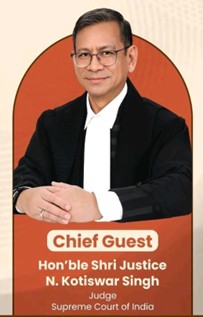
Gracing the event as a Special Guest is Hon’ble Mr. Justice N. Kotiswar Singh, Judge, Supreme Court of India. His presence brings the highest level of judicial insight to the gathering, offering the audience a clear view of how the Supreme Court handles complex commercial matters. HMJ Kotishwar Singh’s address will set a strong and practical tone for the entire discussion, particularly on how to balance the freedom of the involved parties with the strict need for legal oversight in high-stakes disputes.
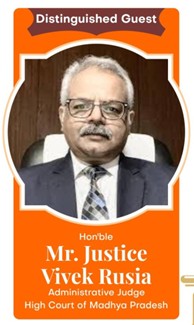
Joining the discussion as a Distinguished Guest is Hon’ble Mr. Justice Vivek Rusia, Administrative Judge, High Court of Madhya Pradesh. Having dealt with numerous commercial cases at the state level, HMJ Rusia will be shedding light on the ground-level challenges of enforcing arbitration awards in local Courts. His practical experience will help the attendees clearly understand the real-world roadblocks that practicing lawyers face during the execution process within regional jurisdictions.
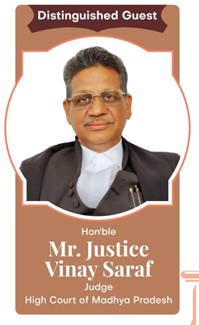
Also gracing the event as a Distinguished Guest is Hon’ble Mr. Justice Vinay Saraf, Judge, High Court of Madhya Pradesh. With more than three decades of experience in the legal profession Justice Saraf has built a distinguished career handling complex commercial and corporate disputes before various judicial forums. Prior to his elevation to the Bench, he practiced extensively in matters relating to arbitration, company law, taxation and constitutional law. His deep engagement with commercial litigation and dispute resolution provides him with a nuanced understanding of the practical challenges faced by litigants and businesses alike.
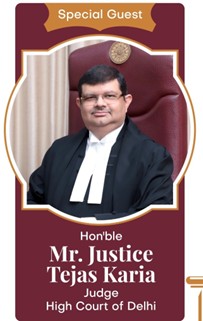
Also gracing the event as a Special Guest is Hon’ble Mr. Justice Tejas Karia, Judge of the Delhi High Court. Recently elevated to the bench in February 2025, HMJ Karia is one of the very few judges appointed directly from a top-tier arbitration practice. He previously handled high-value matters in India, London and Singapore as a Partner at Shardul Amarchand Mangaldas & Co.. With an LL.M. from the London School of Economics and dual qualifications in India and England, HMJ Karia’s transition from a practicing lawyer to a judge will give attendees a rare and valuable look at how the system functions from both sides of the bench.
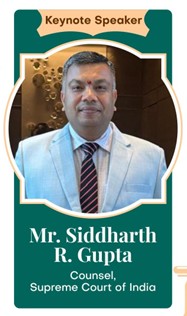
Adding a strong voice from the bar is Keynote Speaker Mr. Siddharth R. Gupta, Counsel at the Supreme Court of India. His extensive experience in arguing high-stakes appeals at the Supreme Court will provide a practical understanding of the most debated legal issues and procedural roadblocks in arbitration today.
A robust arbitration framework is no longer just a legal convenience; it is a fundamental driver of India’s investment climate. Consequently, an efficient and predictable arbitral process directly boosts investor confidence and underpins the broader economic narrative of the nation. Currently, India’s arbitration regime is navigating a critical transitional phase. The legislative approach has consistently favored minimal judicial interference while actively promoting institutional arbitration. The discussions at the upcoming conference are naturally expected to touch upon recent legal milestones that shape this reality, such as the landmark June 2025 Supreme Court Constitution Bench ruling in Gayatri Balasamy v. ISG Novasoft Technologies. By recognizing that Courts possess a limited power to modify rather than merely set aside arbitral awards, the judiciary took a pragmatic step to save parties from the massive financial burden of initiating fresh proceedings. Similarly, in the 2025 landmark case of Hindustan Construction Company v. Bihar Rajya Pul Nirman Nigam, the Court reinforced this pro-arbitration stance by ruling that pre-arbitral judicial scrutiny is strictly confined to verifying the prima facie existence of an agreement. This crucial decision deters dilatory tactics and firmly upholds the statutory mandate of minimal interference. Despite such progressive strides, systemic friction remains a reality.
While our traditional Courts are absolutely essential for handling criminal and constitutional matters, they are struggling to keep pace with the complex demands of modern commerce. Moreover, practitioners continue to face severe constrictions at the enforcement stage where losing parties frequently leverage drawn-out appeals to stall the execution of awards. This bottleneck is directly dragging down our “Ease of Doing Business” rankings because resolving legal conflicts is simply too difficult and time-consuming.
Moving forward, the solution isn’t just building more courts; it’s building a better Alternative Dispute Resolution (ADR) ecosystem. We need to update our laws, overhaul our legal institutions and properly train ADR professionals. Ultimately, our greatest challenge isn’t infrastructural; it’s cultural. We must shed the traditional zero-sum Courtroom mentality and cultivate a landscape that values collaborative and problem-solving approaches. If we can coordinate a national effort and adopt global best practices, we can completely transform how India handles disputes, creating a system that actually supports our fast-growing economy and international trade.
 ,
,  ,
, 
 ,
,