


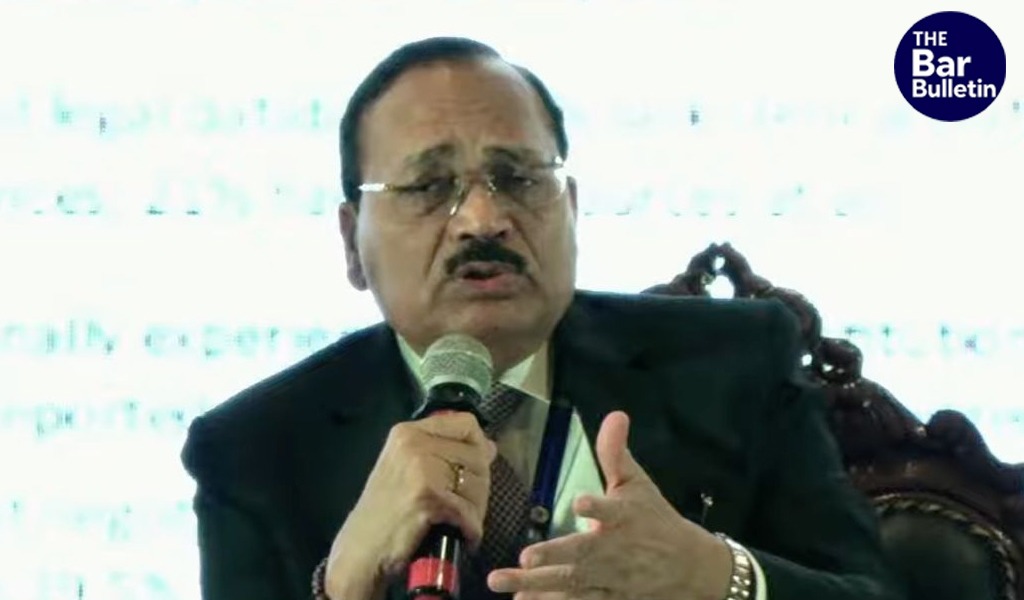

Justice Surya Kant highlighted the need for targeted structural reforms to ensure meaningful gender equality in the legal profession, stating that while women have achieved parity at the entry level, significant barriers persist in their long-term professional growth and retention.
Speaking at the 1st Supreme Court Bar Association Conference, Justice Surya Kant described a recent survey on women in the legal profession as an “eye-opener” that not only identifies key challenges but also provides a roadmap for solutions.
Referring to the report’s priority themes, particularly equal access and opportunity, he observed that constitutional guarantees of equality must translate into lived realities. While noting the encouraging rise in the number of women enrolling in law schools and joining the Bar, he pointed out that a substantial drop-off occurs at later stages of professional progression.
“The problem begins after entry,” he remarked, highlighting that despite strong representation at the foundational level, relatively few women sustain long-term legal careers or advance to higher positions within the profession.
Justice Surya Kant identified multiple structural barriers, including unequal work allocation, lack of briefing opportunities, financial instability in early years, and absence of institutional support systems. He stressed the need to identify and address these impediments to ensure that equality is not merely symbolic but substantive.
Among key suggestions, he proposed increasing women’s representation in government empanelment of advocates, suggesting that at least 30 to 50 per cent of such positions should be reserved for women. He also called for greater inclusion of women in Bar Councils to provide a stronger institutional platform for professional growth.
Highlighting the importance of mentorship, he urged senior members of the Bar particularly male practitioners to actively support and guide women lawyers. He also emphasised the need for financial assistance mechanisms, including the creation of a dedicated corpus to support women lawyers during maternity leave and early career stages.
On the judicial side, Justice Surya Kant noted with satisfaction that women now constitute nearly 45 to 50 per cent of the lower judiciary, with some States reporting even higher representation. He observed that this pipeline has begun to reflect in appointments to High Courts, signalling gradual but meaningful progress.
However, he stressed that sustained efforts are required to ensure that this progress continues across all levels of the judiciary and legal profession.
He also highlighted the importance of safe working environments, given the demanding and often late working hours in the legal profession. He called for the establishment of childcare facilities, including crèches, within court complexes, stating that such infrastructure is essential to support women professionals.
Further, he assured that efforts would be made at the institutional level to encourage High Courts across the country to provide gender-sensitive infrastructure and facilities.
Justice Surya Kant also touched upon the need for reforms within Bar Councils, including greater transparency and representation, noting recent judicial interventions aimed at enhancing inclusivity.
Describing the survey report as a “guidebook” for reform, he urged stakeholders to treat it as a framework for action. “It can serve as a mini-constitution for achieving gender equality in the legal profession,” he said.
Concluding his address, Justice Surya Kant emphasised that achieving gender parity requires collective action from all stakeholders, including the judiciary, Bar, and government, expressing confidence that sustained efforts would gradually eliminate systemic discrimination and realise the constitutional vision of equality.