


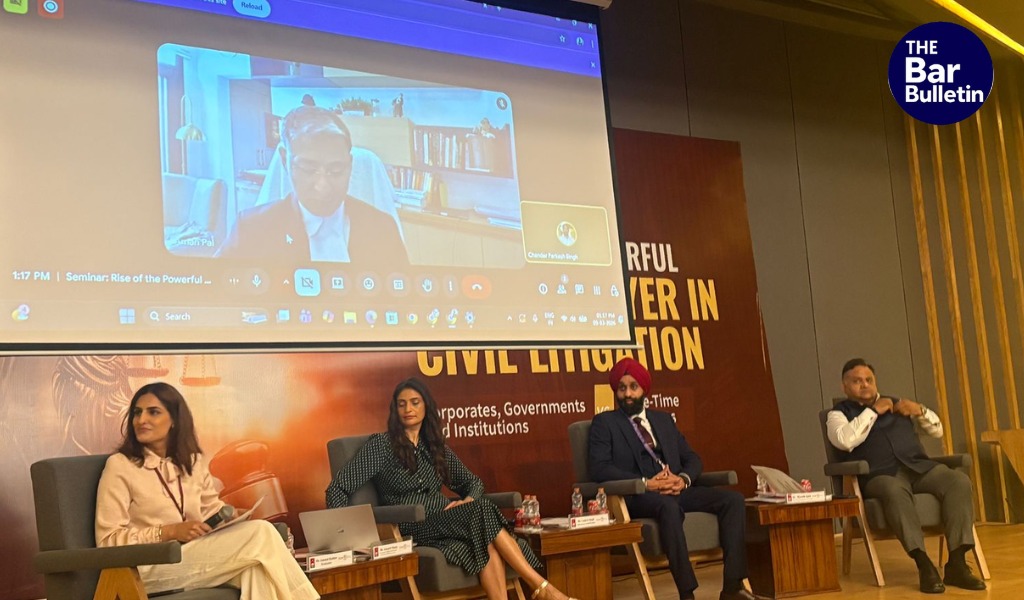

At a panel discussion hosted during India International Disputes Week 2024 at Chandigarh University, legal experts from India and abroad examined the growing influence of institutional litigants in civil justice systems and the challenges faced by individuals who approach courts only once in their lifetime. The session titled “Rise of the Powerful Repeat Player in Civil Litigation: Corporates, Governments and Institutions vs. One-Time Litigants” brought together practitioners and academics to reflect on how structural imbalances affect access to justice.
Moderating the discussion, Amanat Kahlon of the University Institute of Legal Studies, Chandigarh University, opened the session by framing the central issue: while corporations, governments and large institutions appear before courts repeatedly and build familiarity with procedures, resources and strategies, most individuals encounter litigation only once. This disparity, she noted, creates a structural reality within modern legal systems where repeat players often operate with institutional knowledge, professional networks and financial strength that one-time litigants typically lack. She emphasized that understanding how this imbalance shapes litigation outcomes is essential for evaluating fairness and accessibility within civil justice systems.
Responding first, Lakhvir Singh, a Solicitor at Alexander & Co Solicitors LLP in Nottingham, reflected on how repeat institutional litigants naturally develop advantages through experience. According to him, strategic familiarity with litigation allows repeat players to assess risks, control costs and determine when to pursue or avoid litigation. He explained that this accumulated experience enables institutions to make informed decisions about dispute resolution in ways that first-time litigants often cannot. At the same time, he pointed to procedural safeguards within the UK legal system, particularly the Civil Procedure Rules, which are designed to level the playing field by providing structured guidance on how claims should be filed, documents served and proceedings conducted. These rules, he noted, aim to ensure that even parties unfamiliar with the system have a fair opportunity to present or defend their claims.
Building on the theme of balancing inequalities, Gurprit Mattu, Commercial litigation barrister and Mediator based in London, highlighted the growing role of mediation in addressing power imbalances between institutional actors and individual litigants. She explained that mediation in England has evolved into a respected dispute resolution mechanism and, in some circumstances, courts may even direct parties to attempt mediation. According to her, early mediation often prevents disputes from escalating into lengthy and expensive litigation. She stressed that litigation costs in England can be substantial because the losing party may be required to pay a significant portion of the winner’s legal fees, along with interest and damages. This financial reality, she argued, incentivizes parties to attempt mediation early, when costs have not yet accumulated and both sides can negotiate from a relatively equal footing. Mattu also described practical experiences from shareholder disputes and commercial conflicts, noting that prolonged litigation can destroy business relationships and drain financial resources, whereas mediation offers a confidential and flexible environment where parties retain control over the outcome. Importantly, she emphasized that mediation is voluntary in spirit even when suggested by courts and parties retain the freedom to walk away if a settlement cannot be reached.
Turning to the Indian context, senior advocate Manish Jain of the Punjab and Haryana High Court presented a candid assessment of the realities faced by individual litigants in the country’s civil justice system. While acknowledging that mediation and negotiated settlements can provide relief, he argued that such settlements often represent compromises neither party originally sought. In disputes between individuals and large corporations or government bodies, he observed, individuals frequently settle not out of choice but due to the burdens of prolonged litigation. He explained that institutional litigants typically possess extensive legal resources, established panels of lawyers and the capacity to pursue appeals across multiple levels of the judiciary. For an individual litigant, however, each additional appeal means new legal costs, travel, and delays. Even when a favourable judgment is secured, he pointed out, the opposing institutional party can continue the legal battle through successive appeals up to the Supreme Court. In such circumstances, individuals may eventually accept negotiated settlements simply to obtain closure rather than continue a long and uncertain legal struggle. Jain also raised concerns about frivolous litigation and procedural delays, arguing that stronger enforcement of litigation costs against losing parties could discourage unnecessary lawsuits and reduce strain on the judicial system.
Offering a practical perspective on advocacy and reform, Aman Pal, Senior Advocate at the Punjab and Haryana High Court, joined the discussion virtually and traced the conceptual origins of the “repeat player versus one-shotter” framework to the work of legal sociologist Marc Galanter in 1974. He noted that repeat players benefit from accumulated experience, familiarity with court procedures and strategic resources that individuals rarely possess. However, Pal highlighted that technological and procedural reforms in India are gradually narrowing this gap. The digitisation of court records, the expansion of e-courts and the introduction of online case-tracking systems have made information far more accessible to litigants and lawyers alike. Whereas earlier individuals had to rely heavily on lawyers and court clerks simply to obtain copies of orders or track case progress, today many such services are available digitally. According to him, these reforms allow individual litigants and their lawyers to research precedents, monitor proceedings and better prepare their cases. Ultimately, he stressed that while structural disparities may remain, strong advocacy, legal craftsmanship and improved access to information can empower lawyers representing individuals to effectively challenge institutional litigants.
The discussion concluded with reflections on the broader implications for access to justice. Across jurisdictions, the panellists agreed that while repeat players may naturally accumulate advantages through experience and resources, procedural safeguards, mediation mechanisms, cost reforms and digital transparency can help reduce these disparities.