


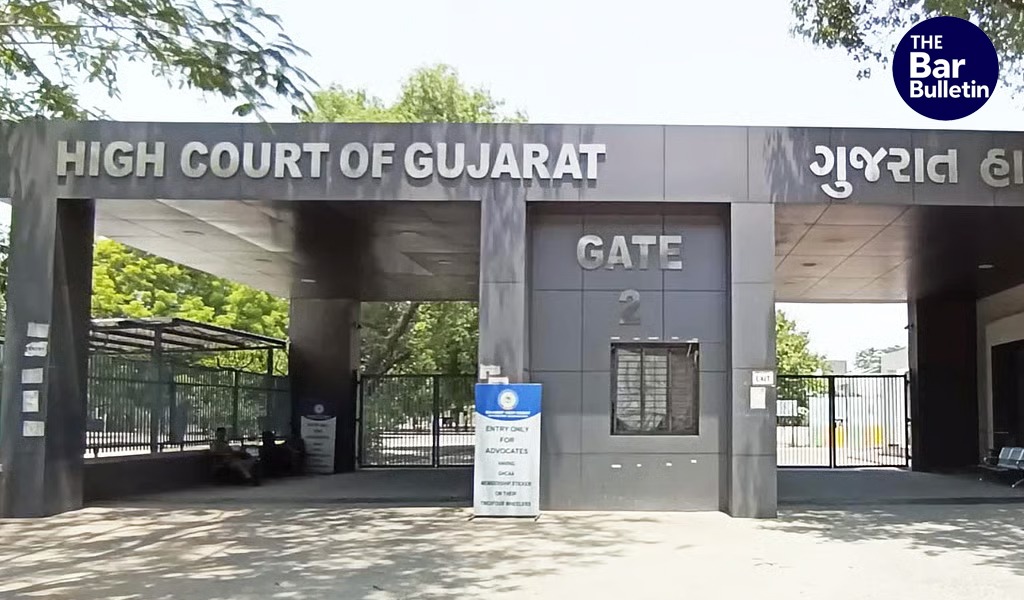

While clarifying that Section 129 of the CGST Act are standalone provisions as far as no element of intention of evasion of tax is involved, the Gujarat High Court (Ahmedabad Bench) ruled that there is no bar in invoking the provision of Section 130 of the CGST Act for confiscation at threshold, if on the seizure of goods and conveyance it is found that the entire transaction reveals the intention to evade the tax.
The Court accepted the stand of the Revenue Department that once it is found that there is a blatant evasion of tax at the stage of seizure and detention of goods under Section 129 of the Act, the authorities are empowered to proceed for confiscation of goods or conveyance.
However, the Court clarified that an officer who intercepts a vehicle/conveyance on receiving information on evasion of tax can carry out physical verification, only after obtaining necessary approval from the Commissioner or an officer authorised on his behalf.
Since the confiscation of goods was resorted to by invoking Section 130 of the CGST Act by issuance of MOV-10 or MOV-11 midway, without completing the entire procedure contemplated under Section 129 of the CGST Act, the Court cautioned that the action taken under FORM MV-10 and 11 for confiscation of goods or penalty other than the Officer having jurisdiction as mentioned herein above will be without authority and illegal.
At the same time, the Court pointed out that the goods and conveyance are liable to be confiscated, if it is found that there is blatant violation of the evasion of tax, while ferrying the goods through transit, and each inspection, seizure and inspection depends on the facts of the case, and no blanket direction can be issued to the respondents restricting them for examining the intention of evasion of tax.
The Court also cautioned that since the action of confiscation is the last resort, and invites serious consequences, the same cannot be resorted to only on suspicion, bereft of any concrete material, and on ipse dixit. The proper officer has to examine the genuineness of the documents, invoices, e-way bills, consignment notes, and registration particulars produced at the time of interception.
Thus, the formation of the opinion of ‘intent to evade tax’, on the act or omission of a person, who is not proximately or directly linked to such activity with the dealer, cannot be made the foundation for confiscation of goods, added the Court.
The Court therefore directed that the notices issued under FORM MOV-10 or Order under FORM MV-11 shall be re-examined, and the goods or conveyance, seized during transit, shall be released by resorting to the provisions of Section 129 of the Act in case any infringement is found under that Section.
Emphasising that the quintessential feature is of forming an opinion of “evasion” of tax, the Division Bench comprising Justice A.S. Supehia and Justice Pranav Trivedi observed that from the stage of “detention” to “seizure”, the proper officer is authorised to form an opinion for “confiscation” under section 130 of the CGST Act, which is a harsh action taken against the dealer/trader. Once the goods and conveyance are seized, no remedy of provisional release of the same is available under Section 67(6) of the CGST Act after the amendment, and the only remedy is the one prescribed under Section 129 of the CGST Act.
Reference was made to the case of Synergy Fertichem Private Limited vs. State of Gujarat, [(2019) 12 TMI 1213 (HC-Guj.)], where the Division Bench of the Gujarat High Court has emphatically held that Section 130 of the CGST Act, which provides for confiscation of the goods or conveyance, is not, in any manner, dependent on Section 129 of the CGST Act. The Court therein, also held that “even if the goods or the conveyance is released upon payment of the tax and penalty under Section 129 of the CGST Act, later, if the authorities find something incriminating against the owner of the goods in the course of the inquiry, then it would be permissible to them to initiate the confiscation proceedings under Section 130 of the CGST Act”.
The Bench also cited the Minutes of the 39th GST Council Meeting held on March 14, 2020, which indicated the intention of the Council to delink the transit-related proceedings under Section 129 of the CGST Act from the proceedings of confiscation under Section 130 of the CGST Act. The same was fortified by the Finance Bill, 2021.
Briefly, the goods belonging to the petitioners were seized and detained while in transit, i.e. the goods being transported in the conveyance (trucks/vehicles) were intercepted by the Proper Officer and upon examination of the e-way bills and other supporting documents, notices in Form GST MOV-10 were issued proposing confiscation of the goods. Later, the authorities confiscated the goods that were seized during transit under Section 129 of the CGST Act. The petitioners, therefore, challenged the mechanical invocation of Section 130 of the CGST Act by the respondents for confiscation of goods immediately upon interception under Section 129 of the CGST Act, as impermissible in law.
Appearances:
Senior Advocate Tushar Hemani, along with Advocates Vaibhavi Parikh, Avinash Poddar, Jatin Harjai, Sujay Adeshra, Chetan K. Pandya, Monal S. Chaglani, Uchit N. Sheth, and Hardik P. Modh, for the Petitioners/ Taxpayer
Advocate General Kamal Trivedi, along with Advocates Vinay Bairagra, Harshvardhan Sharma, Shrunjal Shah, and Nimisha Parekh, for the Respondents/ Revenue
