


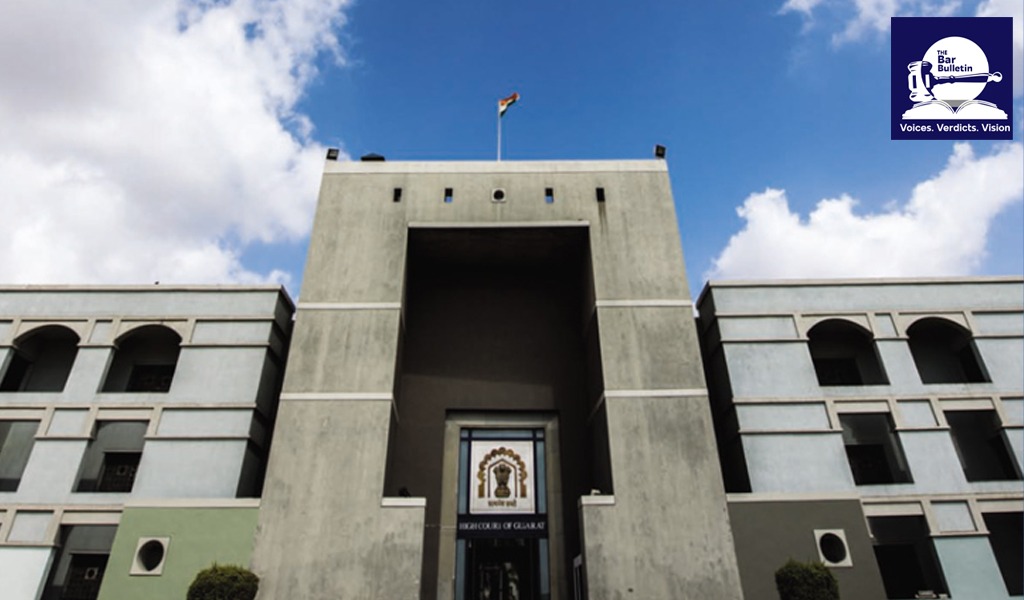

The Gujarat High Court has dismissed the State’s appeal against the acquittal of several accused in a 1997 dowry-related death case and has simultaneously allowed the cross-appeal filed by the husband, setting aside his conviction under Sections 498A and 107 IPC. The bench of Justice Ilesh J. Vora and Justice R. T. Vachhani held that the “general wear and tear of matrimonial life or vague allegations having no mentioning of specific incident of demand of dowry by the accused or hostile attitude of husband and/or his relatives cannot be termed as cruelty.”
The matter arose from the death of a woman who was found to have consumed poison, with allegations of sustained harassment, dowry-related demands, and physical and mental cruelty forming the core of the prosecution’s case. The Sessions Court had acquitted all accused of the major charges under Sections 302, 306, 498A, 107 and 114 IPC, except for convicting the husband only under Section 498A read with Section 107 IPC and sentencing him to three years’ rigorous imprisonment and a fine of ₹5,000. The State of Gujarat filed a Criminal Appeal challenging the acquittal of the co-accused and the husband’s acquittal from the graver charges, while the husband filed an appeal seeking to overturn his conviction under Section 498A
The High Court examined the evidence and held that the prosecution failed to establish any specific, continuous or wilful acts constituting cruelty under Section 498A IPC, nor any instigation or abetment necessary to sustain a charge under Section 306 IPC. It noted significant inconsistencies, absence of recovery of poison, lack of proof of common intention, and contradictions in witness testimonies. The forensic evidence suggested the consumption of poison, but no material linked the act to the accused.
Referring to settled principles laid down in Indrasingh Raol v/s. State of Gujarat, 1999(3) GLR 2536, Manju Ram Kalita v. State of Assam , (2009) 13 SCC 330, V. Bhagat v. D.Bhagat, AIR 1994 SC 710, and Wazir Chand vs. State, AIR 1989 SC 378, the Bench reiterated that ordinary wear and tear of matrimonial life or isolated quarrels do not amount to cruelty or abetment. The Court also took note of affidavits filed by the deceased’s siblings indicating an amicable settlement that they have no problem if the conviction is set aside.
Finding no perversity in the trial court’s appreciation of evidence, the High Court held that the acquittal carried a reinforced presumption of innocence. It, therefore, dismissed the State’s appeal challenging the acquittal of the co-accused and allowed the husband’s appeal, setting aside the conviction under Section 498A read with Section 107 IPC.
Appearance:
Mr. Hardik Mehta, APP for the Appellant(s) No. 1
H B Shethna for the Respondents
