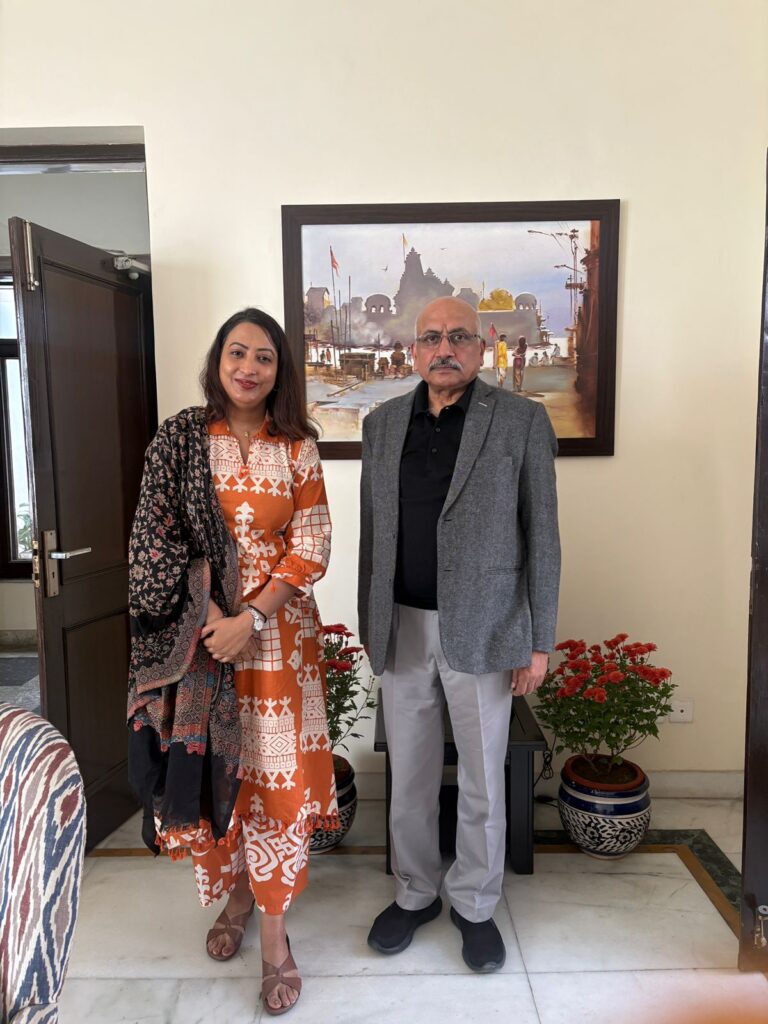
Justice Hemant Gupta currently serves as the Chairperson of the India International Arbitration Centre. He is a former Judge of the Supreme Court of India and has previously served as the Chief Justice of the Madhya Pradesh High Court. Prior to that, he held judicial office as a Judge of the Patna High Court as well as the Punjab and Haryana High Court.
1. What motivated your decision at this juncture regarding your continuation at IIAC?
Every individual has own limits. I have never been one to aggressively promote or market an institution. I candidly conveyed to the authorities that IIAC would now benefit from leadership with fresh energy, new ideas, and a different approach to working. With my impending retirement on 22nd December, and have no plans to seek an extension, I felt that periodic change at the helm is vital for any institution. I believe, it is time for someone new to take IIAC forward.
2. Looking back, what do you consider your most significant achievements during your tenure?
Framing the regulations for arbitration under IIAC was one of the most significant milestones of my tenure. I was also deeply committed to integrating the MSME sector into the framework of institutional arbitration. A key initiative in this regard was the introduction of a provision for legal aid to stressed MSME units, an idea I proposed and which was subsequently accepted. It is important to note that MSME disputes are largely statutory in nature, often arising even in the absence of a formal arbitration clause.
In a further step towards inclusivity, we entered into an MoU with Bhashini, the Government of India’s AI-based language translation platform. Our vision was simple yet powerful: any MSME entrepreneur, whether in Tamil Nadu or any other part of the country, should be able to initiate arbitral proceedings in their own language. This marked a significant step towards democratising access to arbitration in India.
3. Were there systemic or institutional constraints that made progress more difficult?
The single biggest constraint we faced was funding. With an annual budget of approximately ₹3 crore nearly half of which is absorbed by salaries, the remaining resources were scarcely sufficient to sustain programmes, organise conferences, or carry out meaningful national outreach. Each request for funds had to navigate a long and layered bureaucratic process involving multiple ministries, resulting in inevitable delays and severely limiting our ability to act with agility and independence.
4. Was funding the biggest challenge you faced?
Yes, funding and uncertainty around it, sometimes it would come, sometimes not. Without financial autonomy, growth is stifled.
5. Do you feel your original vision for IIAC was realised? If not, where did it fall short?
I believe much more could have been done, but institutional growth requires money, liberty to act, and collaboration of stakeholders. One person or one office cannot transform an arbitration ecosystem in the country. More outreach programmes, regional seminars and roadshows could have been conducted if financial autonomy existed.
6. How do you evaluate IIAC’s evolution under your leadership?
It was a challenge I accepted with passion. While meaningful progress was made in terms of structure and systems, far greater visibility and acceptance was needed in the arbitration community. Promotion of arbitration requires a collective effort of all the stakeholder, such as Government, PSUs, lawyers, corporations and litigants.
7. How would you describe the culture at IIAC during your tenure?
We built a hardworking and committed team. They executed the vision sincerely. There were natural changes, some employees left, but overall I have no grievance about the internal functioning.
8. What are your plans after completing your term?
I will remain active. I intend to contribute to arbitration and also involve myself in social causes. As long as I am capable of working, I will continue to do so.
9. Do you see yourself continuing to contribute to arbitration?
Certainly. Arbitration is still an area very close to me. I will remain associated with it one way or another.
10. If IIAC were being set up today, what would you do differently?
Three things are essential: adequate funding, autonomy to use the funds, and a clear government-backed directive encouraging institutions and PSUs to prefer institutional arbitration. For instance, earlier contracts named ICADR by default. My suggestion was to formally replace that with IIAC through a Government of India notification, but that did not happen. That single step would have significantly increased institutional adoption.
Without structural backing and policy clarity, no institution can fully realise its potential.