


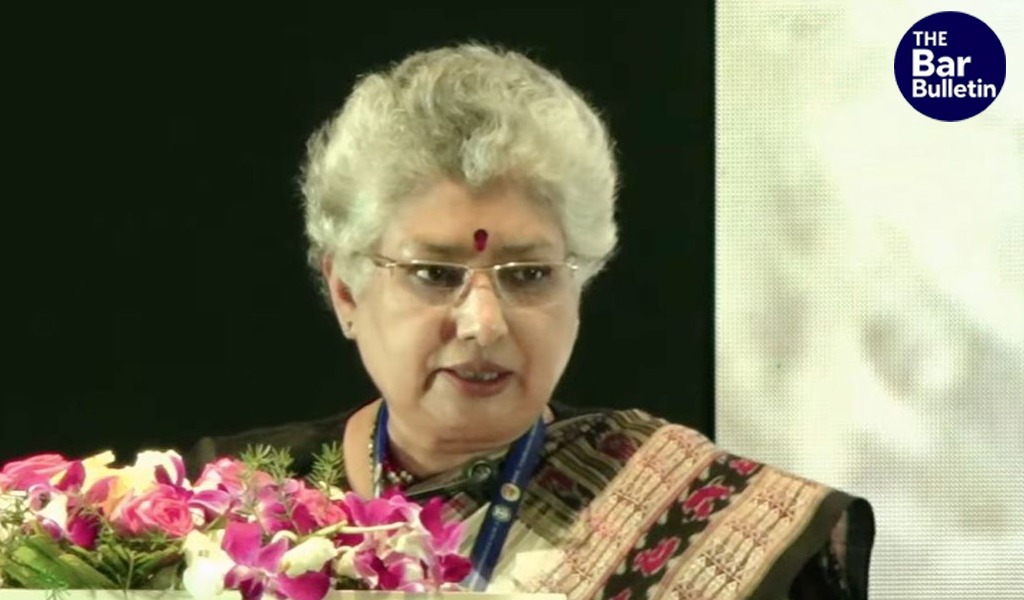

Justice B. V. Nagarathna called for the constitution of a broad-based Judicial Reforms Commission to address mounting pendency and systemic delays in courts, emphasising the need for coordinated action across the judiciary, bar and government.
Speaking at the 1st Supreme Court Bar Association Conference in Bengaluru, Justice Nagarathna proposed that such a commission should include representatives from the Supreme Court, High Courts, district judiciary, members of the Bar, as well as the Attorney General, Solicitor General and government stakeholders.
Opening her address, Justice Nagarathna welcomed the hosting of the conference in Bengaluru, noting that just as the city gave the world the Bangalore Principles of Judicial Conduct, the present conference should aim to produce meaningful judicial reforms.
At the outset, she underscored that systemic delay is not the result of a single failing, but a consequence of rational behaviour by multiple stakeholders. “A litigant benefits from prolonging proceedings, lawyers seek adjournments, government departments prefer appeals, and judges exercise caution to avoid appellate reversal,” she observed, adding that while each action may be individually rational, collectively they contribute to systemic inefficiency.
Highlighting the scale of the problem, Justice Nagarathna pointed to the widening gap between case inflow and disposal, resulting in a growing backlog across all levels of the judiciary. She also questioned the current understanding of “pendency”, noting that even defective filings are counted in judicial statistics. “Why should a defective case be given a number at all?” she asked, suggesting that only cases that are procedurally complete and actively before courts should count towards pendency.
The judge identified several structural causes of delay, including prolonged service of notice, delays in filing written statements, frequent adjournments, and procedural tactics employed to stall proceedings. She called for modernisation of service mechanisms, including the use of electronic modes such as WhatsApp and other digital tools.
Justice Nagarathna also highlighted inconsistencies between trial courts and appellate courts, noting that strict procedural enforcement at the trial stage is often diluted at the appellate level on grounds of natural justice, thereby contributing to delays.
Addressing concerns relating to judicial functioning, she acknowledged that judges often face a dual burden conducting hearings during court hours while reserving time after hours, weekends and vacations for writing judgments.
A significant portion of her address focused on the role of the government as both a litigant and a systemic contributor to pendency. She observed that government departments frequently pursue appeals as a matter of routine due to fear of audit objections, vigilance scrutiny or political consequences. “An appeal signals diligence, whereas a decision not to appeal invites scrutiny,” she noted, adding that this approach leads to avoidable litigation reaching higher courts.
Justice Nagarathna described the State as “both the complainant and the cause” of judicial backlog, particularly in service and taxation matters. She emphasised that poor administrative decision-making and lack of training at the governmental level often generate avoidable disputes.
Further, she pointed to inadequate investment in judicial infrastructure, delays in judicial appointments, and insufficient technological support as critical factors affecting the capacity of courts. “Judicial pendency is not merely an internal problem of courts—it is also a product of governmental choices,” she said.
Outlining a roadmap for reform, Justice Nagarathna proposed measures across stakeholders. For the judiciary, she stressed case management, limiting adjournments, use of technology, prioritisation of cases and institutional accountability. For lawyers, she emphasised ethical litigation practices, timely filings and responsible use of appeals. For litigants, she called for realistic expectations, avoidance of frivolous litigation and openness to alternative dispute resolution.
From the government’s perspective, she urged the formulation of a practical litigation policy, restraint in filing appeals, improved administrative decision-making, timely judicial appointments and greater investment in court infrastructure.
Concluding her address, Justice Nagarathna urged stakeholders to ensure that the conference produces concrete outcomes. She called upon participants to submit actionable suggestions to SCBA leadership to facilitate dialogue with the Supreme Court and the Government, stating that the conference must go beyond deliberation and lead to meaningful reform.