



Inaugural BASL Human Rights Oration
organized by the Bar Association of Sri Lanka
in collaboration with Commonwealth Legal
Education Association (CLEA)
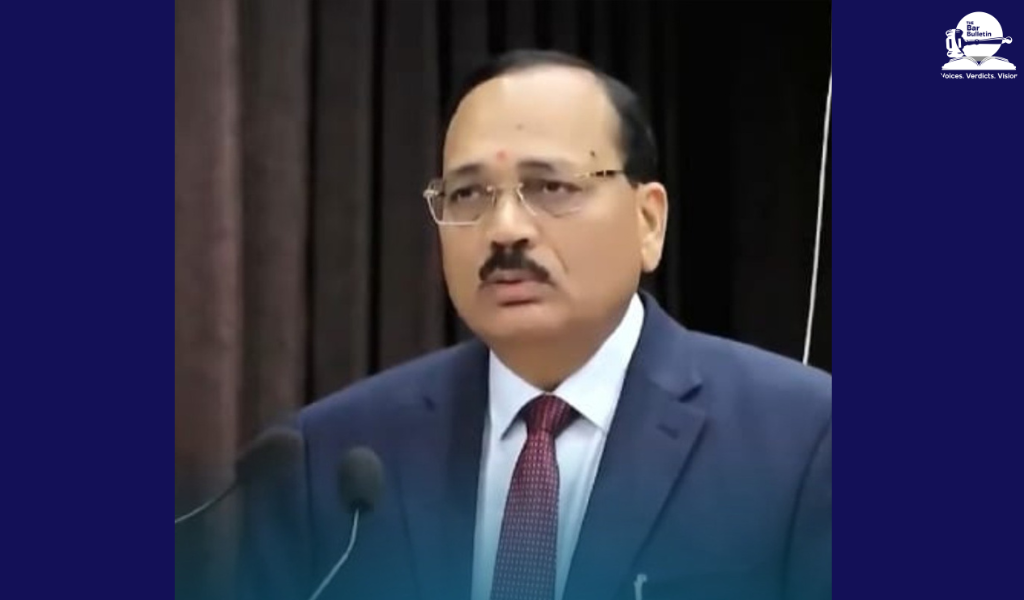
The Bar Association of Sri Lanka (BASL), in collaboration with the Commonwealth Legal Education Association (CLEA), hosted the Inaugural BASL Human Rights Oration at Colombo on October 23, 2025. The keynote address was delivered by Hon’ble Justice Suryakant, Judge of the Supreme Court of India.
The event was graced by Mr. Rajeev Amarasuriya, President of the Bar Association of Sri Lanka; Mr. Chathura A. Galhena, Secretary of BASL; Mr. Lakshan Dias, Chairman of the BASL Human Rights Committee; Mr. V. Puvitharan, Chairman of the Legal Aid Commission of Sri Lanka; and Prof. (Dr.) S. Sivakumar, President of CLEA**,** along with senior members of the legal fraternity and invited dignitaries.
In his oration, Justice Suryakant reflected on India’s long civilizational commitment to justice and human dignity, tracing its roots from ancient texts such as Arthashastra and Dhamma to the modern constitutional framework. He emphasized that “justice in India has never been transactional but transcendental, an ethical and compassionate duty of the State.”
Highlighting the pivotal role of the Indian judiciary in safeguarding human rights, Justice Suryakant referred to landmark cases including Hussainara Khatoon v. State of Bihar, Suk Das v. Union Territory of Arunachal Pradesh, Delhi Domestic Working Women’s Forum v. Union of India, and NALSA v. Union of India. These judgments, he said, demonstrate how free legal aid and judicial activism have transformed access to justice for millions.
Justice Suryakant elaborated on the institutional framework established under the Legal Services Authorities Act, 1987, which created NALSA, State Legal Services Authorities, and District Legal Services Authorities. He described this as “one of the world’s largest and most inclusive legal aid networks,” comprising over 50,000 paralegal volunteers and more than 700 District Legal Services Authorities.
He also cited NALSA’s innovative programs such as Tele-Law, Lok Adalats, and legal literacy campaigns, noting that these initiatives have “brought justice to the doorstep of those who had never before spoken to a lawyer.” Over 6 million consultations have been conducted under the Tele-Law initiative, bridging geographical and social divides.
Drawing global parallels, Justice Suryakant lauded Sri Lanka’s Legal Aid Commission for its outreach to rural and vulnerable populations, and also referenced successful models from South Africa and Brazil. He stressed that “legal aid is not a luxury but a lifeline essential for safeguarding equality before the law.”
Calling for a fusion of institutional and grassroots approaches, Justice Suryakant emphasized that “while strong institutions can deliver justice, only an engaged citizenry can sustain it.” He encouraged collaboration between legal institutions, academia, and civil society to make justice more accessible and participatory.
Concluding his address, Justice Suryakant reaffirmed India’s commitment to strengthening regional and Commonwealth cooperation in advancing human rights and access to justice. “Justice is not a destination, it is a journey of nations, institutions, and hearts,” he said, extending gratitude to the Bar Association of Sri Lanka and CLEA for hosting the inaugural oration.