


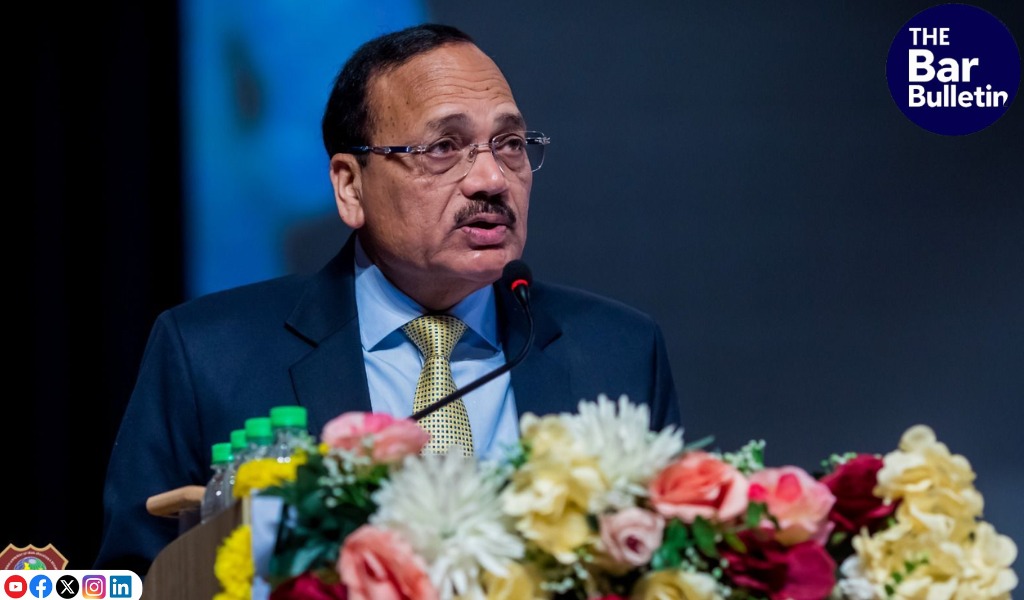

Justice Suryakant, Chief Justice of India delivered the convocation address at the 2026 Convocation Ceremony of Chanakya National Law University (CNLU), Patna, for students graduating from five batches spanning 2019–2020 to 2024–2025. Speaking on the theme “Becoming Whole Lawyers in an Incomplete World,” he reflected on the significance of the convocation as a moment of acknowledgment, while reminding graduates that their professional responsibilities are only just beginning.
At the outset, Justice Suryakant expressed gratitude to the University leadership, particularly the Vice-Chancellor, Prof. (Dr.) Faizan Mustafa, acknowledging his long-standing contribution to legal education and academic leadership. He noted that institutions are ultimately defined not merely by administration, but by the ideas they choose to uphold, observing that CNLU’s association with the name of Chanakya symbolises effort, discipline, and responsibility rather than privilege or entitlement.
Emphasising the historical and intellectual legacy of Bihar, Justice Suryakant situated legal education within a broader tradition of ethics, compassion, and justice. Referring to figures such as Buddha, Mahavira, and leaders of the freedom movement, he underlined that justice is not an abstract concept but a lived commitment to fairness, dignity, and reduction of human suffering.
Addressing the graduating students directly, Justice Suryakant stated that the convocation marked completion but not finality. He observed that the legal profession, like the world itself, remains unfinished and evolving. In this context, he urged students to aspire to be “whole lawyers”, professionals grounded in self-belief, capable of resilience, and conscious that law is a profession to be served, not a force that should consume their lives.
He highlighted the importance of recognising one’s own worth, cautioning young lawyers against undervaluing themselves based on early designations, salaries, or setbacks. According to him, ambition anchored in effort and responsibility should not be seen as something to apologise for. Drawing from the students’ own experiences at CNLU, he reminded them that they had already demonstrated courage, preparation, and the ability to speak without shrinking.
Reflecting on setbacks in legal careers, Justice Suryakant noted that early failures rarely define a lawyer’s future. Sharing an experience from his tenure as Executive Chairman of the State Legal Services Authority, Chandigarh, he emphasised that resilience, reflection, and endurance are integral to the profession, and that the law often tests patience more than it rewards immediate success.
A significant portion of the address focused on the need to maintain a sense of self beyond the law. Justice Suryakant acknowledged the demanding nature of the profession, cautioning against total surrender to work at the cost of empathy and personal balance. He encouraged graduates to preserve interests and relationships outside their professional lives, observing that such balance ultimately makes for better lawyers and a more just legal system.
Concluding his address, Justice Suryakant urged graduates to carry forward the shared spirit of CNLU of discipline, debate, persistence, and humility. He reminded them that the legitimacy of law flows from the people it protects and called upon them to use their skills to serve those in need, reshape the law where required, and uphold its constitutional promise. He extended his congratulations to the graduating classes and expressed hope that their professional journeys would remain meaningful and rooted in self-awareness and responsibility.