


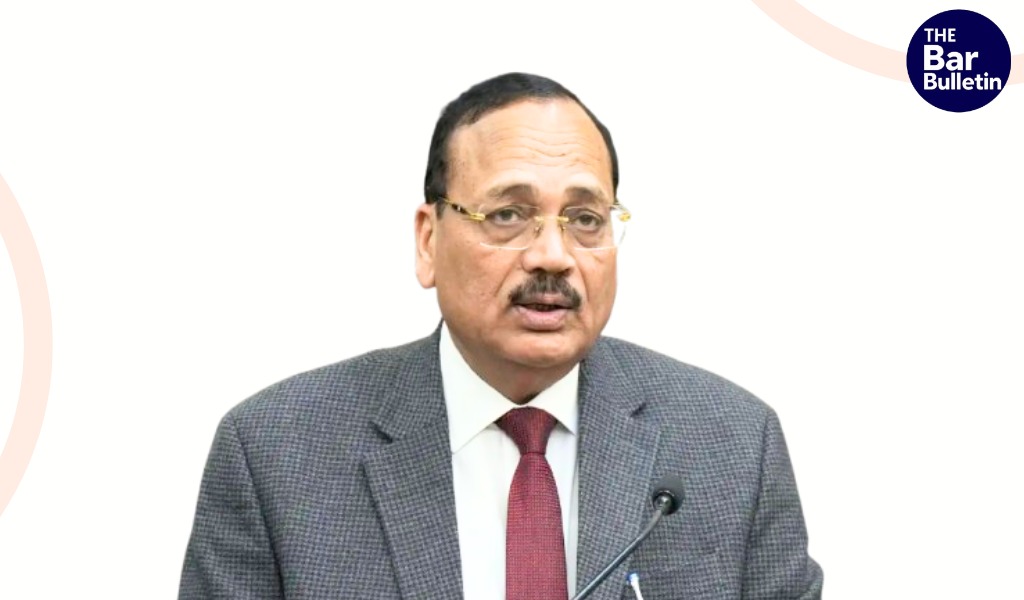

At the Eighteenth Convocation Ceremony of National Law University, Jodhpur, Hon’ble Mr. Justice Suryakant delivered a deeply reflective address urging graduating students to view law not as a static structure, but as a living democratic space shaped by participation, responsibility, and ethical engagement.
Drawing inspiration from the imposing Mehrangarh Fort that crowns the Blue City, Justice Suryakant observed that a fortress symbolizes vigilance and protection against disorder. In its earliest conception, law too functioned as such a fortress erected to guard society against arbitrariness and chaos. However, in a constitutional democracy, law cannot remain a fortress alone. It must evolve into a forum where differences are debated, rights articulated, and power is reasoned with rather than merely resisted.
Addressing the graduating class, he cautioned against the illusion that law is a finished product. Quoting Oliver Wendell Homles Jr, he reminded students that “the life of the law has not been logic; it has been experience.” Law evolves because society evolves, and its legitimacy lies in its ability to respond thoughtfully to change. He emphasized that the Constitution of India was framed as a living framework, not a static scripture. Its guarantees from personal liberty to privacy, from formal equality to substantive justice have grown through interpretation shaped by contemporary realities.
Tracing the historical development of constitutionalism, Justice Suryakant referred to the Magna Carta as an early affirmation that power must answer to law. What began as a limited safeguard against arbitrary detention gradually expanded into broader commitments to due process, equality, and dignity. Similarly, in India, Article 14’s promise of equality before the law has evolved from a formal assurance into a dynamic tool for achieving substantive fairness. The law’s destination, he noted, is never fixed; it is shaped by the experiences and aspirations of the society it serves.
He reminded graduates that institutions like National Law University, Jodhpur do not merely produce skilled professionals they export standards. Excellence, he observed, must never become exclusion, and sophistication must not distance the law from the people it is meant to serve. Law is a public trust, and the credibility of courts depends as much on the Bar as on the Bench. When lawyers prioritise spectacle over substance or complexity over clarity, they risk rebuilding the very fortress mentality that democracy seeks to transcend.
In a personal and warm reflection, Justice Suryakant acknowledged the distinctive campus life of NLU Jodhpur its hostels, student gatherings, festivals, and informal debate spaces. These forums of friendship and argument, he remarked, shape professional temperament as profoundly as classroom instruction. Long after specific citations fade, the habits of listening, persuasion, and principled disagreement forged during these years will endure.
Concluding his address, Justice Suryakant returned to the image of Mehrangarh. A fort stands still, he said, but a forum lives through participation. He urged the graduating class to go forth not as guardians of a closed citadel, but as architects of an open forum committed to widening access, deepening justice, and strengthening institutions in an unfinished Republic.
He extended heartfelt congratulations to the parents and families of the graduates, expressed appreciation to the faculty and administration, and conveyed his warmest wishes to the graduating class as they embark upon their professional journeys.