


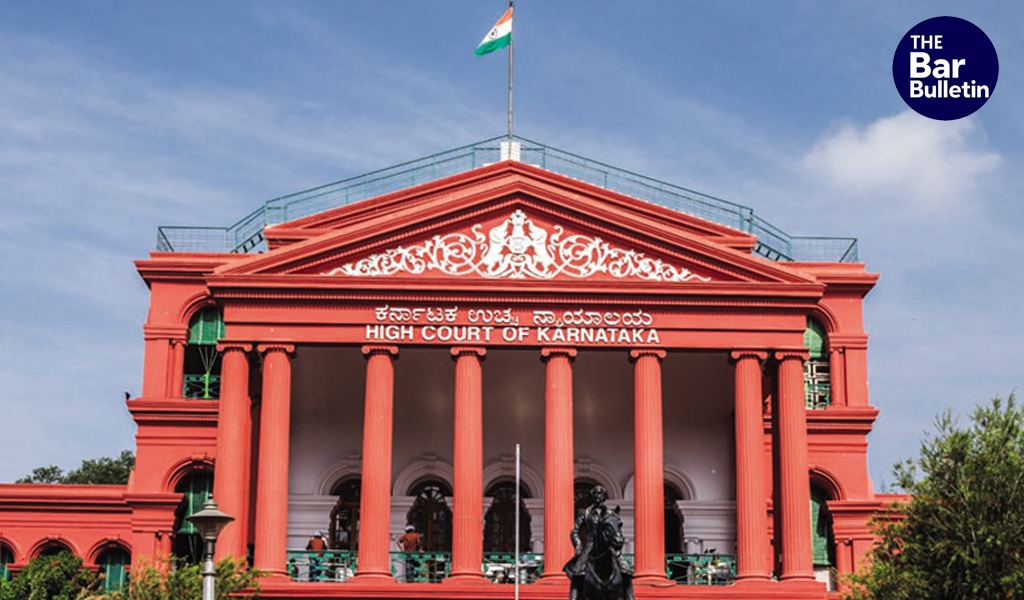

The Karnataka High Court at Bengaluru has allowed a criminal appeal and granted regular bail to an accused booked under provisions of the Bharatiya Nyaya Sanhita (BNS), 2023 and the Scheduled Castes and Scheduled Tribes (Prevention of Atrocities) Act, 1989, holding that continuation of judicial custody without producing the accused before court and without a valid remand order is illegal
Justice G. Basavaraja was hearing Criminal Appeal No. 2056 of 2025 filed under Section 14A(2) of the SC/ST (PoA) Act, challenging the trial court’s order dated 26 September 2025 which had rejected the appellant’s application for regular bail. The case arose out of Crime No. 351/2025 registered by Subramanyapura Police for offences under Sections 69, 89 and 351(2) of the BNS, 2023 and Section 3(2)(v) of the SC/ST (PoA) Act.
According to the prosecution, the complainant alleged that the accused, with whom she was in a live-in relationship on the assurance of marriage, had sexual relations with her, resulting in pregnancy, and later refused to marry her allegedly on the ground of caste, besides threatening her. The accused was arrested on 15 September 2025 and remanded to judicial custody till 30 September 2025.
The High Court noted that on expiry of the remand period on 30 September 2025, the accused was neither produced before the trial court physically or through video conferencing nor was any application filed by the Investigating Officer seeking extension of judicial custody. The trial court merely adjourned the matter without passing a fresh remand order. The Presiding Officer’s report confirmed non-production of the accused and non-compliance with the mandatory requirement under Section 187(4) of the BNSS, 2023
Relying on the Supreme Court’s decisions in Jigar Alias Jimmy Pravinchandra Adatiya v. State of Gujarat (2023) 6 SCC 484 and Subhash v. State of Madhya Pradesh, the High Court reiterated that extension of judicial custody without production of the accused is impermissible and that once a remand order expires, continued detention becomes illegal and cannot be cured by a subsequent order.
The Court further observed that the alleged offences were not punishable with death or imprisonment for life and that the accused was not required for further investigation. In these circumstances, the Court held that the appellant was entitled to bail.
Allowing the appeal, the High Court set aside the impugned order of the trial court and granted bail to the accused on execution of a self-bond of ₹1,00,000 with one surety, subject to conditions including non-tampering of prosecution witnesses and non-indulgence in similar offences in future.
Appellant:
For Appellant: Sri Nikhil Sai M; Smt Yuktha N, Advocates
For Respondent: Smt Asma Kauser, Addl Spp for R1, R2.
