


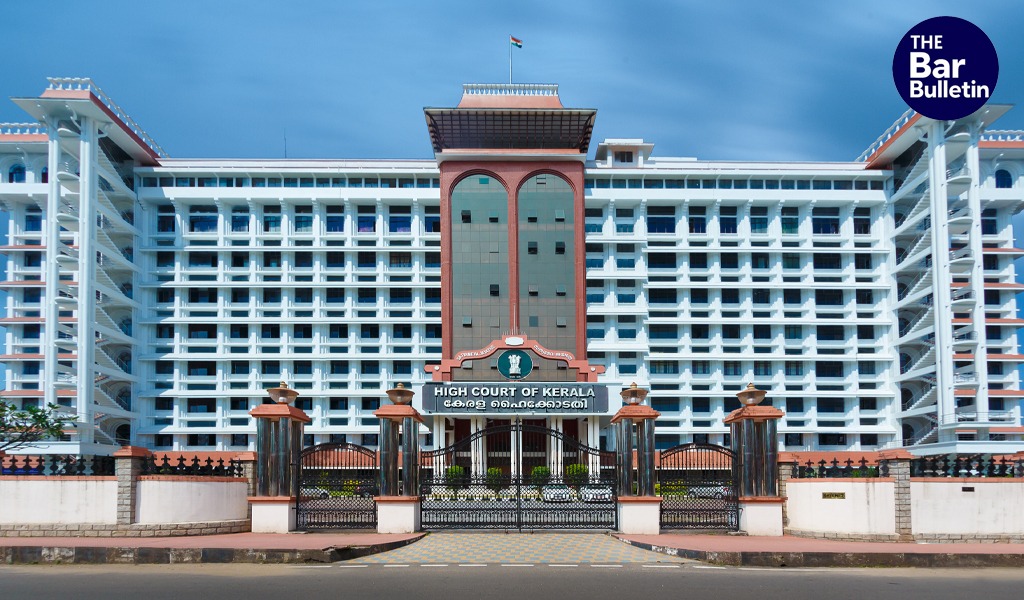

In a suo motu matter before the Kerala High Court based on the report by the Sabarimala Special Commissioner regarding the criminal misappropriation of the proceeds of ‘Adiya Sishtam Ghee’ at various counters at Sannidhanam by the Devaswom Vigilance, a Division Bench of Justice Raja Vijayaraghavan V. and Justice K.V. Jayakumar opined that a comprehensive investigation was required to ascertain the full extent of misappropriation of funds and directed the formation of an investigation team while passing other directions.
The ‘Adiya Sishtam Ghee’ is a sacred offering sold to devotees, and the proceeds from its sale constitute the Devaswom revenue.
The Court perused the report and noted that the Chief Vigilance and Security Officer of the Travancore Devaswom Board conducted an inspection based on a report received from the Temple Special Officer, which disclosed that the sale proceeds of 16,628 packets of ghee had not been remitted to the Devaswom account.
It was noted that the contractor who was assigned the task of filling ghee into packets for sale at various counters was paid at a rate of Rs. 0.20 per packet, and that the entire infrastructure was provided by the Devaswom Board. The Court stated that inspection had revealed that from 17-11-2025 to 26-12-2025, the contractor had packed 3,52,050 packets of 100ml each, and they were then entrusted to the Temple Special Officer for sale.
The Court stated that after deducting the damaged packets and the balance packets in the counter, the sale proceeds from 89,129 packets should have been remitted to the Devaswom Board. However, the employees had deposited only the proceeds from 75,450 packets, and the amount of Rs. 13,67,900/- had not been remitted. It was further stated that the failure to insist on a proper handover and taking over process constitutes a fundamental breach of elementary safeguards.
Thus, the Court held that the employees who were in charge from 17-11-2025 to 26-12-2025 were responsible for the misappropriation of the sale proceeds of 13,679 packets of ghee. It was also noted that out of the total stock, around 25,690 packets were issued at the counter, and that on 02-01-2026, the balance ought to have been 28,550 packets. However, upon physical stock verification, only 5985 packets were found.
The Court said that this was not a case of mere negligence, but that of criminal misappropriation, falsification of accounts, and other cognizable offences under the Bharatiya Nyaya Sanhita, 2023 (BNS), as well as the Prevention of Corruption Act, 1988. It was also found that the records were maintained in a careless and irregular manner, and the Court said that the objective for this was to facilitate the siphoning of funds. The Court stated that the failure to issue receipts and the delayed remittance of collections were grave indicators of deliberate concealment and improper handling of public funds.
The Court expressed its shock and said that it was deeply disturbed by the turn of events. It was stated that the fact that such a large-scale diversion of funds could occur within such a short time span pointed to a deep-rooted and systematic failure in supervision, stock control, verification mechanisms, and the timely remittance of collections. The Court found it inconceivable that such siphoning could have been done without the knowledge or wilful blindness of persons occupying high positions in the administrative hierarchy.
The Court said that certain employees of the Travancore Devaswom Board are more interested in siphoning off funds than in conscientiously rendering the services entrusted to them. The Court had repeatedly emphasised the Board’s duty to ensure that comprehensive, fully functional, and tamper-proof software is put in place to capture and monitor all revenues and expenditures on a day-to-day basis. The Court stated that it had also reminded the Board that a continued failure to act could only lead to the inference that the higher ranks were either unwilling or complicit in permitting such lapses to continue.
Thus, the Court found that a comprehensive investigation was necessary to ascertain the extent of the misappropriation of funds by the Board’s employees in relation to the sale of ghee. The Court suo motu impleaded the Director, Vigilance & Anti-Corruption Bureau as a respondent and passed the following directions:
• The Chief Vigilance and Security Officer was directed to forward the complaint dated 10.01.2026 to the Director, Vigilance & Anti-Corruption Bureau.
• The Director was directed to constitute a team of officers and to initiate steps to register a crime on the strength of the report submitted by the Chief Vigilance and Security Officer. The team was directed to conduct an investigation and not to disclose any details to the public or the media.
• The investigating team was directed to file a report indicating the progress of the investigation within a period of one month.
Lastly, the Court clarified that, as per Jayaprakash v. State of Kerala 2022 (1) KHC 206, Venugopal V. and Ors. v. State of Kerala 2021 KHC 565, and Yakoob Purayil v. State of Kerala 2024 KHC 1199, and the nature of allegations, prior approval under Section 17A of the Prevention of Corruption Act, 1988 was not required in the present case. It was also stated that the investigation team would be answerable only to the Court, and the team was directed to obtain the Court’s prior permission before filing the final report.
Appearances:
Mr. S. Rajmohan (Sr. Government Pleader), Standing Counsel for Travancore Devaswom Board, Ms. Sayujya Radhakrishnan, Mr. A. Rajesh (Special Public Prosecutor), Ms. Rekha S. (Senior Public Prosecutor)
