


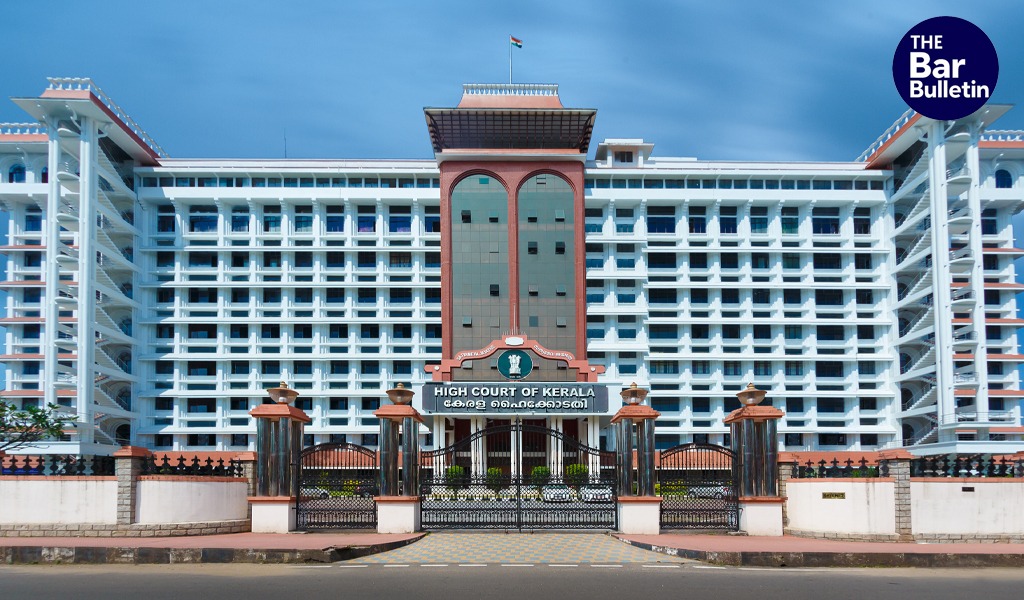

The Kerala High Court has partly allowed a writ petition filed by the landowners, directing the statutory authority to cancel the explosives licence issued for running a petroleum retail outlet after the expiry of the underlying lease, holding that once the lessee loses the right to the site, the licence automatically stands cancelled under Rule 152 of the Petroleum Rules, 2002.
The petitioners had leased out their land to the first respondent under a registered lease deed dated January 21, 2004 for a period of 20 years for running a petroleum retail outlet of Indian Oil Corporation Ltd. The lease expired on January 31, 2024, and was not renewed. Despite expiry, the outlet continued operations. The petitioners approached the High Court seeking (i) eviction of the first respondent from the premises, and (ii) a direction to the licensing authority to cancel the explosives licence granted for the outlet.
The Court, however, declined the prayer for eviction, holding that a writ of mandamus cannot be issued to evict a private individual, as the first respondent–lessee was not “State” within the meaning of Article 12 of the Constitution. The Court distinguished earlier cases where writ relief was granted against oil marketing companies, noting that in the present case, possession remained with a private dealer, and eviction must be pursued before the civil court.
While dealing with the second prayer, Justice M.A. Abdul Hakhim examined Rule 152(1) of the Petroleum Rules, 2002, and held that a licence for storing petroleum stands cancelled automatically if the licensee ceases to have any right to the site. Since the lease had admittedly expired, the first respondent had no subsisting legal right over the land. The Court rejected the argument that a prior hearing was mandatory, clarifying that the proviso to Rule 152 applies only to cancellation for contravention, and not to cases where the right to the site itself has ceased.
Relying on the Supreme Court’s decision in C. Albert Morris v. K. Chandrasekaran, (2006) 1 SCC 228, the Court reiterated that mere possession without a lawful right cannot be treated as a legal right, and that continuation of occupation after lease expiry cannot justify renewal or continuation of a statutory licence.
Accordingly, the High Court issued a writ of mandamus directing the Deputy Chief Controller of Explosives to cancel the explosives licence granted in favour of the respondents for operating the petroleum retail outlet on the petitioners’ land. The writ petition was thus allowed in part.
Appearances:
For the Petitioners – Advocate K.M. Sathyanatha Menon.
For Respondent – Senior Advocate S. Sreekumar, with Advocate Martin Jose P., Nithin George, and Government Pleader G. Sheeba
