


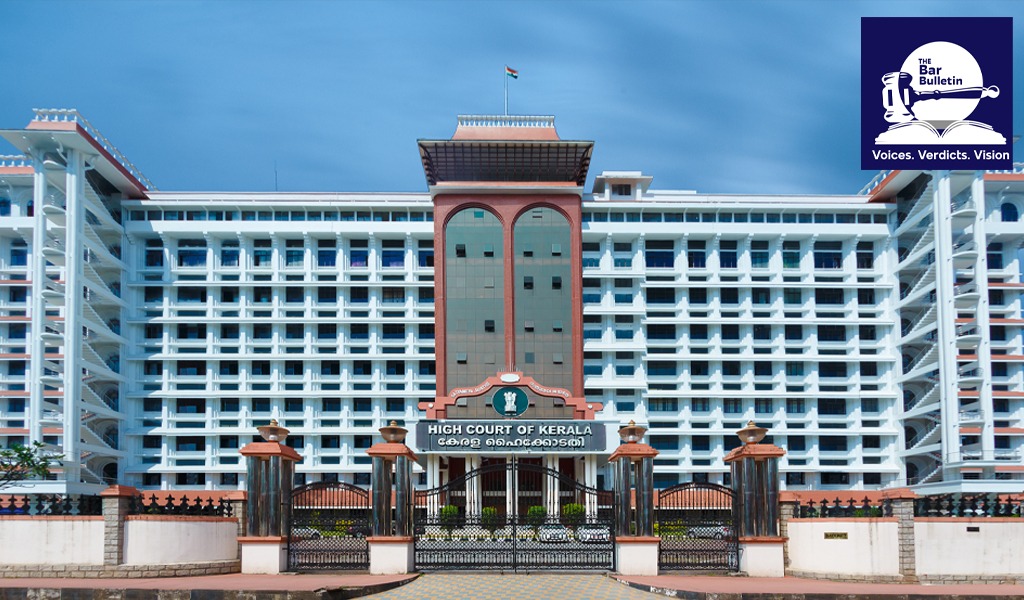

The Kerala High Court (Ernakulam Bench) ruled that long cohabitation of the accused and victim over a period of more than eight years is sufficient to hold that their relationship partook the character of consensual sex. The fact that the accused went in search of greener pastures to give vent to his promiscuous sexual urge, and started a new relationship with another lady, by itself, will not bring his prior relationship with the victim within the meaning of rape. Hence, the Court quashed the proceedings against the petitioner under Section 482 of the CrPC.
Emphasising that a false promise is not a fact within the meaning of the Indian Penal Code (IPC), and a promise to marry without anything more will not give rise to a misconception of fact within the meaning of Section 90 IPC, the Court clarified that the consent given by the prosecutrix to sexual intercourse with a person with whom she is deeply in love on a promise that he would marry her on a later date, cannot be said to be given under a misconception of fact.
The Court further held that the absence of consent cannot be presumed in every case where the prosecutrix alleges that she indulged in sexual intercourse with the offender, believing the offer of marriage made by him. Further, for bringing home the offence of rape, it has to be established that from the very beginning the accused did not have any intention at all to marry the prosecutrix and that the offer of marriage was made as a ploy to make her surrender to him to satiate his carnal desires.
A Single Judge Bench of Justice G. Girish observed from an overall analysis of the relationship between the petitioner and the de facto complainant, which continued for a period of more than eight years starting from 2009, when the husband of the de facto complainant was still alive, that the consensual sex between the de facto complainant and the petitioner cannot be termed as rape.
The Single Judge noted that the facts revealed from the prosecution records themselves make it clear that the sexual relationship between the petitioner and the de facto complainant was purely consensual. The subsequent conduct of the de facto complainant, maintaining the relationship with the petitioner for about four years after the death of her husband, shows that the sexual relationship between the petitioner and the de facto complainant cannot be classified as rape.
The Bench explained that though the de facto complainant has a case that the petitioner contracted marriage with another lady during their relationship, against the promise made to her, however, such allegation is of no consequence since the statement of the de facto complainant itself would reveal that she maintained relationship with the petitioner even after knowing the aforesaid marriage of the petitioner with another lady.
Briefly, the de facto complainant/second respondent is a widow having a daughter and a son aged 18 years and 16 years respectively. Her husband died in the year 2013. During 2009, the petitioner befriended the de facto complainant by rendering financial assistance to her, and later, indulged in a sexual relationship with her on the pretext of marriage. After the death of the husband of the de facto complainant, the petitioner maintained physical relations with the de facto complainant for years, which continued after the de facto complainant came to know about the marriage of the petitioner with another woman.
After some time, the petitioner informed the de facto complainant that he did not want to continue the relationship with her. When the de facto complainant objected and alleged the offence of rape, the petitioner contended that the consensual relationship between him and the de facto complainant would not constitute the offence of rape. Resultantly, an FIR was filed against the petitioner for the commission of the offences punishable under Sections 493, 496 and 376 I.P.C. The petitioner, therefore, approached the Court seeking to quash the proceedings against him.
Appearances:
Advocate B. Mohanlal, for the Petitioner
Advocates Ajith Krishnan and Seena. C, for the Respondent
