


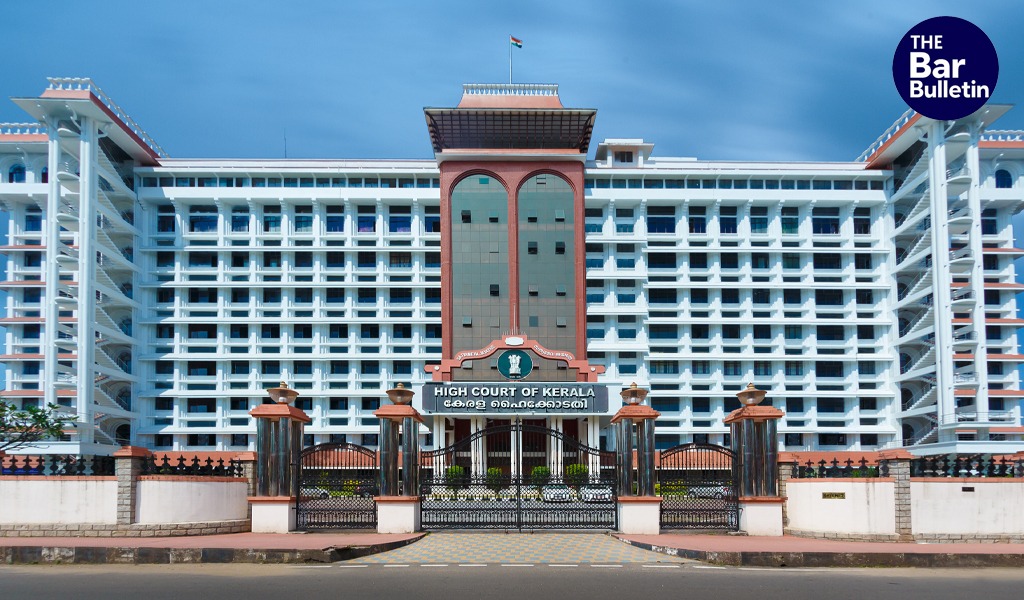

The Kerala High Court (Ernakulam Bench) has emphasised that while a Court can evaluate materials to determine if a prima facie case exists, it cannot adjudicate on disputed facts. When “disputed facts are involved as regards to calculation of assets, it could not be addressed by the Special Judge at the pre-trial stage without adducing evidence”.
The Court, therefore, ruled that the process of making additions and subtractions based on contested claims is “akin to a mini trial where disputed facts are involved, for which adducing of evidence is absolutely necessary by examining witnesses and tendering documents in support of the rival contentions”. Accordingly, the Court held that the Special Judge went wrong in discharging the respondent, and directed the respondent to appear before the Special Judge to cooperate with the trial.
The ruling came in reference to a criminal revision filed by the State of Kerala, through the Vigilance and Anti-Corruption Bureau (VACB), challenging an order from the Enquiry Commissioner and Special Judge (Vigilance), which discharged the respondent, a public servant in the Public Works Department, from a corruption case.
A Single Judge Bench of Justice A. Badharudeen observed that the question of whether the gold ornaments belonged to the respondent’s wife and how she acquired them are “matters of evidence to be ascertained by examining witness during trial”. Thus, adding this amount to the respondent’s income at the pre-trial stage was not sustainable.
The Bench also identified inclusion of a housing loan as income, as a “disputed fact which would require adjudication by adducing evidence and the same is not a matter to be considered during pre-trial stage”. Further, as far as the inclusion of rental income from properties in the wife’s name was also contested, particularly as the prosecution noted it was not declared in the respondent’s property statements, the Bench deemed this as another matter requiring evidence.
Coming to the ownership and payment for the car, the Bench referred these as “disputed facts” for which “evidence needs to be adduced”. Thus, the Bench concluded that the lower court’s decision to exclude this asset from the respondent’s accounts was premature.
Briefly, the prosecution alleged that the respondent, a public servant in the Public Works Department, had, during the check period of August 01, 1992 to July 09, 2009, amassed assets worth Rs. 26.50 Lakhs, which was 53.85% disproportionate to his known sources of income. He was therefore charged with offences punishable under Section 13(1)(e) read with Section 13(2) of the Prevention of Corruption Act, 1988.
Aggrieved, the respondent filed a discharge petition under Section 239 of the CrPC, where the Special Judge re-evaluated the respondent’s assets and income, making several adjustments. Notably, the Special Judge deducted the value of a car and its associated investment, attributing ownership to the respondent’s father. After applying the prosecution’s own formula to the revised figures, the Special Judge calculated the disproportionate assets to be a negative figure, leading to the respondent’s discharge.
Appearances:
Advocates Rajesh. A and Rekha. S, for the Petitioner/ Complainant
Advocates Babu Joseph Kuruvathazha, Archana K.S., and Noel Ealias, for the Respondent/ Accused
