


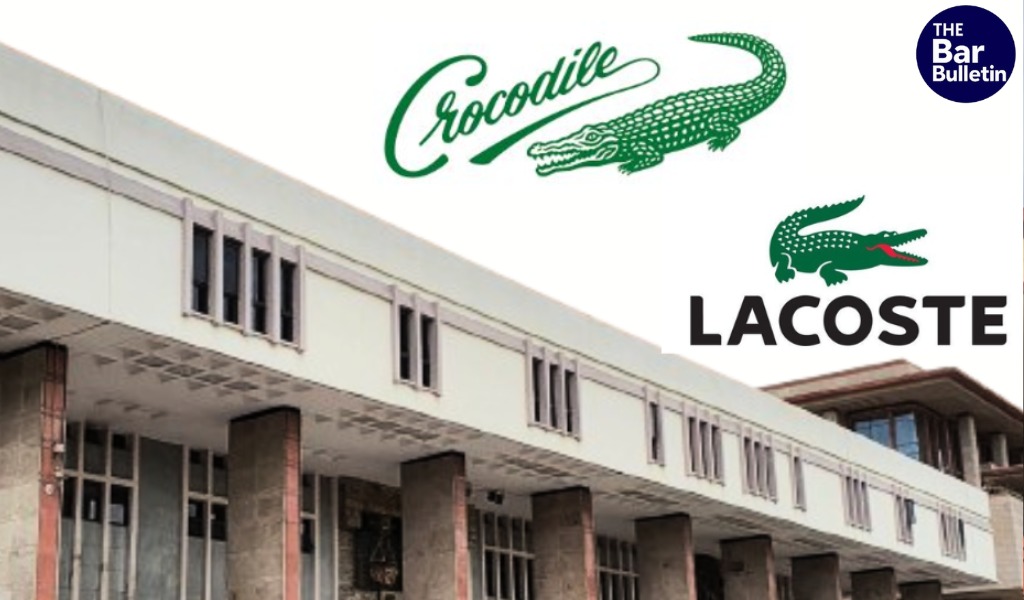

The Delhi High Court has clarified that where an infringing mark is found to be substantially and conceptually similar to a copyrighted artistic work, and the infringer had prior knowledge of and access to the work, a defence of ‘independent creation’ is untenable, and the doctrine of merger is inapplicable, especially when alternative ways to express the underlying idea exist. Such use amounts to copyright infringement.
The Court held that the use of an unregistered device mark that is visually and conceptually similar to a registered device mark for identical or similar goods, creating a likelihood of initial interest confusion among consumers of average intelligence and imperfect recollection, constitutes trademark infringement under Section 29 of the Trade Marks Act, 1999, unless such use is permitted by the registered proprietor.
As far as contract interpretation & territoriality of IP Rights are concerned, the Court stated that a co-existence agreement is strictly territorial and its application is confined to the jurisdictions explicitly defined within it. A subsequent unilateral communication that is not bilaterally executed and lacks certainty and specificity regarding the marks and territories cannot be construed as a binding extension of the original agreement or as consent for permissive use of a trademark in a new territory.
Further, the Court clarified that a claim for passing off will fail if the plaintiff cannot establish, with admissible and reliable evidence, the existence of goodwill and reputation in the relevant jurisdiction at the time the defendant commenced its activities. Evidence such as financial certificates and survey reports must meet the standards of admissibility under the Indian Evidence Act, 1872, to be considered credible.
The Division Bench comprising Justice C. Hari Shankar and Justice Om Prakash Shukla disagreed with the Single Judge’s finding that there was no copyright infringement due to the doctrine of merger. The Bench observed that Lacoste holds a valid copyright registration (No. A-62692/2002) for its artwork, with authorship and conveyance of rights to Lacoste being duly established and unchallenged.
Since Crocodile International was aware of Lacoste’s mark as early as 1980, suggesting they had access to it, the Bench noted that Crocodile International itself used other, different depictions of a crocodile, which proved that alternative ways to express the idea of a crocodile existed. Given the substantial visual and conceptual similarity between the rival marks, the existence of alternative expressions, and the defendant’s prior knowledge, the Bench observed that the impugned mark was not an independent creation. Therefore, the issue of copyright infringement was decided in favour of Lacoste.
However, the Bench affirmed the Single Judge’s finding that the agreements do not extend to India. An examination of the 1983 Agreement revealed that Article I explicitly limited its territorial scope to five countries, which did not include India. A general clause about potential cooperation elsewhere was deemed merely indicative of goodwill and not legally enforceable. The Bench also noted that the defendant’s witness admitted in cross-examination that the 1983 Agreement did not extend to India.
Regarding the 1985 letter, the Bench found it to be a unilateral document, not addressed to or signed by Lacoste, and lacking the certainty and mutual consent required to form a binding contract. It did not refer to the 1983 Agreement or the specific impugned mark. The Bench thus concluded that neither the 1983 Agreement nor the 1985 letter granted Crocodile International any express or implied permission to use the impugned mark in India.
The Bench observed that the rival marks are both device marks used on similar goods for a similar class of consumers. The marks were found to be visually and conceptually similar, with features like posture, curved tail, and open jaw being nearly identical, making them likely to cause ‘initial interest confusion’ among average consumers with imperfect recollection. Since Lacoste is the registered proprietor of the standalone saurian device mark and Crocodile International is neither a registered proprietor nor a permitted user of the impugned mark, its use constitutes infringement under Section 29 of the Trade Marks Act, 1999.
The Bench concurred with the Single Judge that Lacoste failed to establish a case for passing off. To succeed, Lacoste needed to prove the first element of the ‘classic trinity test’: the existence of goodwill and reputation in India as of 1998, when Crocodile International began its use. The evidence submitted by Lacoste, including a survey report and a Chartered Accountant’s certificate, was deemed inadmissible.
Further, the survey report was for the wrong year (2004), and the CA certificate lacked supporting documents and the CA was not produced for cross-examination. Electronic evidence was also rejected for want of a certificate under Section 65B of the Indian Evidence Act. As Lacoste failed to prove the foundational element of goodwill with admissible evidence, the claim for passing off failed, added the Bench.
The Bench also agreed with the Single Judge that the suit does not suffer from acquiescence. Acquiescence requires a positive act or deliberate inaction where a party, with knowledge of infringement, fails to act. The Bench found that Crocodile International did not present sufficient evidence to establish that Lacoste had remained passive or tacitly consented to the use of the impugned mark. The delay of approximately three years in filing the suit was not considered prejudicial to the defendants, as no specific detriment was proven.
Briefly, the dispute concerns the use of a crocodile emblem in India between La Chemise Lacoste (Plaintiff/Respondent – Lacoste) and Crocodile International (Defendant/Appellant – Crocodile International). Lacoste, a French company, is internationally known for its apparel and uses a right-facing crocodile device mark. In India, Lacoste claims prior registration of its crocodile device mark in 1983 (No. 400267 in Class 25) and commenced commercial activities in 1993. On the other hand, Crocodile International, a Singaporean company, uses a left-facing crocodile device mark. Its predecessor first registered a saurian trademark in India in 1952 (No. 154397) and commenced use of its marks in India around 1998.
The core issue arose when Crocodile International began using a standalone saurian device mark without the accompanying word “CROCODILE”, which Lacoste alleged was deceptively similar to its registered device mark. The parties have a history of international disputes, which led to a co-existence agreement in 1983, which permitted co-existence in five specified territories: Taiwan, Singapore, Indonesia, Malaysia, and Brunei, but did not include India. Crocodile International heavily relied on a subsequent letter of 1985, arguing that it extended the spirit of the 1983 Agreement to India and authorized their use of the impugned mark. Lacoste contested this, asserting the 1985 letter was a unilateral communication that did not confer any enforceable rights in India.
Later, Lacoste filed a suit seeking an injunction against Crocodile International for trademark infringement, copyright infringement, and passing off. The Single Judge partly decreed the suit in favour of Lacoste, granting a permanent injunction for trademark infringement but rejecting the claims for copyright infringement and passing off.
Appearances:
Advocates Saif Khan, Shobhit Agarwal, Prajjwal Kushwaha and Shayal Anand, for the Appellants
Senior Advocate Chander M Lall, along with Advocates Nancy Roy and Prakriti Varshney, for the Respondents
