


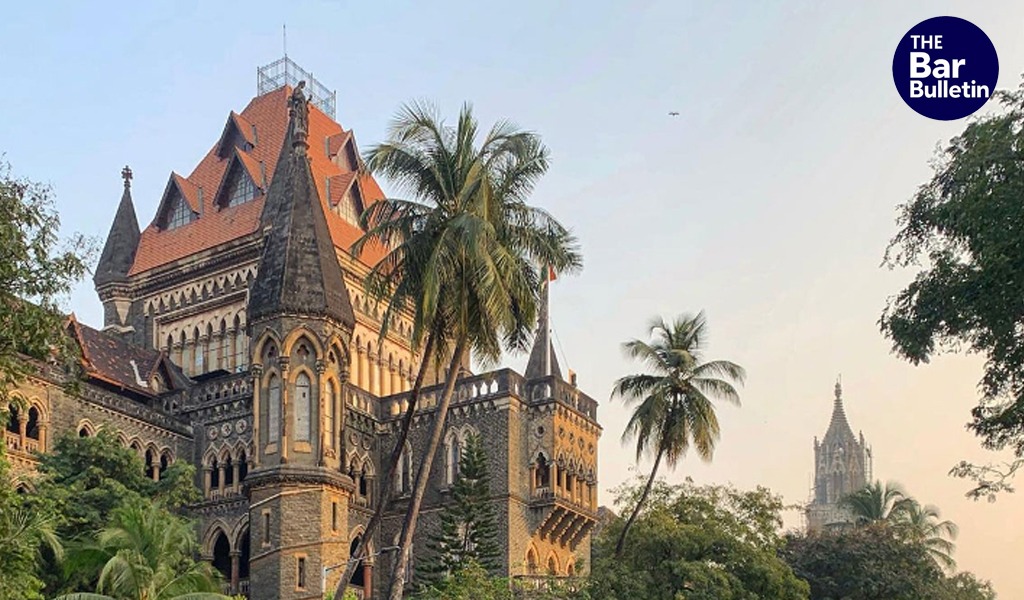

The Bombay High Court (Aurangabad Bench) clarified that medical incapacitation certification cannot be demanded once the application under the Voluntary Retirement Scheme (VRS) was accepted without requiring any medical examination, even though the voluntary retirement was sought by the petitioner due to his own poor health and the medical condition of his son.
Essentially, the Court ruled that submission of a medical incapacitation certificate from any competent authority or panel of doctors is not indispensable for entitlement to ex gratia payment in lieu of compassionate appointment.
Since the 2007 Circular did not impose any requirement for examination of incapacitation by a panel of doctors or any such certification, the rejection of the petitioner’s claim for compassionate appointment could have been appropriately addressed by granting a lump sum ex gratia amount in lieu of compassionate appointment, added the Court.
The Division Bench comprising Justice Sandipkumar C. More and Justice Mehroz K. Pathan referred to the HO circular dated September 24, 2007, which provides for payment of monetary assistance in lieu of appointment on compassionate grounds. The objective of the circular is to strike a balance between the business objectives of the Bank and the social obligations towards family members of employees who either died in harness or voluntarily resigned due to total medical incapacitation.
The Bench also mentioned that the time limit for claiming ex gratia is six months from the date of death of the employee or the date of resignation/voluntary retirement, and it is for the employees seeking premature retirement due to incapacitation before reaching the age of 55 years.
Since the petitioner retired in the year 2013, well before attaining the age of 55 years, and his application for voluntary retirement was accepted by the respondent bank without insisting on any medical certificate, the Bench pointed out that the bank found the petitioner’s case genuine, as it neither sought any certificate of incapacitation nor referred the petitioner to a medical board to verify his medical condition.
As the scheme of 2007, which holds the field, does not require any certification by a panel of doctors showing medical incapacitation, the Bench said that the insistence upon submission of a medical certificate by the respondent bank lacks legal basis, and is liable to be set aside.
Therefore, the Bench concluded that the grounds taken by the respondent bank to reject the petitioner’s claim appear to be a deliberate attempt to deprive the petitioner of his rightful entitlement under the 2007 Circular, and directed the bank to consider the application of the petitioner for the appointment of his son on compassionate ground and in lieu thereof grant the lumpsum ex gratia payment, in accordance with Clause B (iii) of the 2007 Circular.
The Bench also ordered the bank to complete the process of sanctioning and disbursing the ex gratia amount within a period of 12 weeks from the date of passing of the order.
Briefly, the petitioner joined Canara Bank as a Clerk in 1989 and was promoted to Officer in 2008. Suffering from serious health problems since 2000, including a major surgery for Nephrotic Syndrome in 2001, he was under continuous medical treatment. Due to his prolonged illness and the need to care for his physically handicapped son, the petitioner, with 14 years of service remaining, applied for voluntary retirement on grounds of his and his son’s poor health, which was accepted.
However, before and after his retirement, the petitioner made several representations seeking the appointment of his son on compassionate grounds, which were initially rejected by the bank, stating that compassionate appointments had been discontinued. Subsequently, the bank introduced a new scheme for compassionate appointment, and the petitioner and his son submitted further applications under this new scheme. The bank, however, rejected the application, contending that mere voluntary retirement on medical grounds is insufficient; a medical incapacitation certificate must be submitted at the time of the retirement application, which was not done.
Appearances:
Advocate Rahul A. Tambe, for the Petitioner
Advocates Aditya N. Sikchi and Vaibhav R. Patil, for the Respondent
