


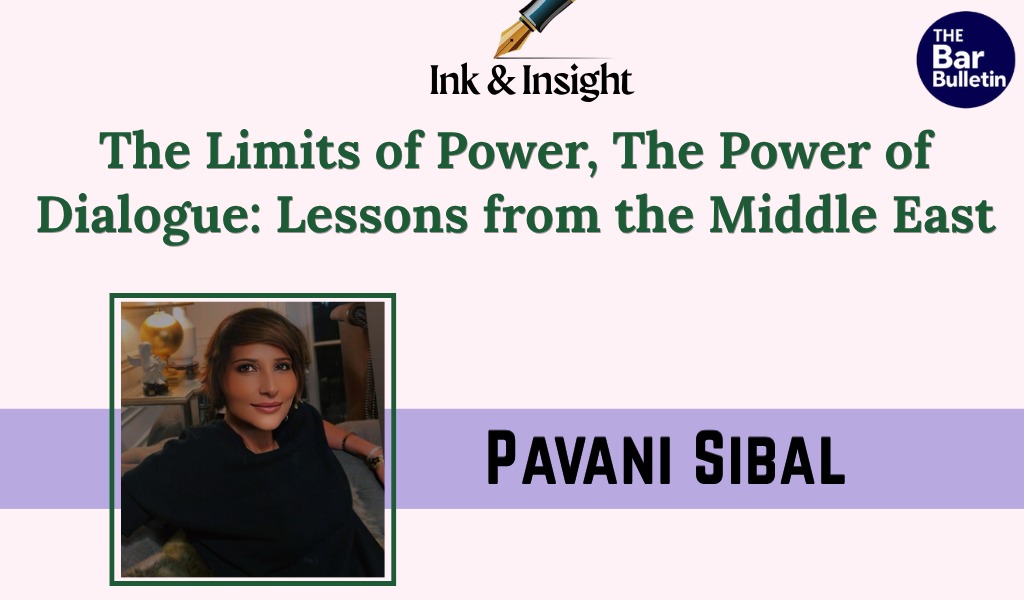
The ongoing conflict in the Middle East represents not merely a regional crisis, but a deeply entrenched and evolving geopolitical challenge with far reaching global consequences. As the Chief Executive Officer of ADRODR India, and equally as a mother and a wife navigating the everyday realities of uncertainty in an interconnected world, I find myself viewing this conflict through a dual lens: one of profound concern, and the other of urgent, almost compelling, opportunity.
The concern is immediate and human. It lies in the immense loss of life, the disruption of families, and the long shadows cast over future generations. It also manifests closer to home than one might expect. As a mother of school going children in London, planning travel, education, and routine life amidst global instability has become a delicate exercise in risk assessment. Decisions that once felt ordinary now carry a weight of consequence. As a wife, there is the added dimension of shared responsibility balancing professional commitments, family priorities, and the unpredictability of a world that no longer adheres to clear boundaries.
Yet, alongside this concern lies an undeniable opportunity, an opportunity to reflect on the limitations of traditional approaches to conflict and to recognise, perhaps more starkly than ever before, the indispensable role of structured negotiation, mediation, and dialogue in resolving disputes that appear otherwise intractable.
The Middle East conflict is not a singular dispute. It is, in reality, a complex mosaic of overlapping tensions of territorial claims, historical grievances, religious identities, and strategic rivalries. From the Israel Palestine crisis to broader regional dynamics, the persistence of conflict is not due to a lack of awareness, but rather a lack of sustained, credible, and effectively structured negotiation frameworks.
Traditional diplomacy continues to play a critical role. However, experience, both historical and professional suggests that it is often insufficient when positions become entrenched and trust deficits deepen. In such circumstances, alternative dispute resolution, particularly mediation and facilitated negotiation, emerges not merely as a complementary mechanism, but as an essential pathway.
There is a difficult but necessary truth to acknowledge: conflicts of this magnitude are rarely resolved through power alone. History has consistently demonstrated that even the most deeply rooted disputes ultimately require dialogue. Northern Ireland, South Africa, Colombia, each stands as a testament to the fact that resolution is achieved not through dominance, but through negotiation. The Middle East will be no exception. The question is not whether parties will eventually come to the table, but how prepared they will be when they do.
This is where the quality of negotiation becomes critical. Structure, neutrality, adaptability, and the skill of the facilitator often determine whether dialogue leads to resolution or further deadlock. From my vantage point at ADRODR India, this is precisely where the global gap lies, not in willingness alone, but in preparedness.
Training in international negotiation and mediation is no longer a specialised skill reserved for diplomats. It is an essential discipline. Today’s disputes are shaped by cross-border legal frameworks, global media narratives, economic interdependence, and multilateral pressures. Effective negotiators must therefore possess a sophisticated understanding of law, psychology, culture, and strategy. Mediation, in particular, requires a delicate balance requiring to remaining neutral while guiding parties towards convergence, influencing without imposing.
At ADRODR India, we have consistently advocated for the professionalisation of dispute resolution. The current global climate only reinforces that position. Ad hoc negotiations, often driven by political expediency, cannot replace the value of trained expertise. A mediator in a conflict of this nature must navigate not only stated positions, but also underlying fears, identity narratives, and historical trauma. This requires not just knowledge, but discipline, empathy, and a rigorous adherence to principles such as confidentiality, neutrality, and procedural fairness.
The legal dimension of international conflict further complicates this landscape. Questions of sovereignty, human rights, humanitarian obligations, and treaty enforcement intersect in ways that demand precision and foresight. Any negotiated resolution must not only be politically acceptable but also legally sustainable. Without this dual foundation, agreements risk collapse, often reigniting the very conflicts they sought to resolve.
Trust, perhaps, remains the most fragile and critical element. In prolonged conflicts, trust is both the first casualty and the most difficult to rebuild. Mediation offers a structured environment in which trust can be restored incrementally through confidential dialogue, carefully calibrated concessions, and sustained engagement. However, this process cannot be improvised. It requires technical expertise, emotional intelligence, and cultural sensitivity in equal measure.
The importance of inclusivity also cannot be overstated. Traditional diplomacy has often been confined to state actors, overlooking the voices of civil society, women, youth, and marginalised communities. Yet, as both a professional and a mother, I am acutely aware that sustainable peace must reflect the lived realities of those most affected. Modern mediation practices rightly emphasise inclusive dialogue, recognising that legitimacy and durability are rooted in broad participation.
Beyond the realm of statecraft, the implications extend into corporate and institutional life. Businesses today operate in an environment where geopolitical instability directly impacts supply chains, investment strategies, and regulatory landscapes. As a CEO, I have seen how quickly external conflict can translate into internal uncertainty. The ability to manage disputes, anticipate risks, and negotiate effectively is no longer optional, it is a core leadership competency.
This is precisely why capacity building in alternative dispute resolution must be prioritised. At ADRODR India, our focus has been on bridging theory with practice, combining legal rigour with real world simulations, case studies, and ethical training. Negotiation is not merely a skill; it is a responsibility. The consequences of failure are measured not just in lost opportunities, but in human lives and societal disruption.
On a personal level, this responsibility feels even more immediate. When global events begin to influence decisions about one’s children, their education, their safety, and their future, the abstract becomes tangible. It reinforces the belief that conflict resolution is not an academic exercise, it is a necessity that shapes everyday life.
Looking ahead, the demand for skilled negotiators and mediators will only intensify. As conflicts grow more complex and interconnected, traditional approaches will continue to fall short. The Middle East stands as a powerful reminder that peace is not passive. It is an active, deliberate process that requires design, discipline, and sustained commitment.
In conclusion, the ongoing conflict is both a tragedy and a lesson. It highlights the limitations of force and reaffirms the enduring value of dialogue. For those of us committed to the field of dispute resolution, it is also a call to action. We must invest in training, strengthen institutions, and cultivate a new generation of professionals who are not only technically skilled, but also principled, resilient, and deeply human in their approach.
To me, this is not merely a professional reflection, it is deeply personal. As a mother, I find myself constantly weighing decisions that were once routine against a backdrop of uncertainty. Travel plans, school commitments, and even a sense of normalcy now feel contingent on forces far beyond our control.I divide my time between Delhi and London, and international travel during the Easter holiday, particularly routes through the Middle East places a considerable strain on my family life, as flight diversions make coordination especially challenging. As a wife, these decisions are shared, discussed, and often revisited, reflecting the quiet but constant negotiation that underpins family life. And as the Chief Executive Officer of ADRODR India, I am reminded daily that the principles we advocate through dialogue, patience, and structured resolution are not confined to boardrooms or international forums; they begin at home and extend outward. This intersection of personal and professional life has only strengthened my conviction that the world urgently needs better negotiators, more thoughtful mediators, and stronger institutions. Because, ultimately, peace is not an abstract ideal, it is what allows families to plan, children to grow, and societies to function with dignity and stability.
At ADRODR India, this remains our unwavering belief: the path to peace lies not in the absence of conflict, but in the presence of effective, credible, and compassionate mechanisms to resolve, with resolve.
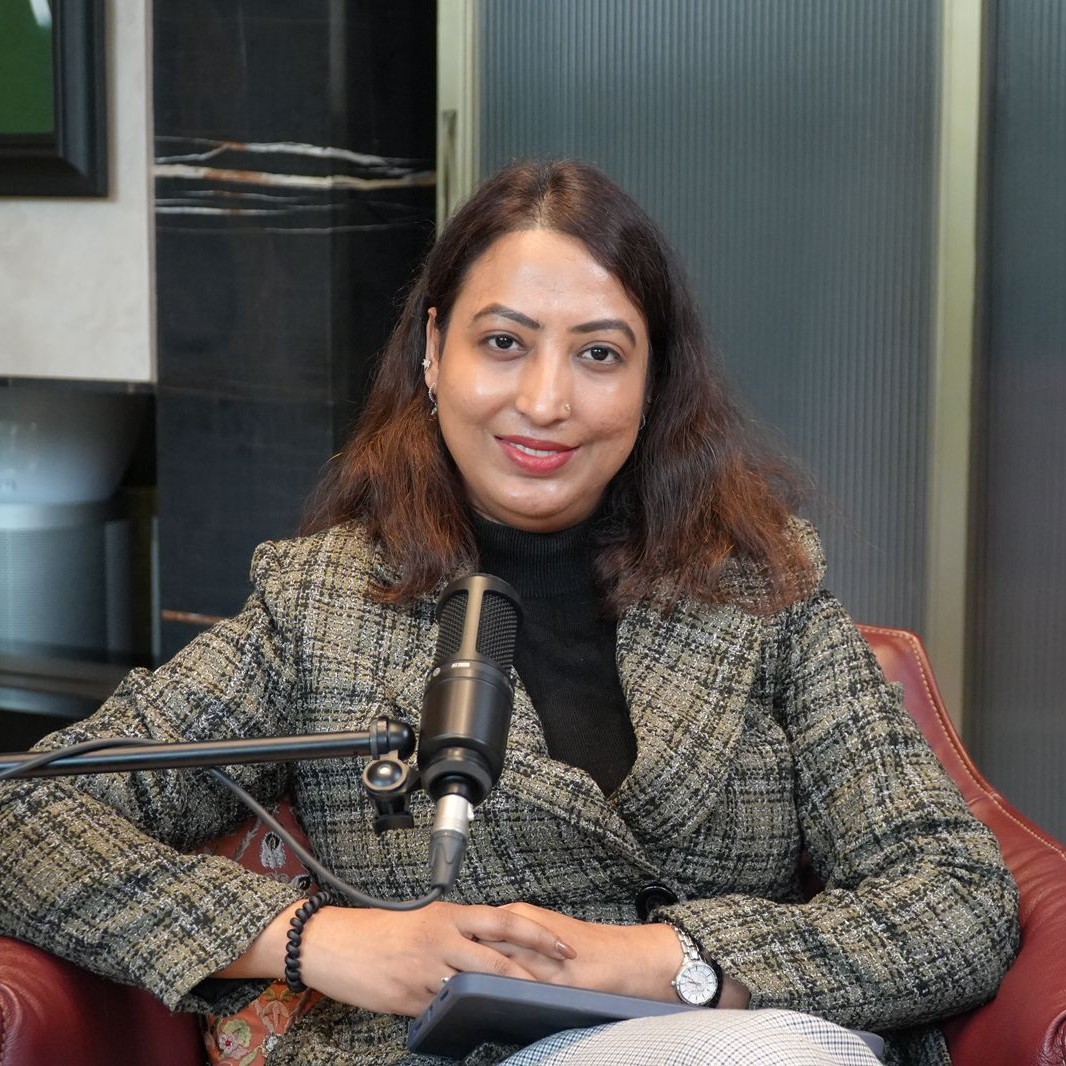
Pavani Sibal Chief Executive Officer, ADRODR India