


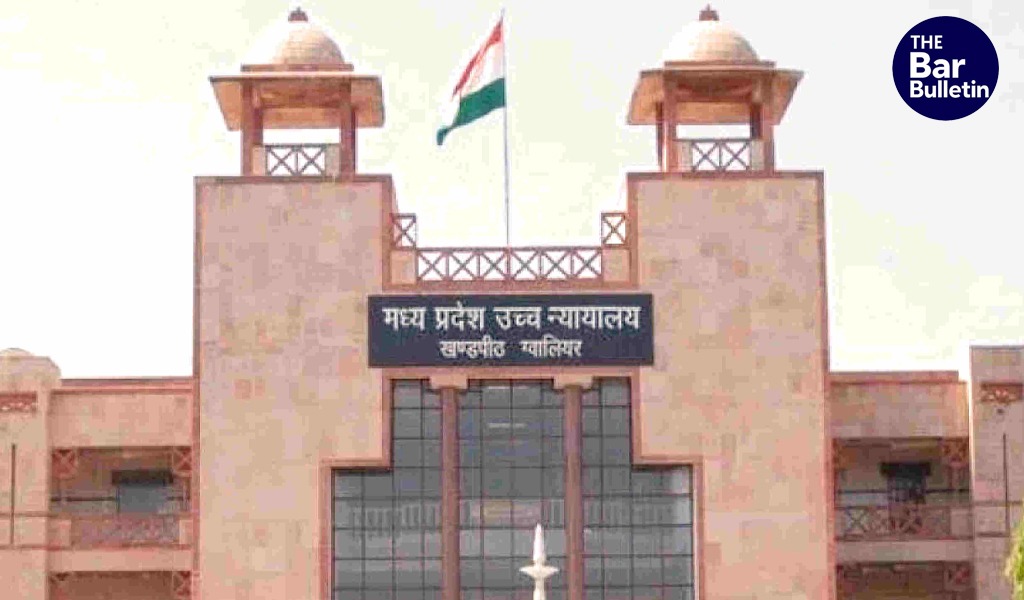

In a suit for specific performance of an agreement, the obligation of the promisor to perform arises only when the reciprocal promisee demonstrates readiness and willingness to fulfil their part of the contract. The Madhya Pradesh HC, in a first appeal filed under Section 96 of the CPC, upheld the order of the Trial Court, denying the Appellant the relief for being unable to meet the requirements for the grant of relief for specific performance.
The appeal arose from the alleged agreement entered into between the Appellant (buyer) and the Respondent (owner) for the sale of the suit property. The said suit property, which belonged to the Respondent, was mortgaged by him with the UCO Bank to obtain a loan. According to the Appellant, the Respondent’s inability to repay the loan led her to execute an agreement to sell the suit property in favour of the Appellant on 02.01.2009. The consideration for the said suit property was decided to be Rs. 7 lakhs, out of which the Appellant paid 5 lakhs cash in advance. The Respondent agreed to clear the outstanding bank loan from the sale consideration and, upon obtaining a No-Objection Certificate (NOC) from the Bank for the suit property, to execute the sale agreement in favour of the Appellant.
To which the Respondent pleaded the defence that the Appellant had forged the signature of the Respondent on the said sale agreement by obtaining her signature on blank stamp paper and therefore, prayed that the said suit was liable to be rejected. Accepting the Respondent’s submissions, the Trial Court held that there was no evidence to substantiate the Appellant’s claim regarding execution of the agreement and consequently dismissed the suit. Aggrieved by the said decision, the Appellant moved the Madhya Pradesh High Court assailing the Trial Court’s order.
The High Court observed that, upon the evaluation of the evidence placed before it, the Respondent was unsuccessful in proving that the impugned agreement was false and fabricated. However, the Court added in a suit of specific performance of an agreement, only proving execution of the agreement is not sufficient, other parameters, such as transfer of consideration, readiness, and willingness to perform an agreement, are quintessential for decreeing such a relief. The Court, while evaluating the evidence of Appellant’s witnesses that were marshalled before it, held that the payment of Rs. 5 lakhs as a consideration of the sale amount by the Appellant tended to be doubtful owing to the absence of any transaction document, and also, could not be proved by the oral evidence of the Appellant.
The High Court further examined whether the Appellant was ready and willing to perform his contractual obligations and noted that under the agreement, he was required to pay the remaining consideration of Rs. 2 lakh within 20 days of its execution. As the Appellant failed to do so, the Court held that he had breached the stipulated timeline and could not be said to be ready and willing to perform the agreement. It noted that in a specific performance suit, all crucial facets necessary for the determination of such relief had to be adduced by evidence and therefore, mere statement or averment in the plaint of readiness and willingness would not suffice.
Accordingly, the High Court dismissed the Appeal and opined that the findings of the Trial Court were free of any infirmity and do not call for any interference.
Appearances:
For Plaintiff: Mr. Ankit Saxena, Adv.
For Respondent: No appearance from the Respondent
