


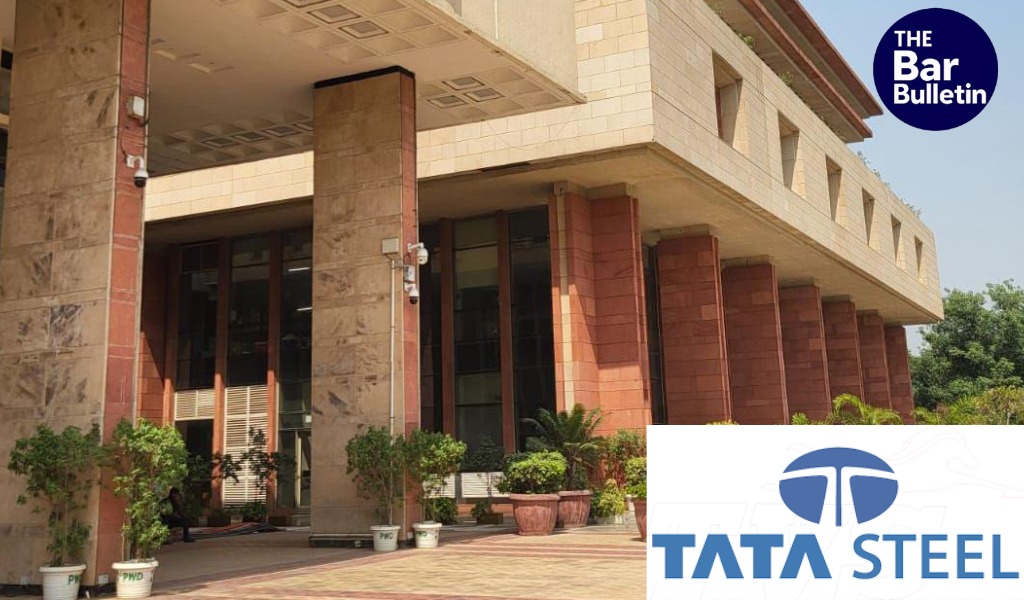

The Delhi High Court has held that once a resolution plan is approved under Section 31 of the Insolvency and Bankruptcy Code, 2016 (IBC), all claims not forming part of the plan stand extinguished, including pending arbitral claims, and cannot be pursued thereafter.
The case stemmed from contractual disputes between Bhushan Energy Limited (now Angul Energy Limited, acquired by Tata Steel) and ISGEC Heavy Engineering Ltd. relating to the supply, erection and commissioning of boilers. ISGEC had initiated arbitration proceedings claiming over ₹80 crore. During the pendency of arbitration, Bhushan Energy entered the Corporate Insolvency Resolution Process (CIRP), pursuant to which Tata Steel submitted a resolution plan that was approved unanimously by the Committee of Creditors and later sanctioned by the NCLT.
ISGEC had submitted its claim during CIRP as an operational creditor. The Resolution Professional categorised the claim as disputed and contingent, and the approved resolution plan expressly extinguished all pre-CIRP claims, including sub judice and contingent claims, with liquidation value assessed as nil.
Despite approval of the resolution plan, ISGEC sought to continue arbitration proceedings. The arbitral tribunal rejected Tata Steel’s application under Section 32(2)(c) of the Arbitration and Conciliation Act seeking termination of the arbitration, holding that ISGEC’s claim survived, prompting the present appeal before the Delhi High Court.
Allowing the appeal, Justice Amit Sharma has held that once a resolution plan is approved under Section 31 of the IBC, all claims not forming part of the plan stand extinguished and cannot be pursued through arbitration or other proceedings.
The Court examined the legal effect of an approved resolution plan on pending arbitral claims and the scope of judicial interference with arbitral orders passed post-approval of such plan. The Court emphasised that permitting continuation of arbitration proceedings in respect of claims extinguished under the resolution plan would defeat the very object of the IBC and undermine certainty in the resolution process. It observed that allowing such claims to survive would expose the resolution applicant to unforeseen liabilities, which the Supreme Court has consistently disapproved.
Referring to Electrosteel Steel Ltd. v. Ispat Carrier (P) Ltd, (2025) 7 SCC 773, the Court held that the arbitral tribunal lacked jurisdiction to continue the proceedings once the claim stood extinguished under the approved resolution plan.
The Court also referred to Committee of Creditors of Essar Steel India Ltd. v. Satish Kumar Gupta, (2020) 8 SCC 531, which held that the mere lifting of the moratorium upon completion of the corporate insolvency resolution process does not revive claims that stand extinguished upon approval of the resolution plan.
In reference to Deep Industries Limited v. Oil and Natural Gas Corporation Limited and Anr. (2020) 15 SCC 706, Punjab State Power Corporation Limited v. Emta Coal Limited and Anr., (2020) 17 SCC 93, and Surender Kumar Singal and Ors. v. Arun Kumar Bhalotia and Ors, 2021 SCC OnLine Del 3708., it was noted that the Court can exercise jurisdiction under Articles 226 and 227, against an order passed by an Arbitral Tribunal, if such order is completely perverse, or is patently lacking in inherent jurisdiction.
Consequently, the Court held that the continuation of arbitration proceedings against Tata Steel after approval of the resolution plan was impermissible in law and set aside the arbitral tribunal’s order dated October 7, 2020, thereby terminating the arbitral proceedings.
Appearances
Petitioner- Mr. Ramji Srinivasan, Senior Advocate with Mr. Shashank Gautam, Mr. Arvind Thapliyal, Mr. Siddharth Pandey, Ms. Saravna Vasanta and Ms. Shefali Munde, Advocates.
Respondents- Ms. Anubha Bhardwaj, CGSC with Ms. Ananya Shamshery and Mr. Vijay Misra, Advocates for R-1. Mr. Ashish Verma, Mr. Saksham Thareja, Mr. Akhil Ranganathan, Mr. Nikhil Thakur and Mr. Rahul Gupta, Advocates for R2.
